Sophie Adenot returns to Europe after a record 237 days in space
The French astronaut is beginning rehabilitation in Cologne after a mission that combined three spacewalks, research and a new European endurance record.
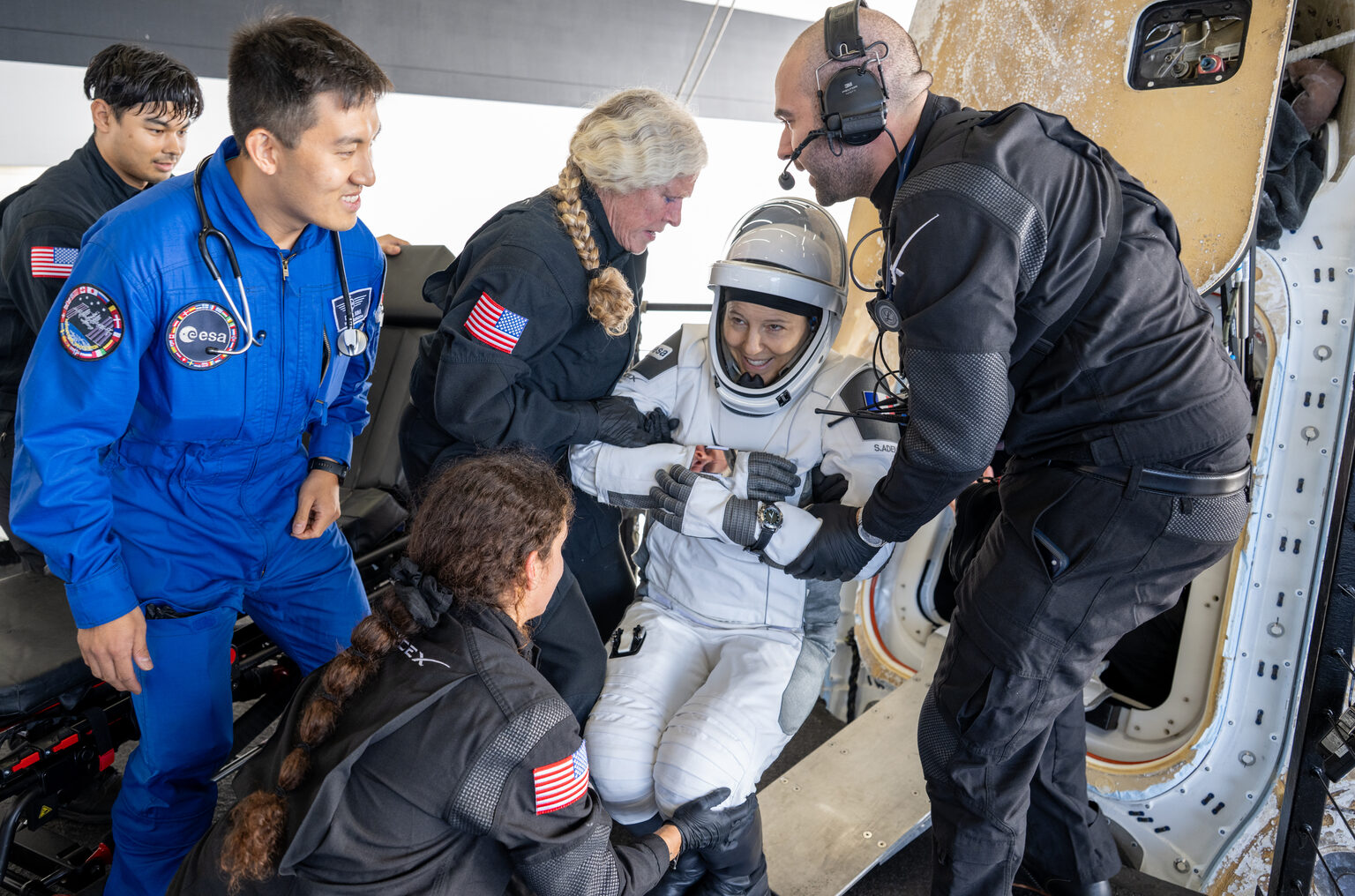
French astronaut Sophie Adenot arrived in Cologne on 10 October after 237 days, 5 hours and 18 minutes in space. Her Crew-12 capsule splashed down in the Pacific off California on 8 October, ending the Epsilon mission and setting a new European record for a single spaceflight.
The return involved several stages. After initial checks aboard the recovery ship, Adenot and her crewmates travelled to Houston. A French Air and Space Force aircraft then carried her to the European Astronaut Centre in Germany, where family, colleagues and representatives of European space agencies welcomed her early on Saturday.
Three spacewalks and a broad research programme
Adenot's record exceeded the previous European mark held by Italian astronaut Luca Parmitano by more than 35 days, according to the European Space Agency. She also became the first French woman to conduct a spacewalk and completed three of them in 14 days, spending 19 hours and 42 minutes outside the International Space Station.
The mission was not only a sequence of records. ESA says Adenot worked for about 218 hours on 35 European payloads and spent roughly 25 hours maintaining or upgrading European systems. The programme covered health, materials, biology, fluid physics, radiation and fundamental science, as well as technologies intended for future exploration.
Splashdown begins a long rehabilitation
Her immediate work is now physical recovery. ESA expects two to three weeks of readaptation and data collection at the DLR's :envihab facility in Cologne, followed by continued rehabilitation. Long stays in microgravity affect muscles, balance, circulation and the immune system, so a successful splashdown is the start of a medical process rather than the end of the mission.
Independent accounts from the Associated Press and Le Monde confirmed the 237-day flight and the safe return of all four Crew-12 members. Le Monde noted that recovery of pre-flight physiological parameters can take six months to a year, even after the more intensive early rehabilitation restores basic mobility and balance.
The mission also carries a European policy message. ESA linked Adenot's return to a decision point over the continent's future role in human spaceflight. The durable measure of Epsilon will be how its experimental data, operational lessons and public engagement are used. Records attract attention, but the scientific results and investment choices that follow will decide the mission's wider value.
Sources & context
Reporting and reference material used for this article. Context sources do not independently confirm every news claim.
- European Space Agency ↗Primary mission source, 10 October: arrival in Cologne, exact duration, research work, spacewalks and rehabilitation plan.
- Associated Press ↗Independent reporting, 8 October: safe splashdown, crew composition and mission duration.
- Le Monde ↗Independent reporting, 8 October: European record, spacewalk work and medical context for recovery.
- NASA ↗Primary agency source, 8 October: splashdown confirmation and official NASA photography credit.
Written for WHIF from the linked material. This article does not claim on-the-ground reporting. Our editorial standards.