France’s school crisis is widening the public-private divide
Disruption, staffing gaps and unequal facilities are pushing some families toward subsidised private schools, sharpening an older problem of social segregation.
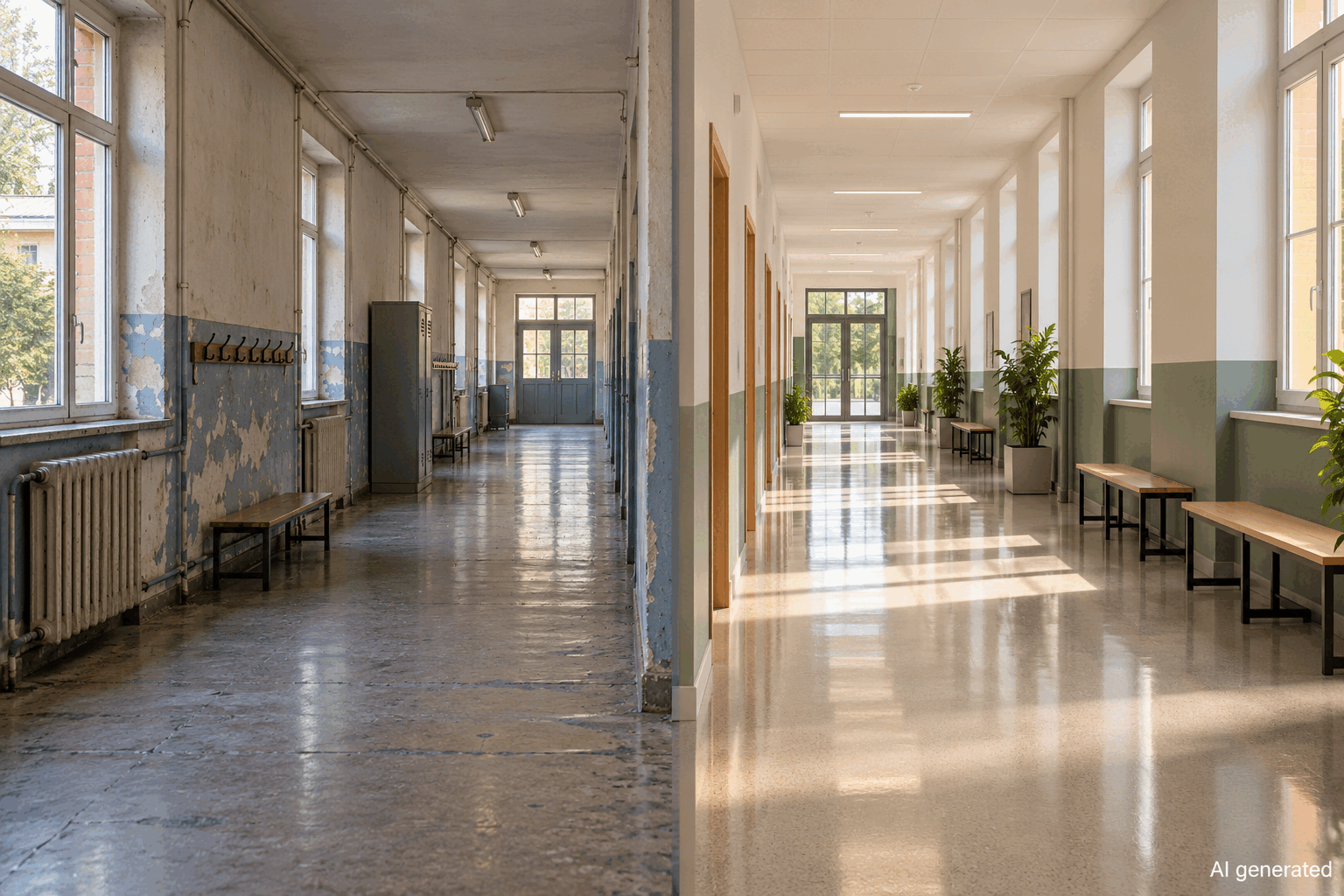
France’s latest school crisis is changing more than the protest calendar. Some families who can afford the fees are moving children from state schools to subsidised private institutions, citing cancelled classes, teacher absences and deteriorating buildings. Reuters reported the shift on 9 October through families, school leaders and national data. The evidence points to a widening divide, not a complete abandonment of public education.
The private sector remains a minority route nationally. More than two million children, or 17.6 per cent of pupils, attended one of France’s roughly 7,500 under-contract private schools in the 2023 audit cited by Reuters. In Nantes, however, the private share reaches 38 per cent. The state pays teachers in these schools, while family fees generally cover other costs, so the boundary between public financing and private selection is unusually important.
A modest national share can conceal deep local separation
The social composition has changed faster than the national enrolment share. The audit found that pupils from very advantaged families made up 40.2 per cent of under-contract private enrolment in 2021, up from 26.4 per cent in 2000. More than half of pupils in those schools were from advantaged or very advantaged backgrounds, compared with fewer than one third in state schools.
That pattern matters because segregation is not simply a matter of parental preference. France’s Scientific Council for National Education says separation between schools can affect attainment, wellbeing and social cohesion. The council’s June 2026 note also documents experiments begun in 2015 to improve social diversity in middle schools, showing that policymakers have long recognised the problem.
National spending figures do not measure daily reliability
The funding debate needs care. OECD data show that France spends more per upper-secondary student than the OECD average in both general and vocational programmes. Yet a high national average does not guarantee reliable staffing, safe buildings or equal conditions between neighbourhoods. Reuters calculates that pensions will absorb 14 per cent of economic output in 2027, while education spending has lost ground relative to other priorities over two decades.
Nor should every private-school family be described as wealthy. Parent representatives told Reuters that some households make significant sacrifices to pay fees. The stronger finding is about concentration: families with more money and flexibility have more ways to avoid disruption, while those without alternatives remain dependent on their local state school.
The government’s promised education plan will therefore be judged on two levels. Replacing absent teachers and repairing buildings could restore day-to-day confidence. Admissions, funding and social-mix policies will determine whether confidence is restored evenly. Without both, a temporary response to strikes could leave a more permanent separation between children who can exit the public system and those who cannot.
Sources & context
Reporting and reference material used for this article. Context sources do not independently confirm every news claim.
- Reuters ↗Independent reporting, 9 October: family decisions, private-school enrolment, social composition and public-finance pressures.
- Scientific Council for National Education ↗Primary research note, June 2026: effects of school segregation and results from social-diversity experiments.
- OECD ↗Primary comparative data, September 2026: spending per upper-secondary student in France and OECD averages.
- The Guardian ↗Independent context, 6 October: inequalities linked to background, postcode and income during the school crisis.
Written for WHIF from the linked material. This article does not claim on-the-ground reporting. Our editorial standards.