France promises 3,000 teachers, but deployment is the real test
The emergency staffing plan is the government’s first material concession to protesting students, yet its effect depends on where qualified teachers arrive and how long they stay.
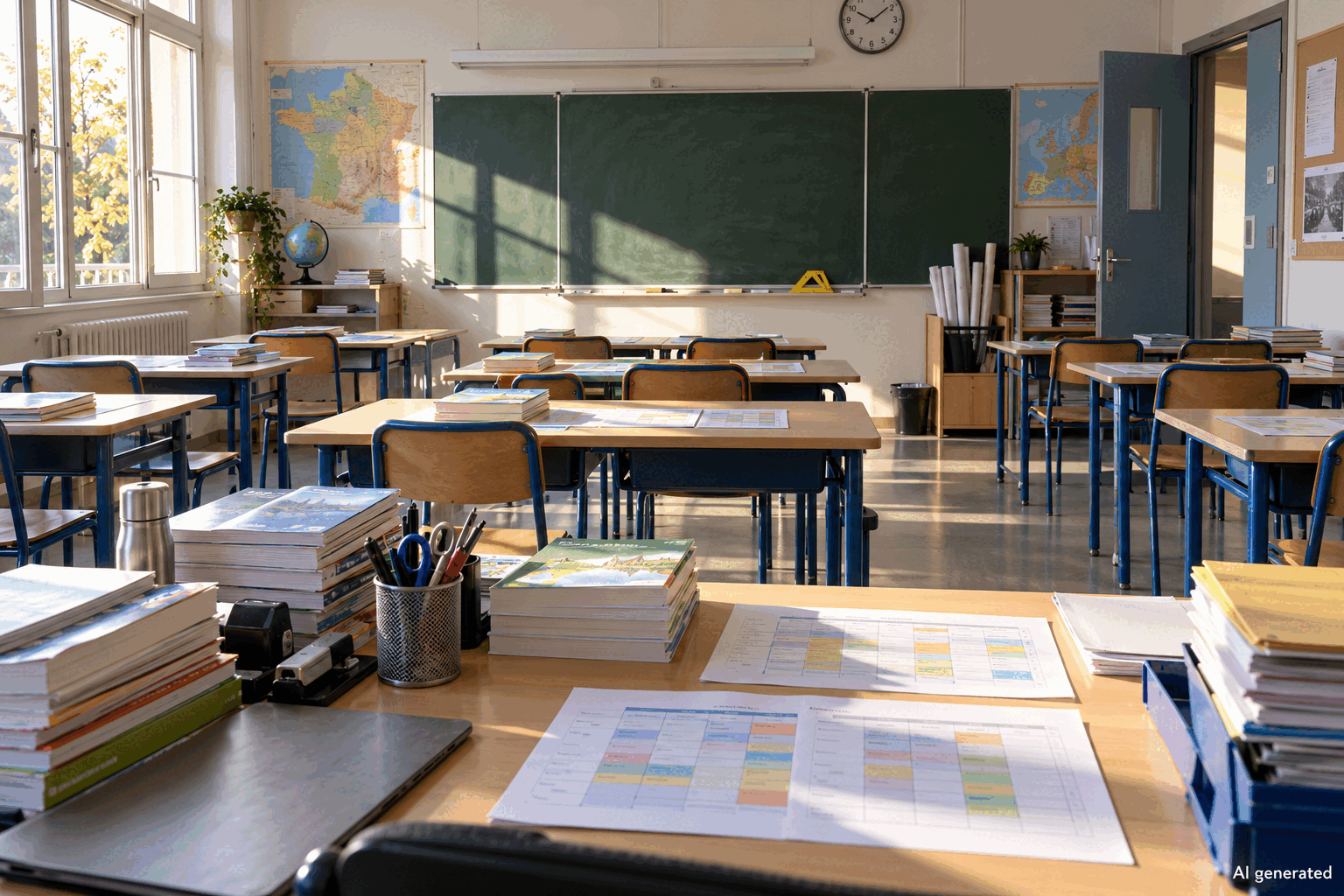
France has made its first concrete staffing concession since the school protest movement began. Education Minister Edouard Geffray said the ministry was urgently contacting about 3,000 fully qualified teachers who had not yet started work and could be sent to schools with the most pressing shortages. Reuters reported that the measure took effect immediately and would cost several tens of millions of euros.
The announcement is a material development after weeks of disruption, not a complete settlement. On 9 October, the Education Ministry said 141 schools remained closed, and student and teacher unions called another nationwide strike for 13 October. Protest organisers described the staffing move as an initial victory while saying their campaign would continue.
A headline number must translate into staffed hours
The number alone does not show how much teaching time will be restored. Reuters cited ministry figures indicating that nearly 10 per cent of teaching hours in state high schools were unstaffed. The useful measures will be the subjects covered, the regions served, the time required for teachers to enter classrooms and the number of vacant hours that disappear.
Targeting also matters. The minister said deployment would prioritise schools with urgent needs, often in lower-income areas. That could narrow a gap that allows families with more resources to seek alternatives, but only if the placements match local shortages. A national total can look substantial while leaving individual schools short of mathematics, languages or special-needs support.
The staffing plan does not repair every part of the crisis
The plan arrives amid a wider dispute about buildings, safety and public finances. Associated Press reporting from a Paris high school documented complaints about leaks, insulation and pests alongside staffing concerns. Le Monde reported on 8 October that the prime minister had previously offered dialogue but no material response to demands for repairs, replacements and pay.
There is also a difference between mobilising qualified people and creating stable posts. The government has not yet published a school-by-school allocation, contract duration or retention plan. Without those details, it is too early to know whether the emergency pool will provide lasting continuity or a temporary reduction in cancelled lessons.
The next edition of this story should be driven by delivery data rather than another promise. Families and students can reasonably ask how many of the 3,000 teachers accepted assignments, when they began teaching and what happened to unstaffed hours. Until those figures are public, the plan is a significant concession whose classroom impact remains unproven.
Sources & context
Reporting and reference material used for this article. Context sources do not independently confirm every news claim.
- Reuters ↗Independent reporting, 9 October: 3,000-teacher emergency plan, immediate cost, closures and union response.
- Associated Press ↗Independent reporting, 8 October: school disruptions, building-condition complaints and protest context.
- Le Monde ↗Independent context, 8 October: the government’s earlier response, budget constraints and unresolved demands.
Written for WHIF from the linked material. This article does not claim on-the-ground reporting. Our editorial standards.