France pauses stun grenades as school protest policing faces scrutiny
A teenager's severe injury has prompted a temporary weapons suspension and intensified questions about proportionality, oversight and the government's promised education response.
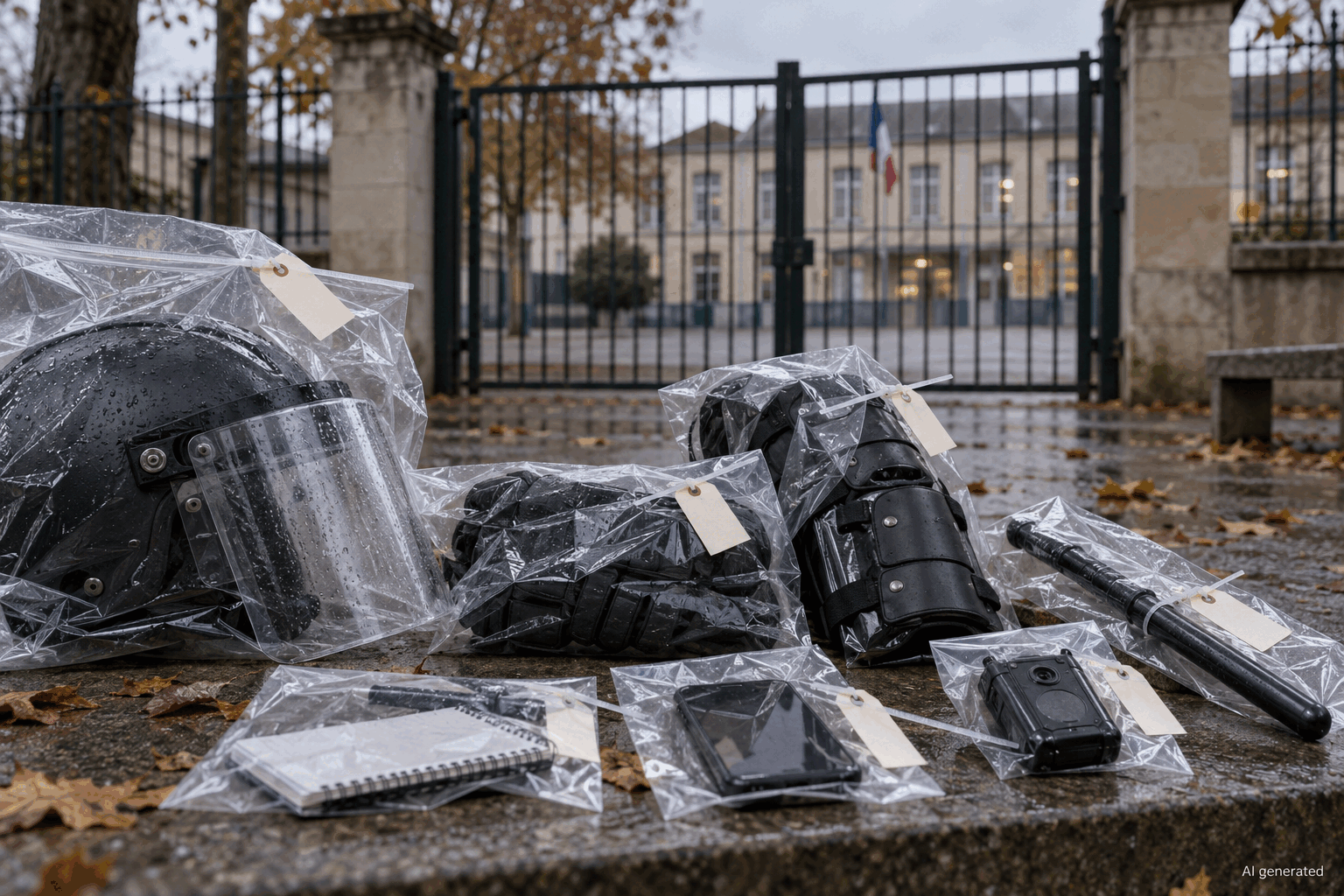
France has temporarily stopped police using EF-SON stun grenades during high school protests after a 15-year-old lost a hand in Lens on 5 October. Interior Minister Laurent Nuñez announced the suspension on 7 October while investigators establish what happened. The decision applies to this protest movement and is not yet a permanent ban.
The injury sits inside a wider dispute about how authorities have policed demonstrations led largely by minors. Nuñez told parliament that 18 internal investigations had opened into alleged officer misconduct. The government says interventions have generally been proportionate when vandalism or violence occurred. Students, unions and rights groups have challenged that account.
A weapon and its deployment rules under examination
The weapon itself is now under examination. Le Monde reports that the EF-SON entered service in 2025 and can be fired from a launcher to a range of about 80 metres. Its intended effect includes a sound level of about 160 decibels at ten metres. Those specifications explain why deployment rules and the exact trajectory in Lens matter to the investigation.
The protest movement has also created an education emergency. The Education Ministry said classes were wholly or partly suspended in 429 of France's roughly 3,700 high schools on Wednesday. The Guardian reported 215 injured students, 89 injured school staff and 761 injured officers, figures attributed to the government. Thousands of young people have been arrested since the movement expanded.
Policing scrutiny does not replace an education answer
Prime Minister Sébastien Lecornu has promised an action plan by the end of October addressing replacement teachers, school buildings and timetables. That separates two questions that can easily be blurred: whether schools have the resources students are demanding, and whether police tactics used at blockades and demonstrations were lawful and proportionate.
The suspension is therefore a precaution, not a conclusion about criminal responsibility. The Lens inquiry must determine what munition was used, how it was fired and who was responsible. Other investigations cover separate injuries. Any allegation against an officer remains subject to evidence and judicial process.
The next test is whether the government turns a weapons pause into transparent oversight while delivering a credible school plan. Publishing investigation findings, clarifying permitted uses of explosive munitions and consulting students would help answer the policing issue. Funding commitments and implementation dates will determine whether the underlying education conflict begins to ease.
Sources & context
Reporting and reference material used for this article. Context sources do not independently confirm every news claim.
- Reuters ↗Independent reporting, 7 October: suspension, Lens injury, school disruption and official response.
- Le Monde ↗Technical reporting, 7 October: EF-SON introduction, launcher compatibility, range and stated acoustic effect.
- The Guardian ↗Independent reporting, 7 October: injury figures, affected schools and the promised government action plan.
- Associated Press ↗Independent reporting, 7 October: protest policing, serious injuries, arrests and the scope of oversight investigations.
Written for WHIF from the linked material. This article does not claim on-the-ground reporting. Our editorial standards.