France’s third protest Saturday draws fewer marchers and late clashes
The 31 October marches were largely peaceful and smaller than the previous two Saturdays, before confrontations at dispersal and hundreds of arrests extended the security operation into the night.
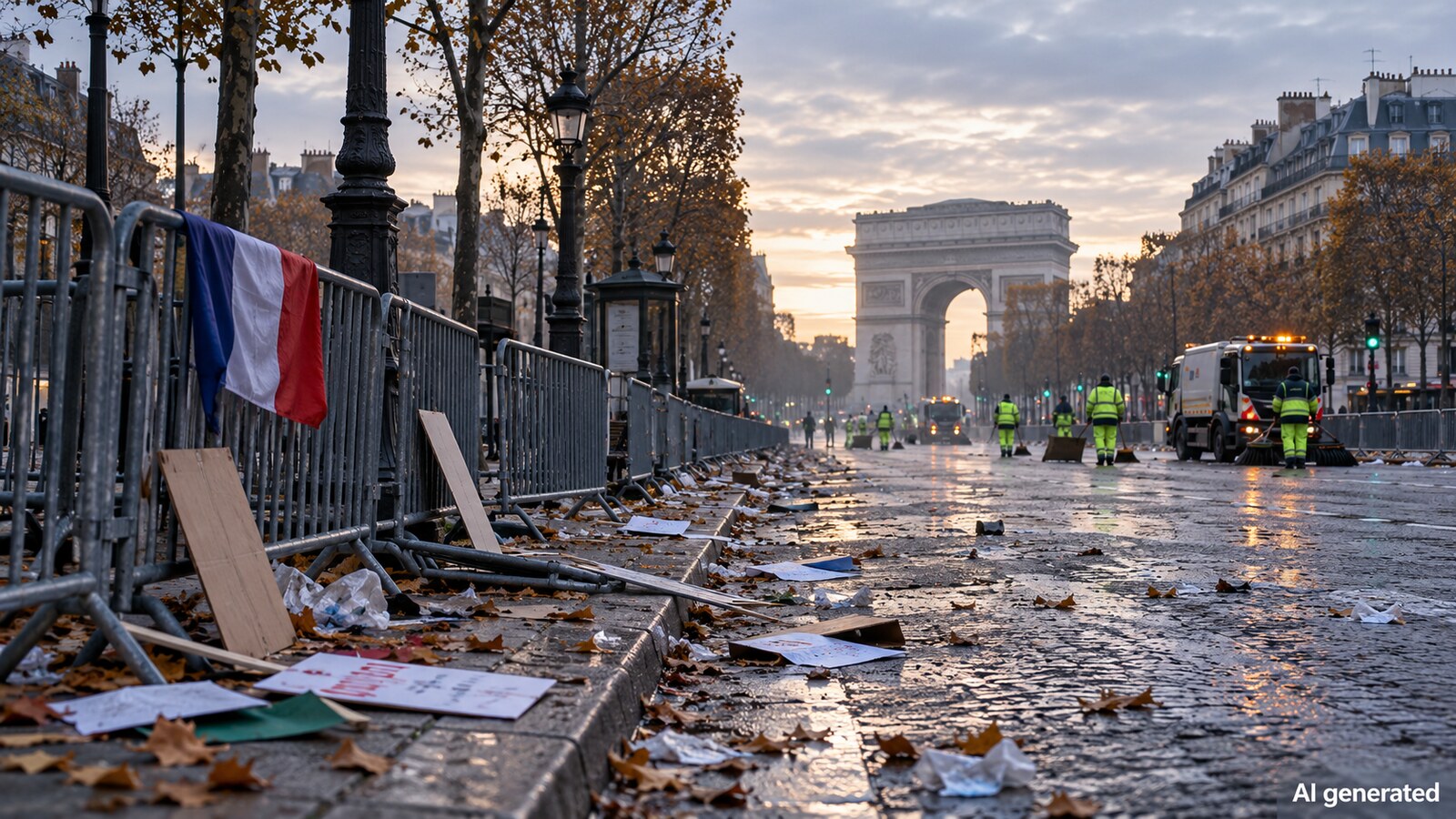
France’s third consecutive Saturday of nationwide demonstrations drew fewer people than the previous two, while the marches themselves remained largely peaceful before clashes at dispersal. The Interior Ministry counted 320,000 participants nationwide on 31 October, including 70,000 in Paris. Reuters compared that with 410,000 on 24 October and 550,000 on 17 October.
Organisers disputed the official total. Le Monde’s live coverage reported a youth coalition estimate of nearly 500,000 nationally and 200,000 in Paris. Neither side’s count is independently established, so the difference is part of the record rather than a number WHIF can resolve. The direction is clearer than the precise scale: official turnout fell from the two previous Saturdays.
Peaceful marches, then confrontations
The afternoon marches combined students, unions and some Yellow Vest participants around living costs, fuel prices, schools and public services. Reuters reported that riot police later dispersed small groups in Paris and used tear gas in Lyon and Toulouse. The Guardian likewise described approximately 150 planned demonstrations as peaceful before violence involving masked groups at the end of some routes.
Arrests continued into the evening as Halloween restrictions and partial curfews took effect. Le Monde recorded 565 arrests by 10:05 pm and five injured police officers in Paris. Those were provisional figures at a stated time, not a final national balance. Any later judicial outcome will also be separate from the fact of arrest.
A deployment with two stated aims
The security operation was unusually large. The Interior Ministry had deployed 70,000 police and gendarmes, mobile units, helicopters and drones, presenting the measures as a way to protect lawful protest while preventing looting and attacks. That statement is the government’s operational account, not independent proof that every restriction or use of force was necessary.
The result differs materially from WHIF’s morning preview. It establishes lower official turnout, largely peaceful daytime marches, isolated confrontations and a substantial arrest tally. It does not establish that demonstrators as a whole were responsible for the violence, or that every detained person will be charged.
What the outcome establishes
The next meaningful evidence will be a final Interior Ministry balance, injury and damage assessments, and court decisions arising from the arrests. Until then, the fairest description is a broad protest day that avoided a repeat of the 17 October riots but did not end calmly everywhere. Event figures remain attributed and time-stamped.
Sources & context
Reporting and reference material used for this article. Context sources do not independently confirm every news claim.
- Reuters ↗Reporting, updated 31 October 2026: turnout, comparison with earlier Saturdays and clashes at dispersal.
- Le Monde ↗Independent live reporting, 31 October 2026: organiser estimates, time-stamped arrest and injury figures, and city-by-city developments.
- The Guardian ↗Independent reporting, published 31 October 2026: peaceful daytime demonstrations and later clashes.
- French Interior Ministry ↗Primary official material, published 31 October 2026: deployment, equipment and the government’s stated policing objectives.
Written for WHIF from the linked material. This article does not claim on-the-ground reporting. Our editorial standards.