Corsica autonomy talks face a reset after the Senate rejection
The Senate rejected the constitutional bill after rewriting its central balance. The government says the vote does not end autonomy talks, but the next text will need a new political route.
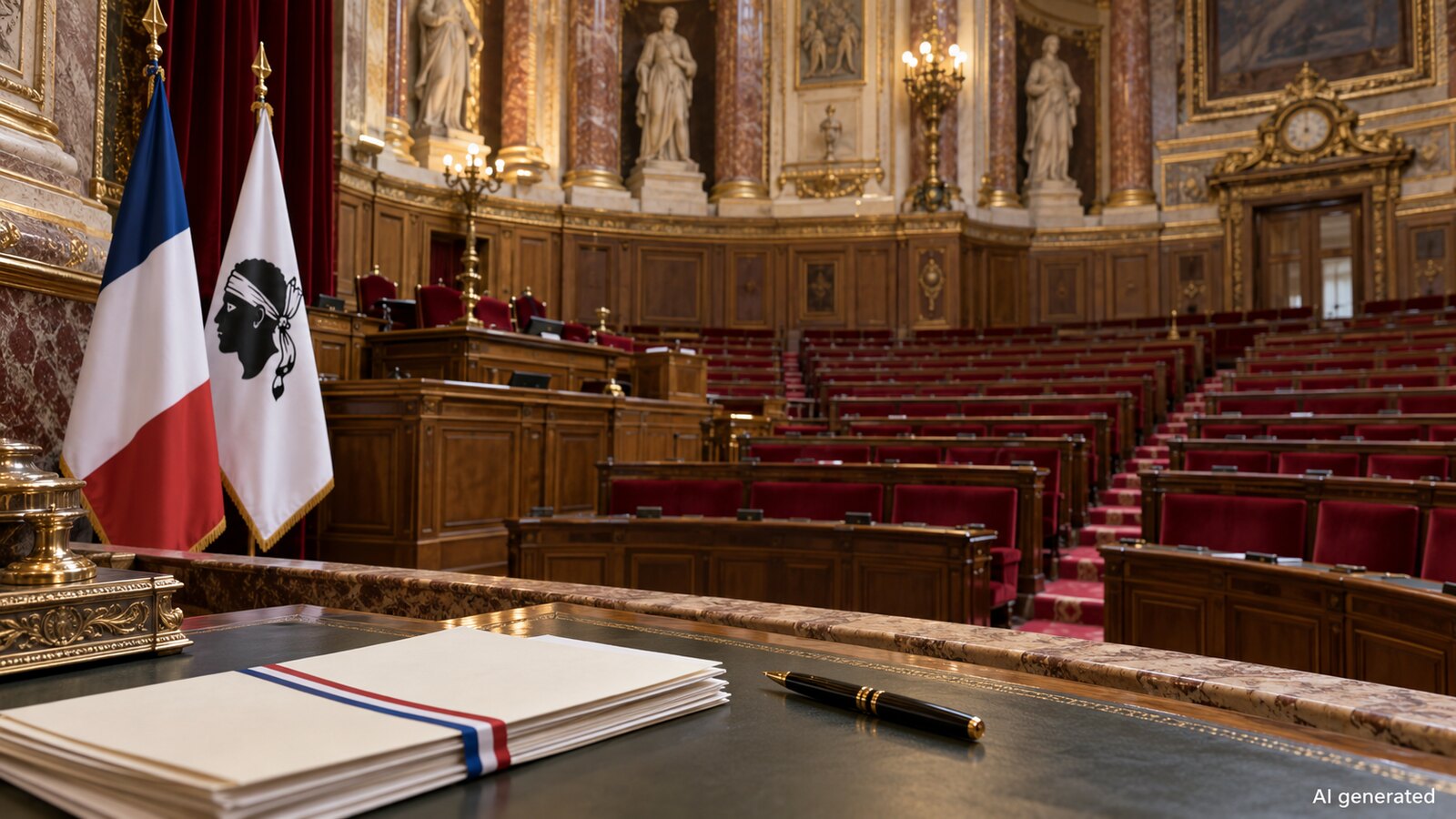
France's Senate rejected the constitutional bill on Corsican autonomy late on 26 October, stopping the text that had been adopted by the National Assembly in June from advancing in its current form. The rejection followed amendments that changed the bill before the final vote. It was a parliamentary decision on a revised text, not a referendum on Corsican opinion.
The government's response on 27 October was deliberately narrow. Territorial minister Françoise Gatel said the amended version had moved away from the balance of the Beauvau agreement and that its defeat should not be read as a rejection of autonomy itself. She promised rapid talks with Corsican elected representatives and members of both chambers to seek common wording.
That distinction does not erase the political damage. AFP reporting carried by TF1 Info described autonomist and nationalist representatives leaving the chamber, with Senator Paul-Toussaint Parigi saying his camp was withdrawing from the Beauvau process. Euronews separately reported that autonomists regarded the amended text as emptied of its substance. The government is therefore reopening talks with at least one key partner publicly stepping back.
Why the wording now controls the timetable
The Senate record shows why wording now matters more than declarations of principle. Senators adopted amendments before rejecting the bill as a whole. A constitutional revision cannot be completed while the National Assembly and Senate are working from different texts, so the immediate task is not simply to schedule another vote. It is to find language that can survive both chambers.
The original project sought to recognise an autonomous status for Corsica within the Republic and to create room for island-specific rules under constitutional safeguards. The debate has repeatedly turned on how much legislative adaptation the island should control and how firmly national lawmakers should retain the final word. Those are constitutional design questions, not just disputes about the label 'autonomy'.
Talks are promised, not an outcome
A new consultation can produce compromise, delay or another impasse. The government's statement does not set a new parliamentary timetable, and the Senate vote does not itself create an alternative text. Claims that autonomy has either been secured or permanently defeated therefore go beyond the current record.
The next measurable development will be the composition and output of the promised talks. Any replacement wording should be compared with the Assembly version, the Senate amendments and the Beauvau agreement. Until then, the process remains politically alive but procedurally reset.
Sources & context
Reporting and reference material used for this article. Context sources do not independently confirm every news claim.
- French territorial ministry: response to the Senate rejection ↗Primary reporting material: government position and promised consultation, published 27 October 2026.
- French Senate: recorded votes on the constitutional bill ↗Primary parliamentary record: amendments and final rejection on 26 October 2026.
- TF1 Info with AFP: autonomist response to the vote ↗Independent reporting: chamber reaction and withdrawal announced by autonomist representatives, published 27 October 2026.
- Euronews: political consequences for the autonomy process ↗Independent reporting and context: response to the amended bill, published 27 October 2026.
Written for WHIF from the linked material. This article does not claim on-the-ground reporting. Our editorial standards.