Southern France begins a difficult cleanup after fatal floods
Four deaths and disrupted transport show the human cost of the Mediterranean episode. The next Atlantic storm moved the risk north-west.
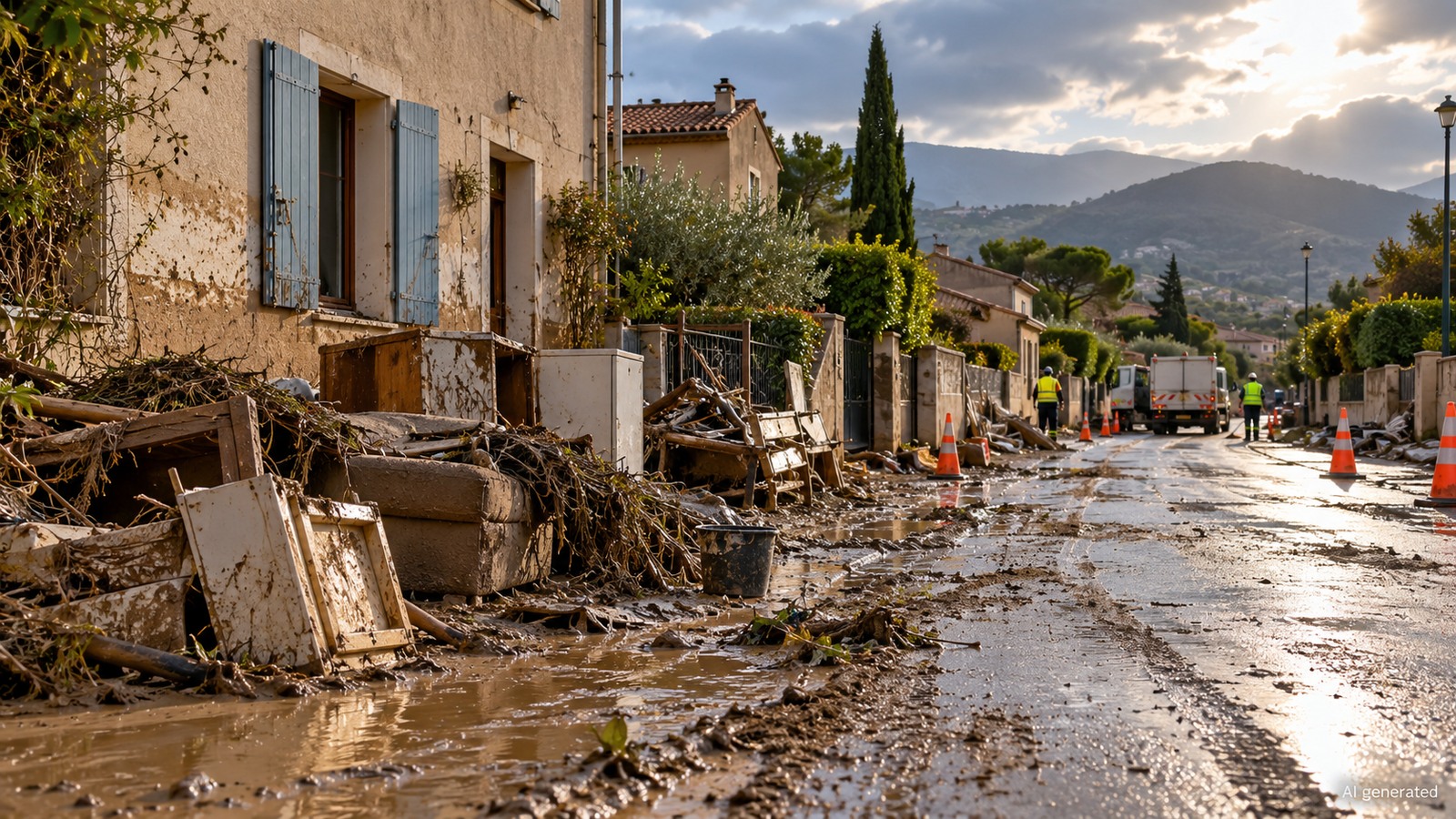
Communities in southern France are clearing mud and debris after storms and flash floods killed at least four people. Reuters reported emergency shelter use in Mouriès and Saint-Martin-de-Crau, one injury and disruption to roads and rail lines. The death toll is an official minimum reported on 22 October, not an estimate of the event's wider health or economic impact.
The Local, citing the Bouches-du-Rhône prefecture, reported three deaths in that department and one serious injury. Two women, aged 26 and 86, were found in a flooded cellar at Lançon-Provence, while a 75-year-old man died after his car was swept away near Istres. The report said Bouches-du-Rhône, Var and Corsica faced major cleanup operations.
The warning matched an exceptional episode
Météo-France had warned that the Mediterranean episode was moving east from Hérault and Gard into Provence-Alpes-Côte d'Azur and Corsica. Its 20 October bulletin described exceptional rainfall intensity, with risks of flooding, hail, violent gusts and rotating storms. An earlier bulletin had forecast local hourly totals of 60 to 80 millimetres in Gard and Hérault.
Those warnings explain the hazard, but they do not remove local exposure. Fast runoff can overwhelm roads, basements and small watercourses before a regional rainfall total looks extraordinary. Cellars and vehicles become especially dangerous because water can rise quickly and block escape routes. The fatalities should not be reduced to weather statistics.
Recovery and a moving forecast
The forecast also shifted geographically. Reuters said conditions were expected to ease in the south while Storm Austen approached north-western France with strong winds. That means recovery work and new preparedness were happening at the same time in different parts of the country. Residents should use live Météo-France and Vigicrues notices because warning colours and affected departments change.
The immediate public record is still incomplete. Damage assessments, rail restoration and municipal costs will take longer than the first emergency bulletin. Any later attribution to climate change will require event-specific analysis; this article does not infer a quantified climate contribution from one storm. What is established is the exceptional intensity described by forecasters and the confirmed human losses reported by authorities.
Source access note: Reuters and The Local provided independent reporting on fatalities, shelters, transport and cleanup. Two dated Météo-France bulletins were consulted as primary forecast material for the episode's path and intensity. They describe successive phases of one weather event and are used for chronology, not counted as independent news corroboration.
Sources & context
Reporting and reference material used for this article. Context sources do not independently confirm every news claim.
- Reuters: four dead as storms hit southern France ↗Reporting: confirmed toll, shelters, transport disruption and the next Atlantic storm, 22 October
- Météo-France: exceptional rain in Provence and Corsica ↗Primary forecast: eastward development, hazards and public-warning tools, 20 October
- The Local France: authorities describe deaths and cleanup ↗Independent reporting: prefecture account, affected departments and recovery, 22 October
- Météo-France: Hérault and Gard episode begins ↗Primary forecast context: timing and possible hourly rainfall totals, 19 October
Written for WHIF from the linked material. This article does not claim on-the-ground reporting. Our editorial standards.