Data-centre demand pushes Schneider Electric to raise its outlook again
Record quarterly revenue and stronger 2026 targets show how AI infrastructure is reshaping the French industrial group, while execution and investment risks remain.
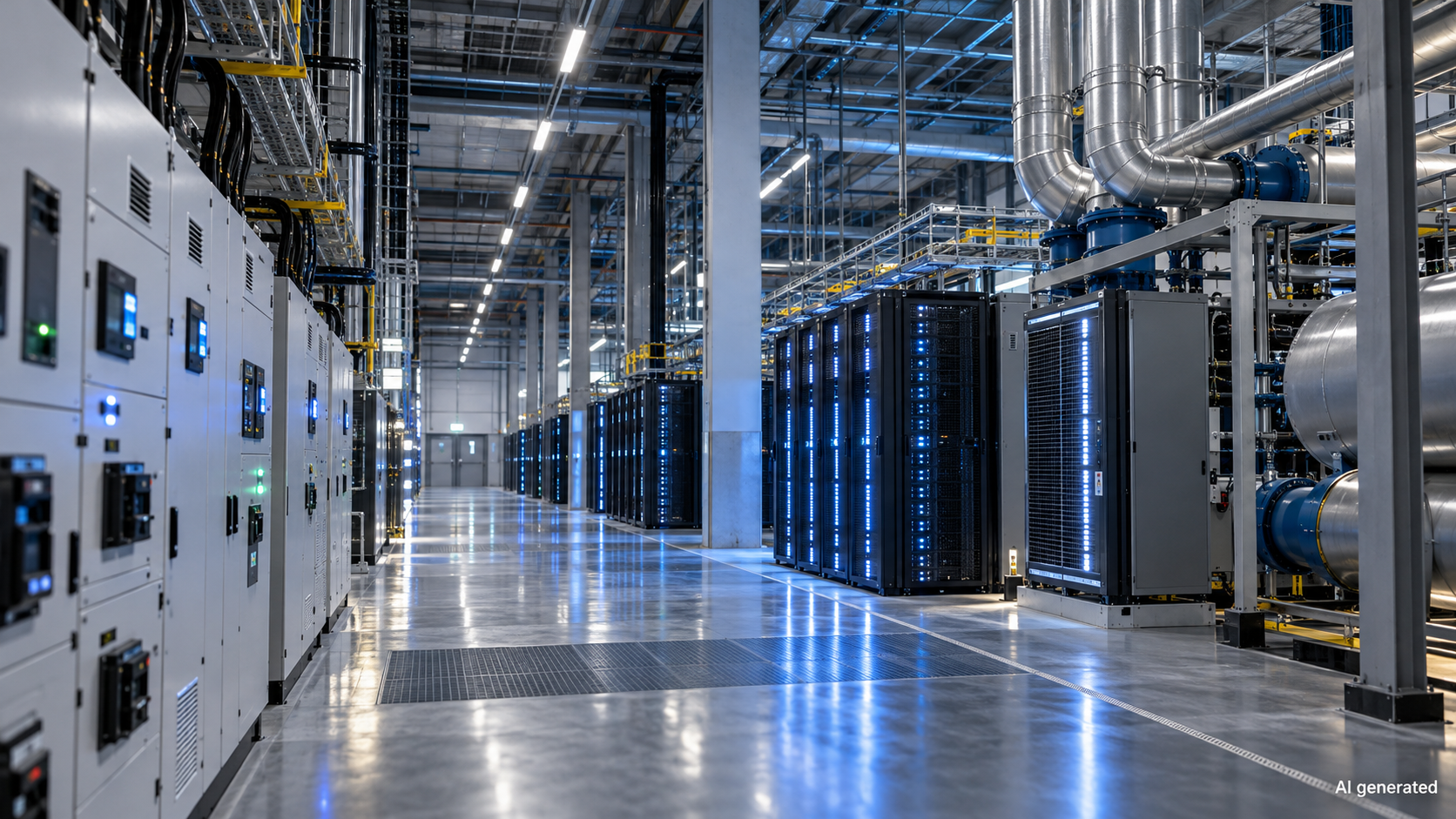
Schneider Electric raised its 2026 financial targets for the second time this year on 16 October after reporting record third-quarter revenue of €11.46 billion. The French energy-management group now expects organic revenue growth of 12% to 14%, compared with its previous range of 10% to 13%.
The company also lifted its forecast for organic growth in adjusted earnings before interest, taxes, depreciation and amortisation to 18% to 21%, from 14% to 19%. These are full-year company forecasts, not guaranteed results. Reuters said the quarterly revenue figure exceeded the €11.13 billion average in the company-provided analyst consensus.
The AI build-out is becoming an electrical-infrastructure story
Data centres were the clearest driver. Schneider said demand in that market grew at a triple-digit rate during the quarter, while the overall order backlog reached another record. Its equipment sits behind the visible computing layer, supplying power distribution, cooling, racks and automation for facilities built by hyperscalers and regional operators.
The growth was not limited to North America. Schneider said China and East Asia led regional expansion in the quarter, supported by sales to large technology customers and domestic colocation providers. That geographic spread matters because it reduces the story to more than a single US construction cycle, although a common dependence on AI investment remains.
A raised forecast still carries execution risk
The revised outlook follows a strong first half in which the company had already upgraded its targets. It also arrives soon after Schneider agreed to buy US industrial-software company PTC. The acquisition is a separate transaction, still subject to approvals, and should not be treated as part of third-quarter organic revenue.
Strong orders do not remove the risks. Building data centres requires heavy capital expenditure, reliable electricity and complex supply chains. The Wall Street Journal noted that raw-material inflation and tariffs remain pressures. A slowdown in AI infrastructure spending or delays in customer projects could affect how quickly Schneider converts its backlog into revenue.
The next test is whether the group can deliver its raised range through year-end without sacrificing margins or service quality. For France, the results illustrate an industrial side of the AI boom that is less visible than software models: power systems, cooling and automation have become central to the economics of computing infrastructure.
Sources & context
Reporting and reference material used for this article. Context sources do not independently confirm every news claim.
- Schneider Electric ↗Primary company release, 16 October: quarterly revenue, regional performance and revised 2026 targets.
- Reuters ↗Independent reporting, 16 October: analyst consensus, demand growth and the role of data-centre infrastructure.
- The Wall Street Journal ↗Independent reporting, 16 October: outlook changes, quarterly comparison and cost pressures.
- Schneider Electric half-year results ↗Primary context, 30 July: previous outlook upgrade and first-half regional and segment performance.
Written for WHIF from the linked material. This article does not claim on-the-ground reporting. Our editorial standards.