A small rise in French housing permits does not yet make a recovery
September brought 31,428 housing authorisations, up 1.2 percent from August. Starts fell and the twelve-month total remained well below its five-year benchmark.
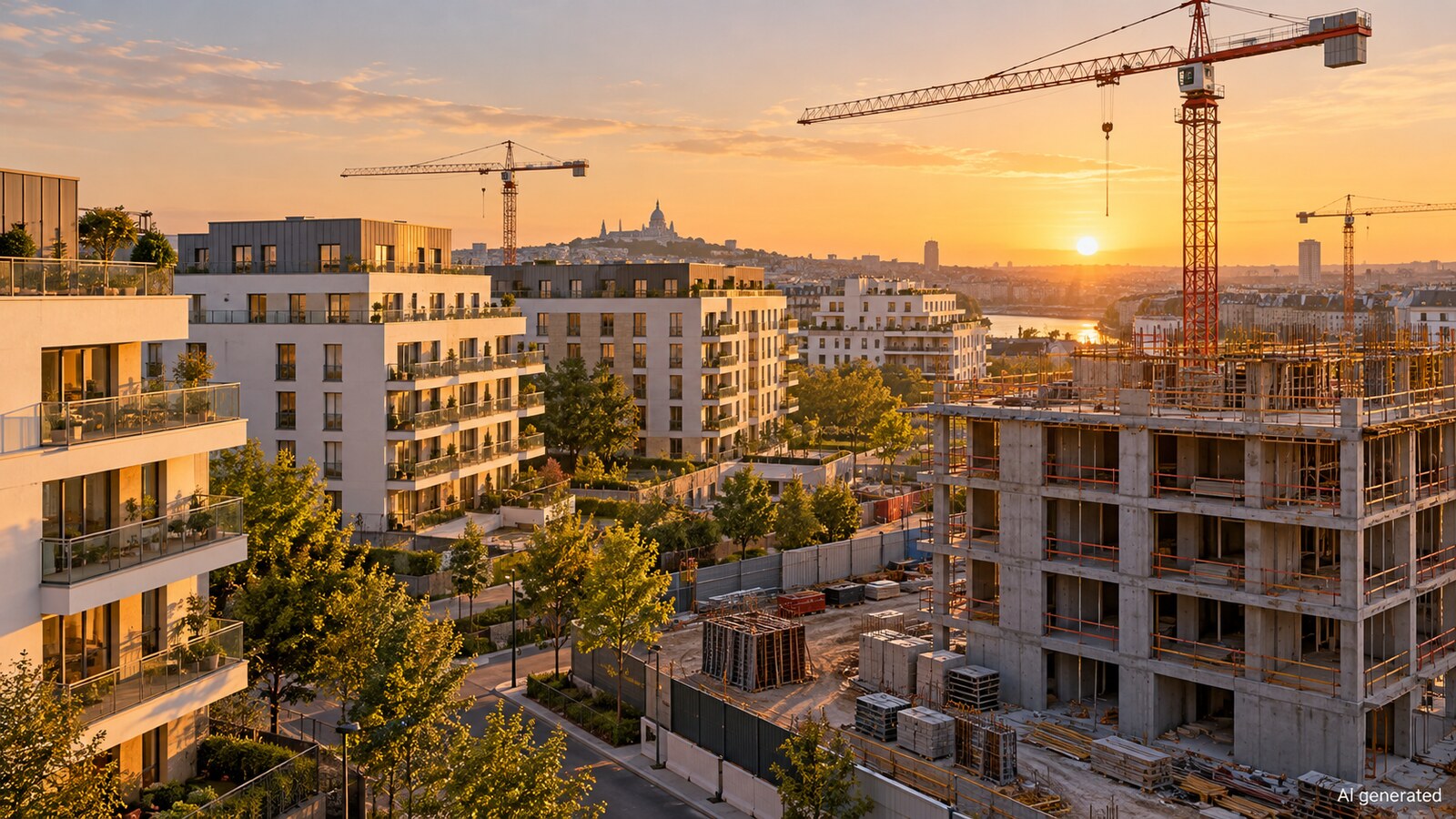
France authorised 31,428 homes for construction in September, a seasonally adjusted increase of 1.2 percent from August. The monthly rise was the second in a row, but it was uneven: permits for flats increased 5.3 percent while authorisations for individual homes fell 5.5 percent, according to the government's SDES statistical service.
Ground-breaking moved in the opposite direction. The ministry estimates that 28,682 homes were started in September, down 3.8 percent from August after a strong increase the month before. Starts are estimates and can be revised as local planning records are updated, so a single monthly movement should not be read as a definitive turn.
The twelve-month gap remains
The longer comparison remains weak. From October 2025 through September 2026, 377,834 homes were authorised, 9.1 percent below the average for the previous five years. The first nine months of 2026 did produce a monthly permit average 1.4 percent above the whole-year average for 2025, which shows some stabilisation without restoring earlier volumes.
Independent trade coverage from Batinfo described the recovery as fragile and reported the same split between permits and starts. The French Building Federation's September outlook was more cautious about 2027, citing weaker sales of detached homes and continued declines in developer sales. Its position represents the industry and should be read as advocacy as well as market evidence.
Developers are still cautious
A separate INSEE survey published in October found that property developers' expectations for future housing starts had deteriorated sharply, while their assessment of buyers' personal contributions reached its lowest level since January 2015. That survey measures sentiment rather than completed activity, but it helps explain why a modest rise in permits has not translated into confidence.
Permits, starts and completions answer different questions. A permit shows administrative approval, not certainty that financing is secured or construction will begin. Starts are closer to current activity but remain provisional. Completions, which affect the available housing stock, arrive later. Treating the September permit number as delivered homes would therefore overstate its immediate effect.
What would confirm a recovery
The next test is whether collective-housing permits convert into starts over several months and whether the weakness in individual construction eases. For now, September offers a narrow positive signal inside a market that remains below its recent benchmark. It is evidence of movement, not yet evidence of a durable rebound.
Sources & context
Reporting and reference material used for this article. Context sources do not independently confirm every news claim.
- SDES: housing construction results through September 2026 ↗Primary statistical source: permits, starts, sector split and methodology, published 28 October 2026.
- INSEE: October property-development outlook ↗Primary survey context: developer expectations and buyer-finance conditions, published 23 October 2026.
- Batinfo: permits rise while starts fall ↗Independent trade reporting: corroboration of September movements, published 28 October 2026.
- French Building Federation: September 2026 outlook ↗Industry context: sales pipeline and 2027 outlook, published September 2026; treated as a sector position.
Written for WHIF from the linked material. This article does not claim on-the-ground reporting. Our editorial standards.