Saft moves solid-state batteries from research into a Bordeaux production line
France's first multi-technology solid-state battery line targets aviation and space, but pilot capacity is not the same as mass-market scale.
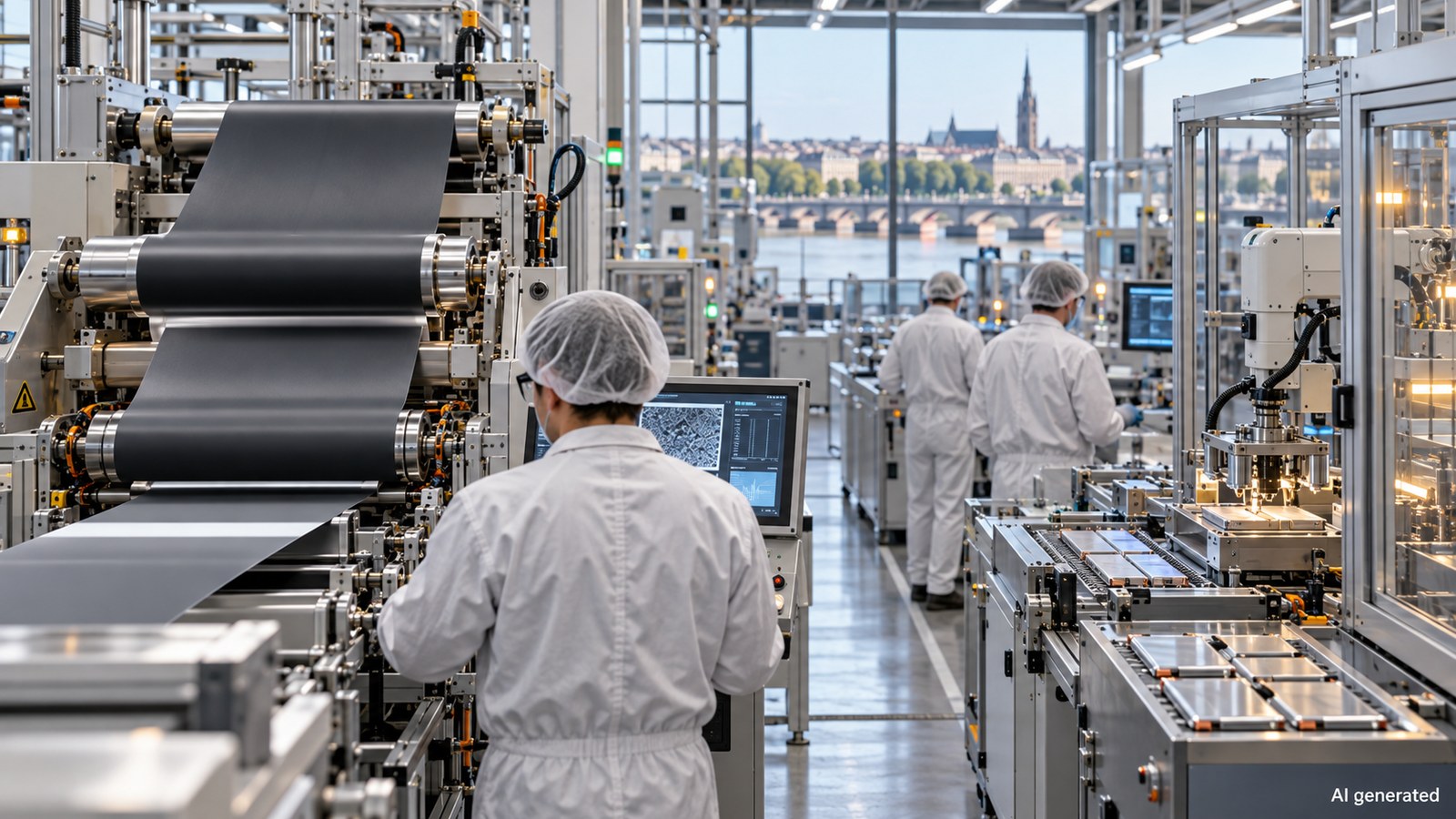
Saft inaugurated new solid-state battery production lines at its Bordeaux site on 19 October, giving the TotalEnergies subsidiary capacity to develop and make cells with sulphide and polymer electrolytes at room temperature. The company describes the facility as the first of its kind in France.
Solid-state batteries replace the liquid electrolyte used in conventional lithium-ion cells with a solid material. Saft says its designs can deliver energy density up to 50% higher and improved safety. It also says the dry-electrode stage can cut carbon emissions from that production step by as much as 40%. These are company performance claims, not independent certification of a finished commercial product.
Aerospace is the first proving ground
The practical focus is aviation and space, where weight, volume and safety carry unusually high value. Four days before the inauguration, Saft said it had delivered semi-solid cells to Safran for evaluation in future electric and hybrid aircraft architectures. Evaluation is a development milestone, not approval for flight or a confirmed aircraft programme.
The line matters because battery competition is increasingly about manufacturing knowledge as well as laboratory chemistry. Producing both sulphide and polymer systems allows engineers to compare routes on shared industrial equipment. Yet Saft has not disclosed annual cell capacity, unit cost or a date for full-scale commercial output in the material reviewed by WHIF.
A pilot line does not settle the scale question
Bordeaux already combines manufacturing and research. Saft's earlier EnerShift project placed a 9 MWh industrial storage system on the same site, while company material says the plant supports rail and aviation battery production. The new line therefore adds a technology platform to an established industrial base rather than creating a mass factory from scratch.
China's lead in advanced battery manufacturing remains the competitive backdrop highlighted by French trade reporting. A French pilot line can protect skills, shorten testing cycles and give aerospace partners local access. It cannot by itself close gaps in materials supply, yields, capital spending or volume production.
The test now moves from inauguration to evidence. Useful milestones will include independently verified performance, safety qualification, repeatable production yields and customer programmes that move beyond evaluation. Until then, Bordeaux represents credible industrial capacity and an option for future applications, not proof that solid-state batteries are ready for everyday vehicles.
Sources & context
Reporting and reference material used for this article. Context sources do not independently confirm every news claim.
- Saft ↗Primary company announcement, 19 October: line configuration, claimed performance, process emissions and intended applications.
- L'Usine Nouvelle ↗Independent French industrial reporting, 19 October: inauguration, competitive context and the distinction between the line and broader Asian scale.
- Saft and Safran ↗Primary partnership update, 15 October: delivery of semi-solid cells for aviation evaluation and the programme's development stage.
- Saft Bordeaux site background ↗Context source, 24 September 2025: the site's existing research, rail, aviation and industrial storage functions.
Written for WHIF from the linked material. This article does not claim on-the-ground reporting. Our editorial standards.