Recovered Renoirs now move from police evidence to conservation
DNA and vehicle tracking helped recover two paintings stolen in Cagnes-sur-Mer, but examination and the criminal inquiry continue before any museum return.
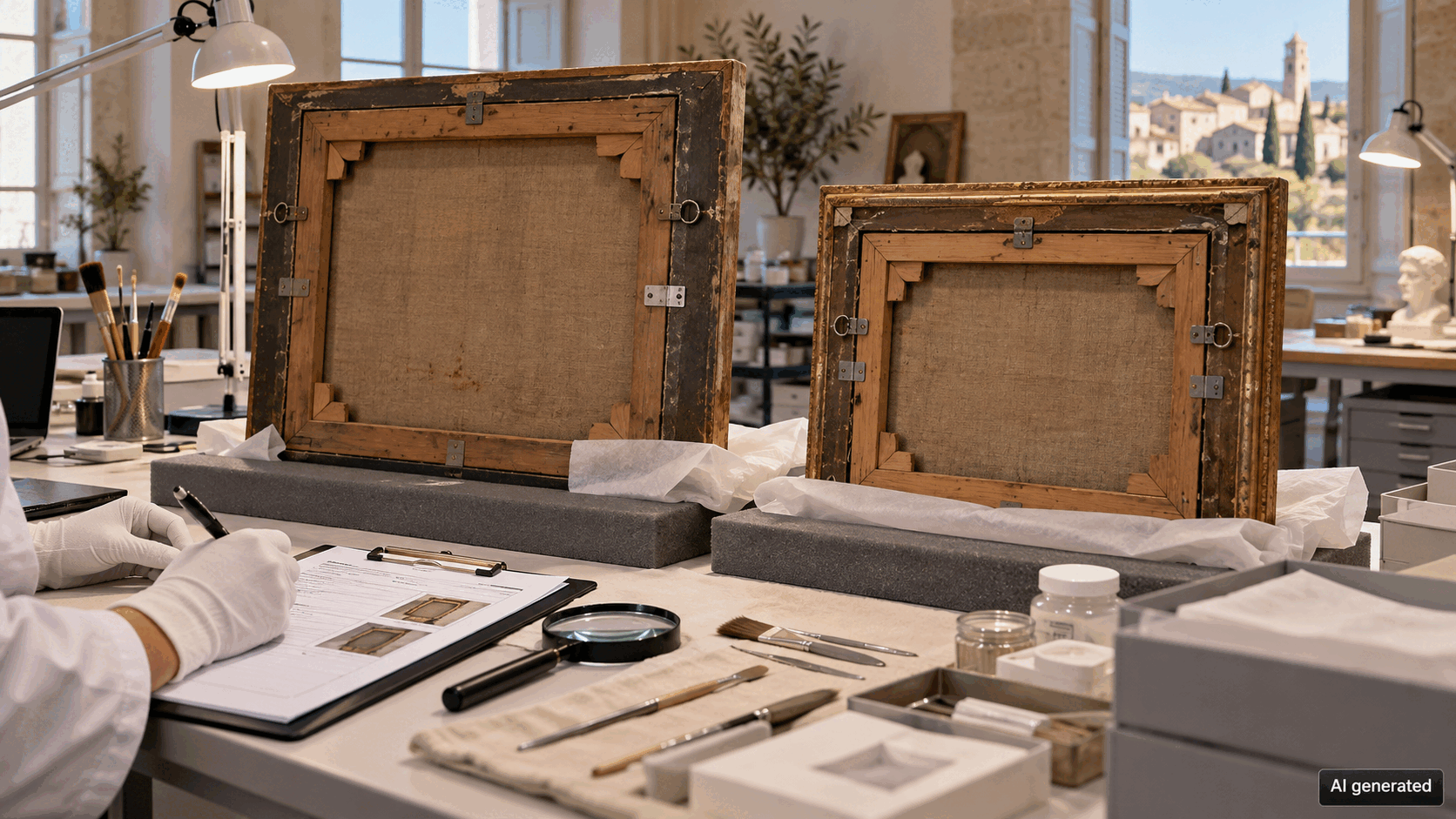
Two Renoir paintings stolen from the Musée Renoir in Cagnes-sur-Mer on 8 September have been recovered and transferred to a conservation centre in Marseille for examination. The Culture Ministry identified them as Portrait de Madame Colonna Romano and Femme au puits, both on deposit from the Musée d'Orsay.
The works were among four paintings taken during the break-in. An alarm caused the thieves to abandon two, while the other pair remained missing until investigators found them concealed behind a removable wall near a staircase, according to Associated Press. The recovered works were valued together at about €4.2 million in the prosecutor's account.
DNA and tracking narrowed the inquiry
The investigation combined DNA recovered from material left at the museum with vehicle-tracking and surveillance. Four men received preliminary charges in the case, AP reported. Reuters had earlier reported six arrests during the operation. Arrest and preliminary charge figures describe different stages of the inquiry, and none establishes guilt before trial.
Investigators also suspect that another theft may have been under preparation after monitoring one suspect near the Fondation Maeght in Saint-Paul-de-Vence. That point is an allegation within an active investigation, not proof that the foundation was definitely selected or that a second offence would have occurred.
Recovery begins a conservation process
Recovery is not the same as immediate redisplay. The Culture Ministry said specialists at the Centre interdisciplinaire de conservation et de restauration du patrimoine in Marseille would examine the works before their return. Condition reports can identify damage to paint, supports and frames, as well as changes caused by handling or storage.
The case also renews a wider museum-security question. Small and regional institutions hold nationally important works, often in historic buildings that are harder to secure than purpose-built galleries. A fast alarm helped limit this theft, but the cut fence and window entry showed how perimeter weaknesses can still expose a collection.
For Cagnes-sur-Mer, the next milestone is a documented conservation decision and a safe return plan. For the justice system, it is a case built on admissible evidence rather than public relief. The paintings have been found. Their physical condition and the defendants' responsibility remain separate matters to establish.
Sources & context
Reporting and reference material used for this article. Context sources do not independently confirm every news claim.
- Associated Press ↗Independent reporting, 12 October: DNA, vehicle tracking, hiding place, valuation and preliminary charges.
- Reuters ↗Independent reporting, 9 October: recovery, arrests and the original museum break-in.
- French Culture Ministry ↗Primary source, 12 October: work identification, ownership and transfer to Marseille for conservation examination.
- The Art Newspaper France ↗Independent specialist context, 12 October: museum return process and cultural significance.
Written for WHIF from the linked material. This article does not claim on-the-ground reporting. Our editorial standards.