Sixteen bear cubs show growth and genetic risk in the Pyrenees
Nine litters have been detected on the French side in 2026. Monitoring also keeps the population's low genetic diversity in view.
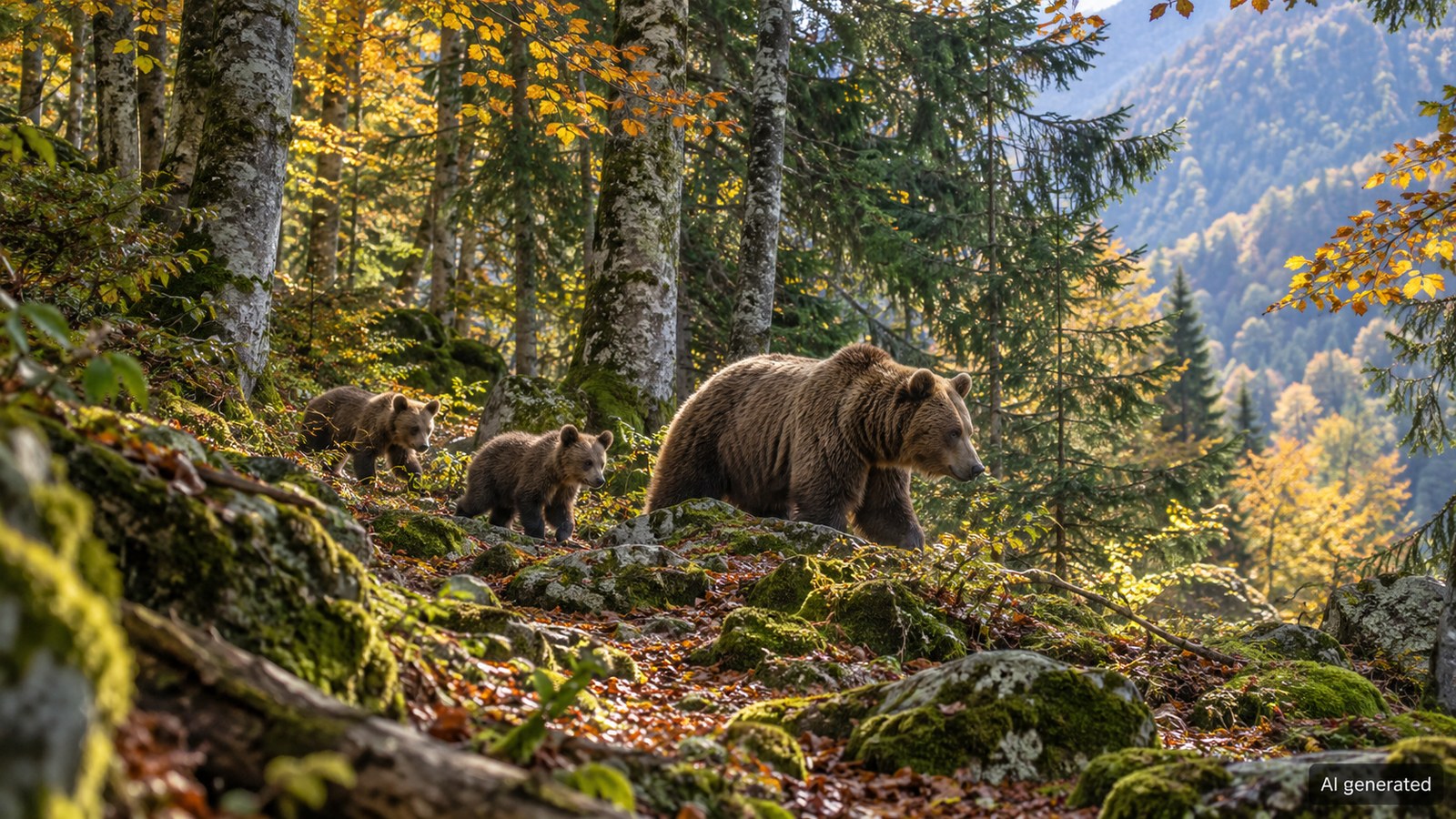
At least nine brown-bear litters containing 16 cubs have been detected on the French side of the Pyrenees in 2026. The count comes from the Office français de la biodiversité's October field bulletin and was reported by Le Monde on 20 October. It is a minimum based on confirmed observations, not a complete census taken at one moment.
The OFB's Brown Bear Network collected 345 indirect signs across four French departments during August and September. Twenty-two survey routes yielded 61 signs, while 26 automatic cameras produced 96 photo and video sequences. Recorded locations included Laruns, Moncaup and Fos, where mothers and cubs appeared on camera.
What the cameras and samples show
Those observations show successful reproduction across parts of the range, including the western population centre in Béarn. Preliminary DNA analysis of hair and scat also identified movements by young males between population areas. Such dispersal can matter because isolated groups have fewer opportunities to exchange genes.
The encouraging birth count does not settle the population's long-term health. Le Monde reported an estimate of nearly 130 bears across the Pyrenees but cited specialists who say the genetically effective population is much smaller. Its account linked inbreeding to fewer cubs per litter, lower survival and shorter dispersal distances.
More animals do not erase genetic risk
Historical comparison needs care. Le Monde reported at least 22 cubs from 13 litters across the whole range in 2024. The current 16-cub figure concerns confirmed 2026 detections on the French side at this stage of monitoring. Different dates and geographic scopes make a simple rise-or-fall comparison misleading.
The monitoring system combines field signs, camera records and genetics because no single method captures every animal. A camera sequence confirms presence at a place and time, while DNA can help establish identity and relatedness. Both can miss individuals. The OFB therefore publishes minimum detections and later annual estimates with uncertainty.
This article treats the new cub count as evidence of reproduction, not proof that conservation risks are resolved. The OFB bulletin is the primary field source; Le Monde supplies current independent reporting and scientific context, while its April 2025 report provides an explicitly historical baseline on population estimates, livestock attacks and low genetic diversity.
Sources & context
Reporting and reference material used for this article. Context sources do not independently confirm every news claim.
- OFB: L'Écho des Tanières, August–September 2026 ↗Primary field source: signs, camera records, locations and issue date
- Le Monde: 16 cubs and continuing inbreeding risk ↗Reporting: current count, genetic context and attributed expert analysis, 20 October
- Le Monde: 2024 bear-population baseline ↗Historical context: 2024 range-wide count, uncertainty and livestock impacts
Written for WHIF from the linked material. This article does not claim on-the-ground reporting. Our editorial standards.