H5N1 farm outbreak tests France's new high-alert rules
Authorities reported the virus at a Pas-de-Calais poultry farm, where 80 birds died and the remainder of a 4,300-bird flock was culled.
France has reported a highly pathogenic H5N1 avian-influenza outbreak at a poultry farm in Pas-de-Calais. The notification submitted to the World Organisation for Animal Health said 80 of the farm's 4,300 birds died and the remaining birds were culled.
Reuters reported that the outbreak began on 19 November, one day before France's national high-risk classification took effect. The timing does not prove that the new rules failed: the measures are intended to reduce future introduction and spread, and an infection can be present before illness is detected.
A material update after the national alert
The Agriculture Ministry's situation page recorded six French outbreaks in the current season before this new notification: three in commercial holdings and three in backyard or captive birds. The Pas-de-Calais report is therefore a material development from WHIF's 20 November article about the national alert.
High-risk measures include housing or netting birds in covered settings, stronger controls on gatherings and transport, and reinforced cleaning and surveillance. The exact obligations depend on the holding and activity. Farmers and private keepers should follow current ministry and prefectural instructions rather than infer rules from a news summary.
An animal outbreak is not a food-safety warning
The outbreak is an animal-health event. French authorities and WOAH say properly handled poultry meat and eggs are not a route of avian-influenza transmission to consumers. Rare human infections have generally involved close contact with infected birds or heavily contaminated environments.
The official farm notification establishes deaths and culling, but it does not by itself identify the route by which the virus reached the holding. Wild-bird migration, movements, equipment and other exposures require epidemiological investigation before any cause can be assigned.
The route of infection is not yet established
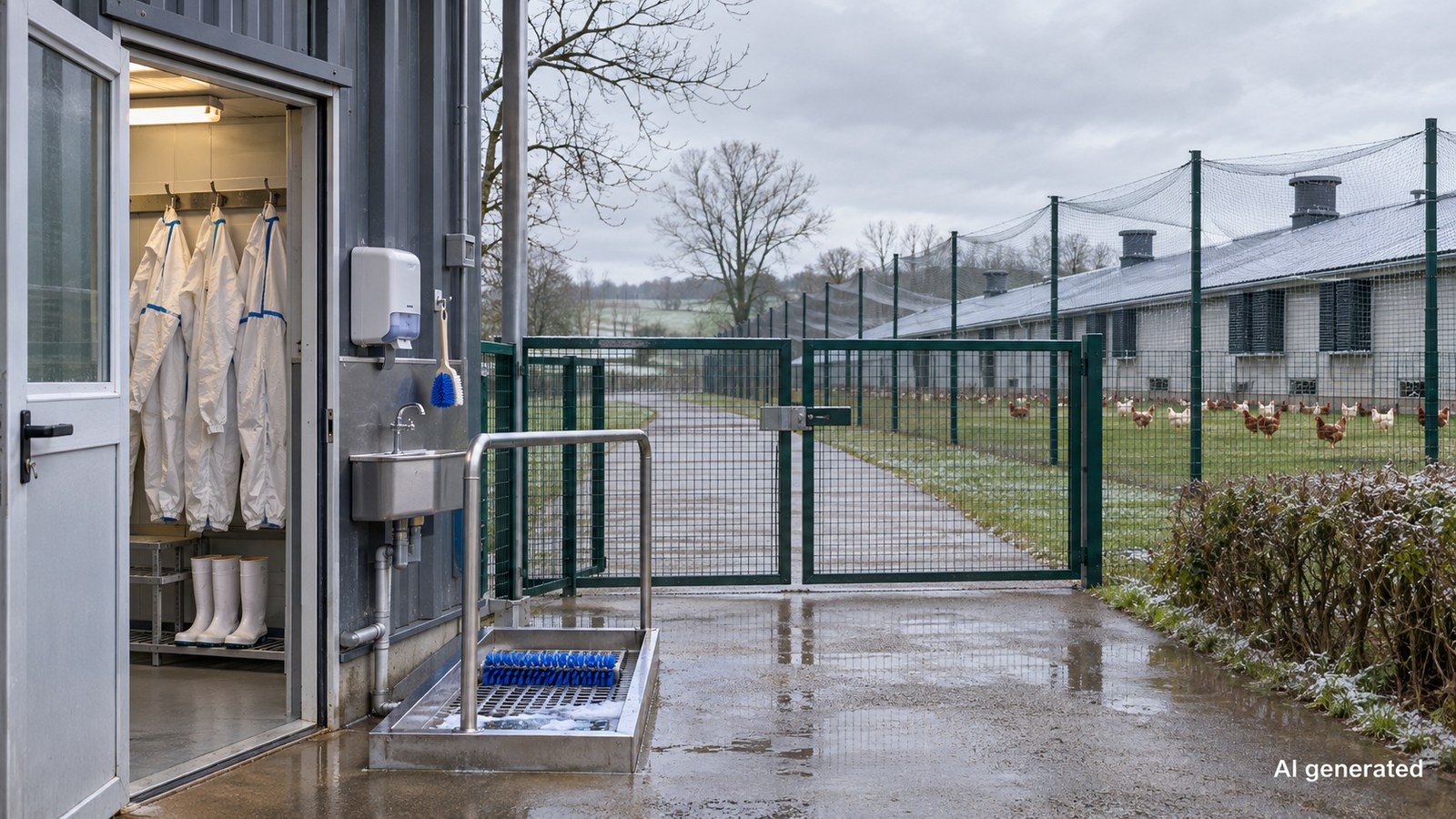
The next useful indicators are linked-farm surveillance, any protection-zone measures and the ministry's updated national count. The accompanying image is an invented biosecurity entrance with healthy birds, not a photograph of the affected farm, its flock, a culling operation or a named location.
Sources & context
Reporting and reference material used for this article. Context sources do not independently confirm every news claim.
- Reuters ↗Independent reporting, published 23 November 2026: farm notification, flock size, deaths, culling and timing.
- WAHIS, World Organisation for Animal Health ↗Primary international animal-health database, consulted 24 November 2026: French veterinary notification and outbreak status.
- French Agriculture Ministry ↗Primary national situation page, updated 20 November 2026: current-season baseline, high-risk status and control measures.
- Pas-de-Calais prefecture ↗Primary local guidance, updated November 2026: biosecurity duties, reporting instructions and food-consumption context.
Written for WHIF from the linked material. This article does not claim on-the-ground reporting. Our editorial standards.