French heat alerts are linked to lower mortality
A nationwide study of nearly 2.5 million deaths found the strongest association among people aged 85 and over, while repeated alerts appeared less effective.
France's heat-health warning system is associated with lower all-cause mortality on alert days, according to a nationwide study published on 24 November in Environmental Health Perspectives. The largest estimated reduction was among people aged 85 and over.
Researchers analysed 2,462,651 deaths across 96 metropolitan departments during the summers of 2004 to 2022. They matched orange or red alert days with non-alert days in the same place and season that had similar temperatures, seeking to isolate the additional effect of triggering the warning.
The strongest estimate concerns the oldest group
For adults aged at least 85, mortality was estimated to be 3.70 percent lower on alert days, with a 95 percent confidence interval from 1.40 to 5.94 percent lower. The study also found lower mortality in most age and sex groups, though estimates differed between them.
This is a quasi-experimental association, not a randomised trial. An alert activates several local actions, including public messages, outreach to vulnerable residents and preparedness in care facilities. The analysis cannot identify which component caused the observed difference.
Repeated warnings may lose attention
The estimated benefit weakened during successive alert episodes in the same summer. Researchers suggest public attention may be stronger for the first warning, but differences in timing, pollution and the characteristics of later heat episodes are other plausible explanations.
The dataset contained 4,422 departmental alert days, including 4,225 orange and 197 red days. Alerts became much more frequent after 2015, reaching more than 800 departmental alert days in both 2019 and 2022, which increases the importance of avoiding warning fatigue.
An alert reduces risk, not the heat itself
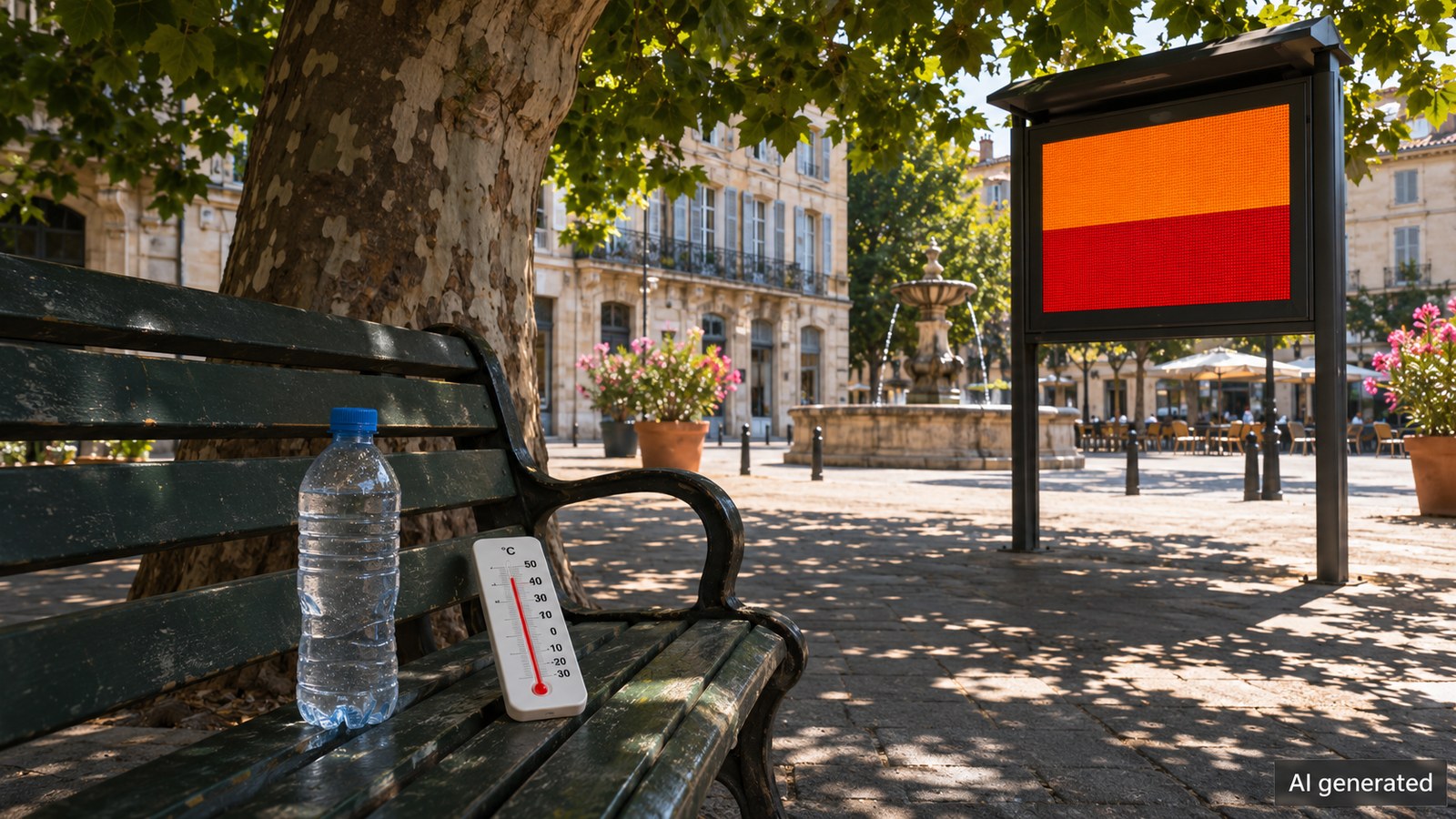
The finding supports the warning system while pointing to more dynamic local prevention and better evaluation of individual measures. It does not mean heat becomes safe once an alert is issued. The accompanying image is an invented shaded square and alert board, not a photograph of a specific heatwave, city response or health outcome.
Sources & context
Reporting and reference material used for this article. Context sources do not independently confirm every news claim.
- Environmental Health Perspectives ↗Primary peer-reviewed study, published 24 November 2026: design, mortality estimates, confidence intervals and sensitivity analyses.
- Inserm Newsroom ↗Primary research-institute summary, published 24 November 2026: dataset, alert-day counts, mechanisms and author cautions.
- Santé publique France ↗Primary public-health context, consulted 25 November 2026: operation of the warning and prevention system.
- Ouest-France ↗Independent news coverage, published 24 November 2026: study result, older-adult finding and reduced effect across repeated alerts.
Written for WHIF from the linked material. This article does not claim on-the-ground reporting. Our editorial standards.