Paris Fashion Week becomes a test of luxury's selling power
The spring 2027 shows arrive as major groups face weaker demand and pressure to prove that costly spectacle can still convert into sales.
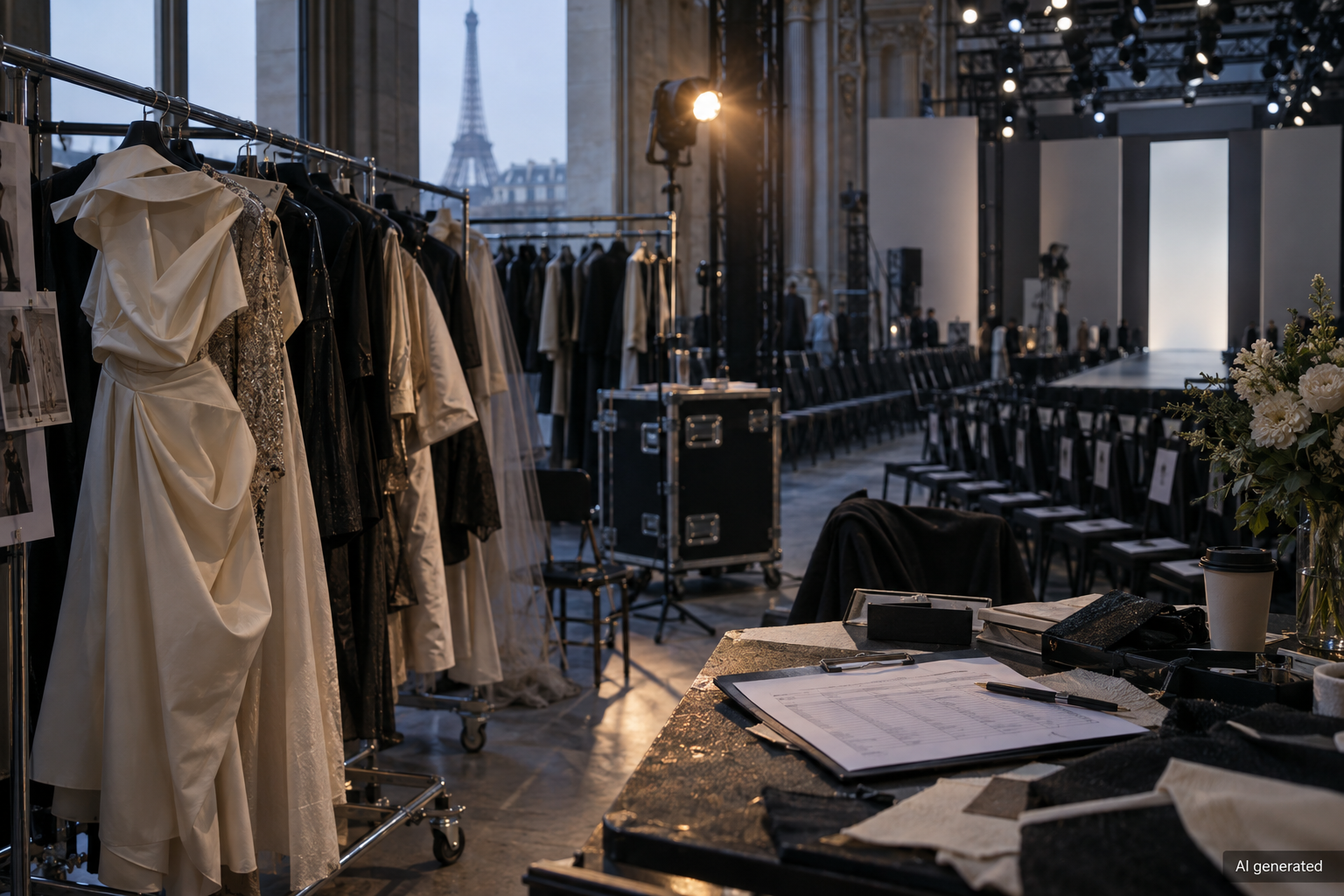
Paris Fashion Week opens on 28 September with more than seasonal clothes at stake. Reuters reports that luxury companies are entering the Milan and Paris shows amid a worsening slowdown, pressure on share prices and a more selective customer. For French groups, the runway is therefore both a creative platform and an unusually visible test of whether attention can still become demand.
The Fédération de la Haute Couture et de la Mode confirms that the spring and summer 2027 womenswear calendar runs from 28 September to 6 October. Its programme also includes a showroom for emerging designers at the Palais de Tokyo from 30 September. Those dates describe the event. They do not guarantee public access to individual shows, many of which operate by invitation.
A runway under financial pressure
The commercial background is uneven rather than uniformly bleak. Reuters said LVMH shares were down 37% since the start of 2026 when its report was published, while Kering had lost the gains associated with its leadership change. Yet Kering's second-quarter revenue rose 1% in reported terms to €3.65 billion, according to The Wall Street Journal. That result suggests stabilisation in one period, not a completed recovery.
A show can cost as much as €10 million, industry experts told Reuters. In a strong market, that spending can be defended as global communication, wholesale support and brand building. In a weak one, executives and investors can ask a harder question: does the collection restore cultural relevance and persuade clients that high prices still deliver distinctive value? The answer will not be visible from applause alone.
What Paris can and cannot prove
Dior, Louis Vuitton and Chanel are among the Paris presentations that Reuters identified as closely watched. Their scale gives them unusual reach, but the official calendar also matters for smaller houses that use the week to meet buyers and press. The contrast is important because one headline performance cannot stand in for the commercial position of the entire French fashion ecosystem.
Recent company results provide context, not a prediction for a specific collection. LVMH reported organic sales growth in the second quarter in July, while first-half operating profit was lower than a year earlier. Kering's improvement came with Gucci revenue still down in reported terms. Currency, geography and brand mix complicate any direct connection between a catwalk reaction and quarterly sales.
The useful signals will come after the lights go down: retailer orders, client response, pricing discipline and subsequent company disclosures. Paris can create a cultural moment, but it cannot by itself repair consumer confidence. This season's significance lies in that gap between spectacle and proof, as French luxury asks costly creative events to do more commercial work.
Sources & context
Reporting and reference material used for this article. Context sources do not independently confirm every news claim.
- Reuters ↗Current reporting on the luxury slowdown, market pressure and commercial role of the Milan and Paris shows, published 22 September 2026
- Fédération de la Haute Couture et de la Mode ↗Primary organiser material for the official 28 September to 6 October schedule and the emerging-designer showroom
- The Wall Street Journal ↗Independent business reporting on Kering's second-quarter revenue and Gucci performance, published in July 2026
- Reuters ↗Earlier reporting on LVMH's second-quarter sales and first-half operating profit, used as company-performance context
Written for WHIF from the linked material. This article does not claim on-the-ground reporting. Our editorial standards.