Hotter autumns are rewriting fashion’s seasonal calendar
Paris Fashion Week exposed a widening gap between the clothes arriving in stores and the weather customers actually experience.
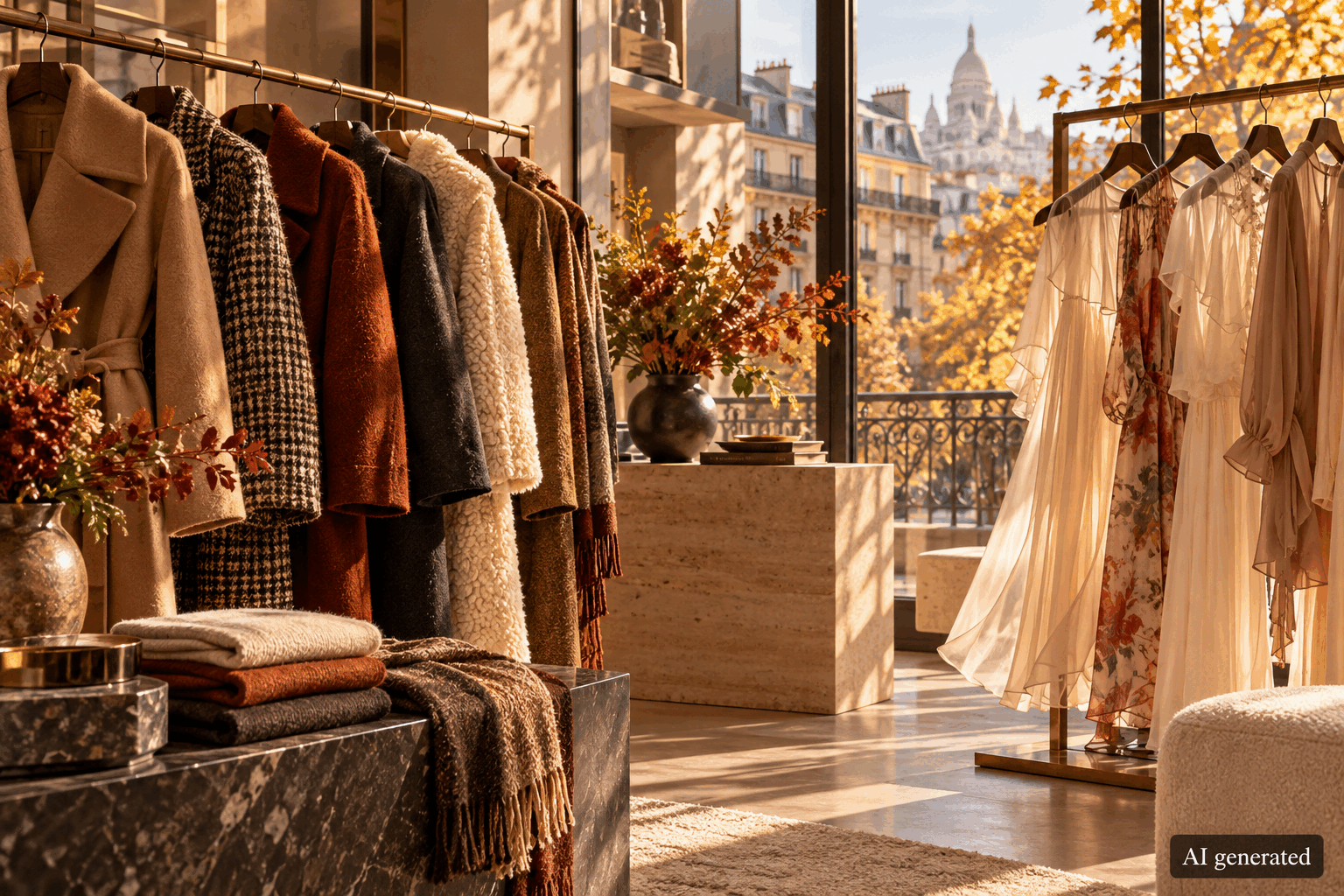
Paris Fashion Week ended with an unusually practical question for an industry built on seasons: when should winter clothes reach shops if October still feels like summer? Temperatures in Paris reached 28C during the shows, according to Reuters, leaving many guests in light clothing while thick coats and knitwear filled autumn advertising and retail floors.
The mismatch affects more than street style. Winter outerwear usually carries higher prices and margins, so delayed cold weather can leave retailers holding expensive stock. If demand arrives only near Black Friday or end-of-season sales, brands may have to discount products they expected to sell at full price.
Lighter construction moves from mood to strategy
Designers are already responding in the clothes themselves. Reuters reported that Louis Vuitton womenswear designer Nicolas Ghesquière linked Europe's record heat to his use of thinner fabrics and airy constructions. The Guardian's account of the show similarly highlighted silk dresses, vented tunics and layered chiffon rather than the protective, structured shapes often associated with his work.
One collection does not establish an industry rule. Paris Fashion Week included many competing ideas, and the Associated Press described glamour, exposed silhouettes and couture techniques adapted to everyday clothing. The stronger signal is operational: buyers and retailers must decide how much heavy stock to order, when to display it and how much transitional clothing customers will need.
Climate uncertainty becomes an inventory problem
France's 2026 climate gives that problem weight. Météo-France says the country experienced its hottest summer since records began in 1900, with 53 days in heatwave conditions. A hot summer does not prove that every future October will be warm, but climate change increases the need to design for variable and extended warm periods.
Brands can adapt through lighter layers, smaller initial orders and faster replenishment rather than abandoning coats altogether. Such changes also carry environmental consequences. Poor seasonal forecasting creates unsold inventory, transport and markdown pressure. More flexible products may reduce some waste, but only if companies also control production volumes.
The runway calendar will not disappear quickly. It coordinates design, manufacturing, wholesale buying, marketing and media around the world. Yet the Paris heat made its central assumption increasingly visible: a date on the calendar no longer guarantees a temperature. Fashion's next adaptation will be measured not only in silhouettes, but in how accurately brands align supply with a less predictable climate.
Sources & context
Reporting and reference material used for this article. Context sources do not independently confirm every news claim.
- Reuters ↗Independent reporting, 7 October: Paris temperatures, design adaptation and retail-margin risks.
- The Guardian ↗Independent runway reporting, 7 October: materials, silhouettes and collection context.
- Associated Press ↗Independent Fashion Week overview, 3 October: wider creative and commercial context across houses.
- Météo-France ↗Primary climate context, 3 September: record summer temperature and heatwave duration in France.
Written for WHIF from the linked material. This article does not claim on-the-ground reporting. Our editorial standards.