In Paris, Europe makes its case for space independence
A space summit puts European launch capacity and satellite infrastructure at the centre of the debate.
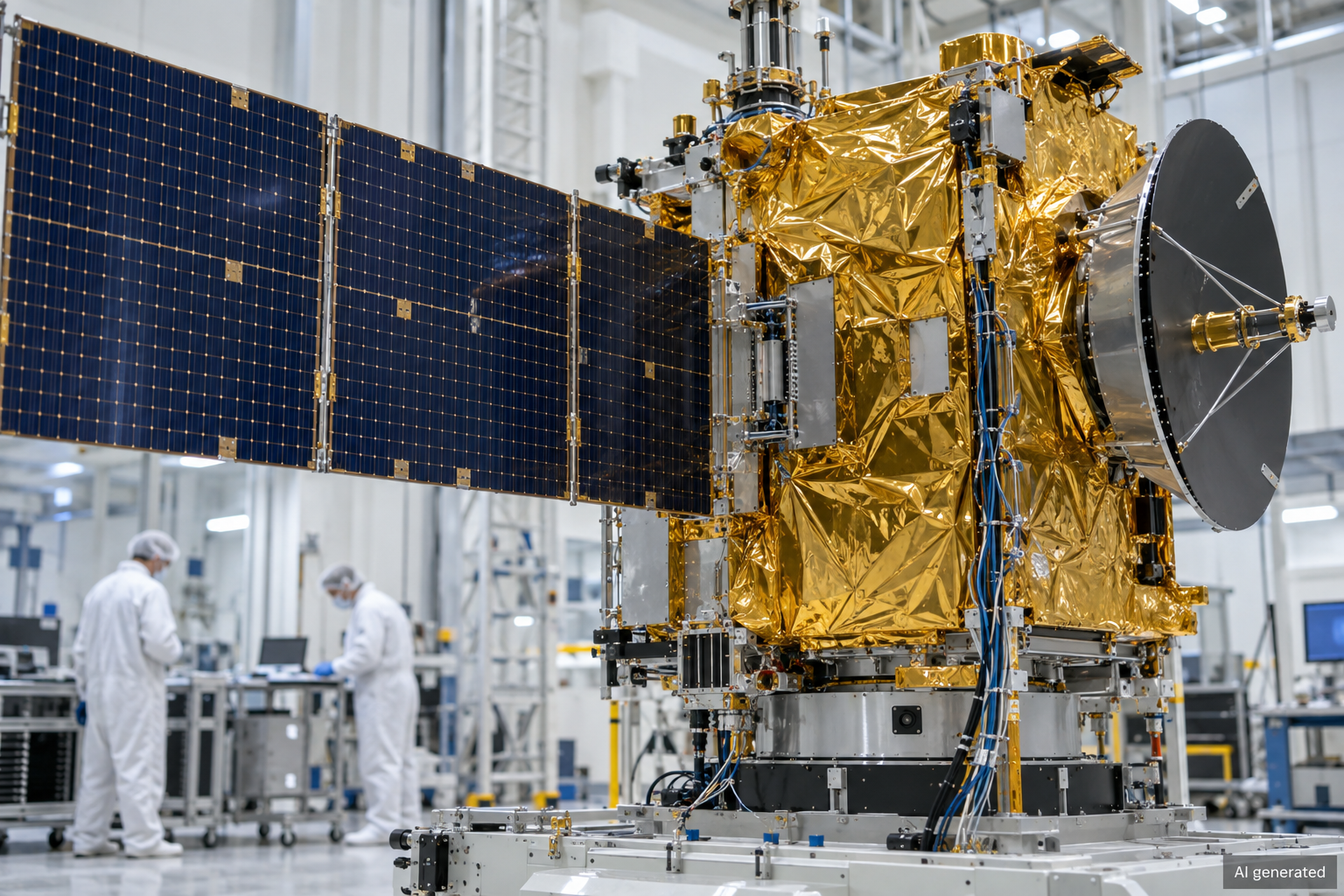
Europe’s space debate is about more than a rocket on a launchpad. The Associated Press reports that discussions in Paris are focusing on autonomy: the ability to put satellites into orbit and maintain infrastructure without depending entirely on outside providers.
That ambition connects several different jobs. A satellite must be built, launched, operated and supported on the ground. Having control over one part of that chain does not automatically deliver control over the others. This is why the word independence needs a little unpacking.
A European project with a French base
The European Space Agency describes Ariane 6 as a programme involving companies across 13 European countries. France has a particular role through CNES, which operates the launch facilities in French Guiana, while the wider industrial effort is multinational.
ESA’s account of the cooperation also separates the responsibilities of institutions and industry. A programme that is often discussed through national politics depends, in practice, on a network of participants. WHIF’s interpretation is that autonomy here means dependable cooperation as much as national capability.
For people outside the space industry, the stakes can sound remote. Yet the uses listed for the launcher include communications, weather observation and navigation. These are services whose value is usually noticed on the ground, rather than when a rocket leaves it.
From declarations to delivery
The next useful test of political ambition will be delivery. Readers should look for the difference between a declaration of support, an order for a mission and a satellite operating successfully. They represent distinct milestones, with different evidence behind them.
A summit can set a direction. Turning that direction into reliable access requires sustained decisions about funding, production and demand. The Paris debate is best followed as an ongoing infrastructure story, with announcements checked against the capabilities that eventually result.
Sources & context
Reporting and reference material used for this article. Context sources do not independently confirm every news claim.
- Associated Press ↗Reporting on this story
- European Space Agency — Ariane 6 overview ↗Technical background on the launcher
- European Space Agency — a European cooperation ↗Programme partners and responsibilities
Written for WHIF from the linked material. This article does not claim on-the-ground reporting. Our editorial standards.