Mont Blanc's new height shows why one number needs context
Surveyors measured the summit at 4,807.47 metres, higher than in 2023 but lower than in 2025, reflecting a moving snow and ice cap rather than a simple climate scorecard.
French surveyors have measured Mont Blanc at 4,807.47 metres above sea level. The result, announced on 14 October after a September expedition, is 1.88 metres above the figure published in 2023 but 1.29 metres below the 2025 measurement. Both comparisons are correct because the snow-covered summit changes from year to year.
The mountain's rocky base is about 4,792 metres high. Above it sits a cap of snow and ice shaped by snowfall, wind and temperature. A new surface altitude therefore records the summit at a particular moment. It does not mean that the underlying rock grew, nor does a single higher reading prove that Alpine ice loss has reversed.
Surveyors mapped a changing cap, not a fixed monument
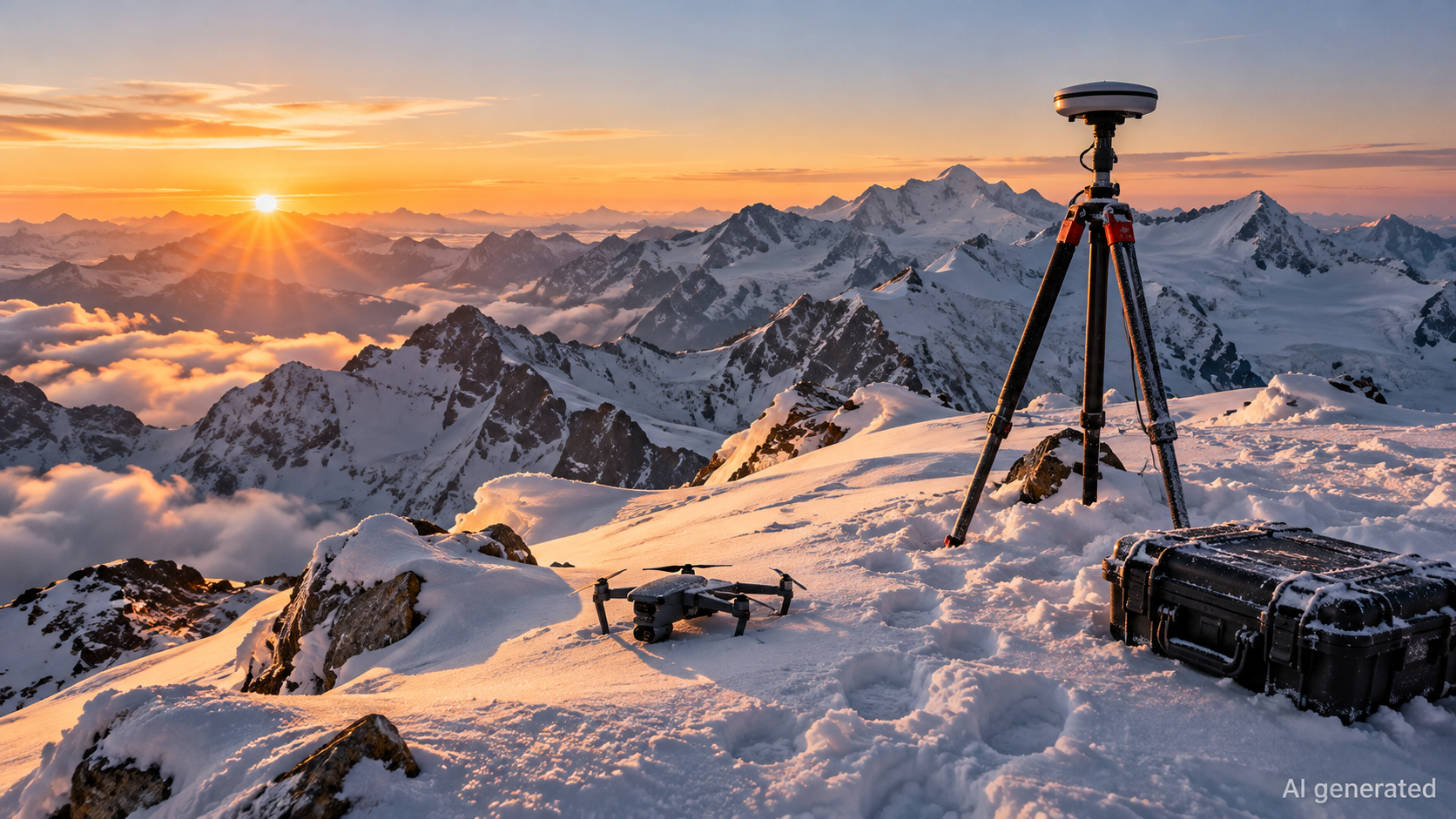
The September team used satellite positioning equipment to locate the summit. A drone captured more than 1,300 images for a three-dimensional model, while ground-penetrating radar examined the cap and rock beneath it. The Associated Press reported that the group carried nearly 30 kilograms of measuring equipment to the summit.
The campaign belongs to a monitoring series begun in 2001 by surveyors in Haute-Savoie. Repeated measurements help researchers separate short-term weather effects from longer-term change. The 2026 figure remains 3.43 metres below the series high of 4,810.90 metres recorded in 2007, but the sequence does not move in a straight line.
Summit ice and lower glaciers tell different stories
Mont Blanc's summit also behaves differently from lower glaciers. The high summit is cold enough that its ice has historically melted far less than ice at lower elevations. The Guardian notes severe recent Alpine glacier losses, while AP cites Grenoble research finding relative stability in the summit cap over the twentieth century. The statements address different parts of the mountain system.
This distinction matters for public communication. Saying the mountain grew by nearly two metres since 2023 is numerically accurate but incomplete. Saying climate change made it shrink by 1.29 metres since 2025 would claim a cause the surveyors have not established from one reading. Weather, accumulation and wind redistribution all affect the result.
The most useful outcome is the expanding record, not a contest over one headline number. Future measurements, radar profiles and climate observations can be compared with a consistent method. For visitors, the altitude remains a scientific measurement, not guidance that any route is safe. Mountain conditions require current local advice and appropriate expertise.
Sources & context
Reporting and reference material used for this article. Context sources do not independently confirm every news claim.
- Associated Press ↗Independent reporting, 14 October: measurement, method, equipment and scientific interpretation.
- The Guardian ↗Independent reporting, 14 October: annual comparisons, series history and wider Alpine glacier context.
- Union Nationale des Géomètres-Experts ↗Primary expedition announcement, 14 October: official 2026 figure, 2023 comparison and campaign partners.
- Geologie Mont-Blanc ↗Specialist context, accessed 16 October: repeated-measurement series and distinction between the rock summit and snow cap.
Written for WHIF from the linked material. This article does not claim on-the-ground reporting. Our editorial standards.