Limoges city hall fire case moves to attempted-murder charges
Two suspects have been indicted over the 17 October blaze. The main suspect contests the evidence, and the judicial investigation must now test claims about intent and organisation.
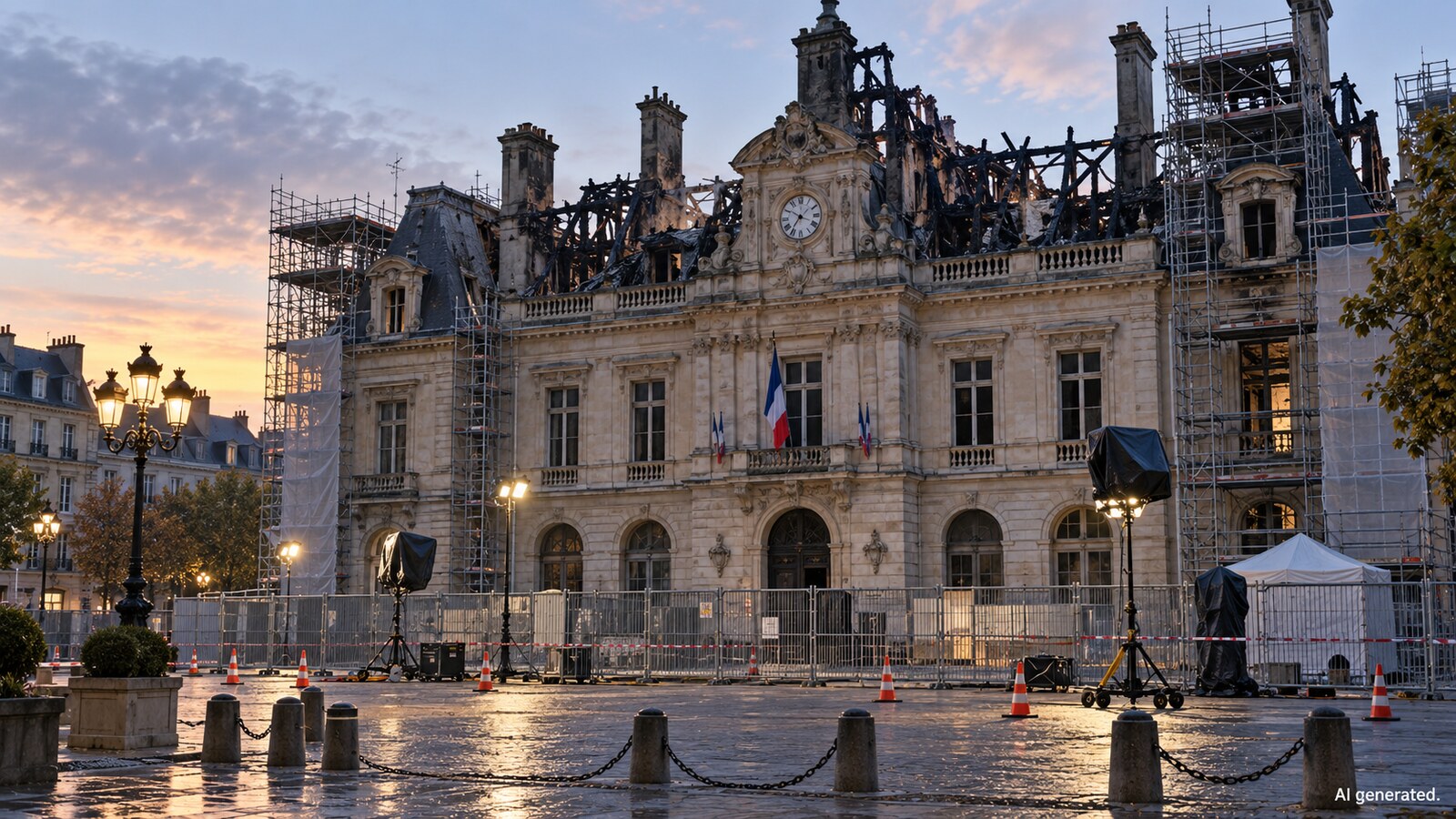
Two people have been indicted in the investigation into the fire that devastated Limoges City Hall during unrest on 17 October. Le Monde reported that the main suspect, a 34-year-old construction worker, faces charges including organised destruction, criminal conspiracy and attempted murder of 13 municipal police officers.
Investigators allege that a burning rubbish container was thrown through a window and that the fire spread while officers were sheltering inside the building. The historic roof and bell tower later collapsed. A second suspect, aged 66, was indicted on organised-destruction and conspiracy charges, according to the same report.
The charges turn on danger to officers
The attempted-murder element matters because prosecutors are not only examining damage to a public building. They must assess whether the act was intended to kill officers, or was committed with knowledge that death was a likely consequence. That is a higher evidential question than proving participation in property destruction.
The main suspect's lawyers dispute the case against him and have said they will challenge both the indictment and detention. An indictment in France means investigating judges consider there are serious or consistent indications against a person. It is not a conviction, and both defendants retain the presumption of innocence.
Political labels are not judicial findings
Political leaders have described the fire as organised far-left violence, while earlier reporting linked the arrest to radical environmental circles. Those descriptions should not be treated as findings about a group or motive. The investigation still has to establish individual acts, any coordination and the legal intent behind them.
The building has also become a reconstruction issue. Prime Minister Sébastien Lecornu promised national support to rebuild the 19th-century city hall and proposed faster heritage procedures. That response may restore the landmark, but it is separate from the criminal case and cannot determine the defendants' responsibility.
Source note: Le Monde supplied the current indictment details and defence position. Reuters, the Associated Press and Euronews were consulted as independent background on the fire, the initial arrest, security response and reconstruction debate. Allegations about motive and affiliation remain contested and unproven.
Sources & context
Reporting and reference material used for this article. Context sources do not independently confirm every news claim.
- Le Monde: suspect indicted for attempted murder of officers ↗Reporting: indictment, alleged sequence, defence challenge and second suspect, 24 October
- Reuters: France counts the cost after unrest ↗Independent background: fire, danger inside the building and local reconstruction concerns
- Associated Press: curfews and Limoges arrest ↗Independent background: arrest and wider judicial response after the unrest
- Euronews: arrest connected to Limoges fire ↗Independent background: arrest, building damage and investigation context
Written for WHIF from the linked material. This article does not claim on-the-ground reporting. Our editorial standards.