France's largest operating renewable-hydrogen unit opens at Port-la-Nouvelle
Hyd’Occ starts its first 20 MW phase beside the Mediterranean, creating a real industrial test of demand, delivery and low-carbon power supply.
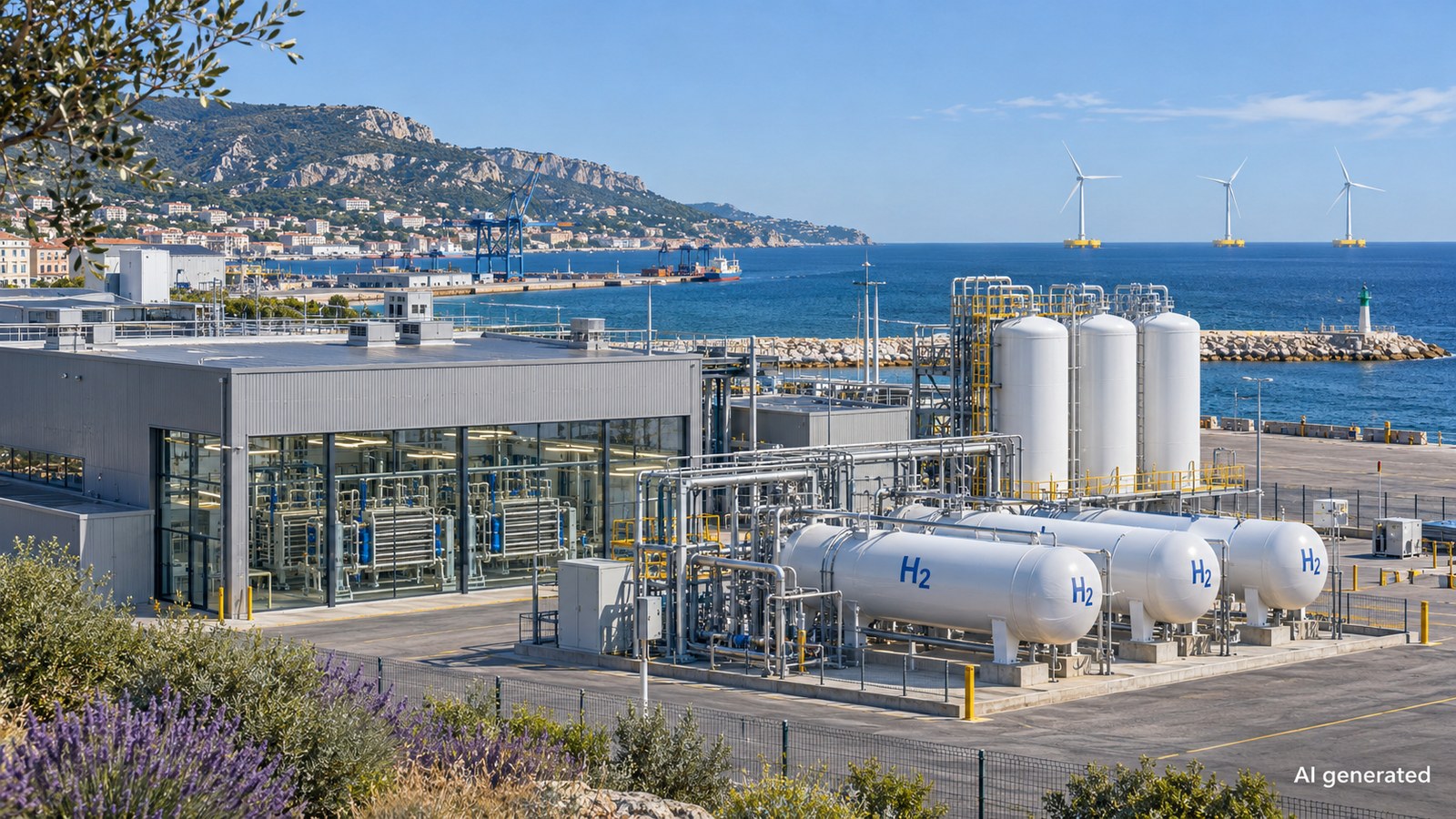
Qair and the Occitanie regional energy agency have inaugurated Hyd’Occ at Port-la-Nouvelle in the Aude, presenting it as France's largest renewable-hydrogen production unit now in operation. The first phase uses a 20 megawatt electrolyser. Qair says the first hydrogen molecule was produced at the end of 2025, while full output is expected in the first quarter of 2027.
The plant uses renewable electricity to split purified water and package the resulting hydrogen for customers. AFP reported that three floating wind turbines a few kilometres off the Mediterranean coast supply power to the project. The port location also provides industrial land, transport infrastructure and nearby maritime users.
A 20 MW first phase beside the Mediterranean
Hyd’Occ's first phase is designed to produce about 2,700 tonnes of renewable hydrogen a year. Current users cited in reporting include a dredging vessel, a lighthouse-maintenance vessel and 13 buses in the Béziers area. These are early customers, not proof that every planned tonne already has a buyer.
The scale is substantial within France's young renewable-hydrogen market. AFP put the country's installed green-electrolysis capacity at about 70 MW before the new plant reached full output, while green hydrogen represents only about 1 percent of total French hydrogen production. Most hydrogen is still made from fossil fuels.
Large for a small domestic market
Public support is part of the business model. The Occitanie region, the French state and the European Union contributed financing, according to reporting from the inauguration. Regional authorities view the project as an industrial and transport investment, while Qair emphasises access to renewable power and the commercial port.
The environmental case will depend on operation rather than the ribbon-cutting alone. Electricity origin, water treatment, equipment utilisation, transport distances and the uses that hydrogen replaces all affect emissions. Hydrogen can be useful where direct electrification is difficult, but converting electricity into gas and moving it introduces energy losses.
Opening day is only the first test
The next test is whether Hyd’Occ reaches full capacity in early 2027 and builds dependable demand beyond its initial vessels and buses. Production volumes, customer contracts and verified electricity sourcing will show whether the project becomes a durable regional industry. The image here is an illustration, not a photograph of the Port-la-Nouvelle installation.
Sources & context
Reporting and reference material used for this article. Context sources do not independently confirm every news claim.
- Qair ↗Primary project material: site, operator, first production at the end of 2025 and planned commissioning of the 20 MW phase.
- TV5MONDE with AFP ↗Independent reporting from the inauguration: financing, wind-power link, water process, current users and the national green-hydrogen share.
- Le Journal des Entreprises ↗Independent specialist reporting: inauguration date, first-phase power and the project's industrial development timeline.
- Enerzine ↗Specialist context: 2,700-tonne annual design capacity, project partners, initial transport uses and commissioning details.
Written for WHIF from the linked material. This article does not claim on-the-ground reporting. Our editorial standards.