Guadeloupe places the whole archipelago under drought alert
The 17 November order extends alert status across Guadeloupe as rainfall deficits, lower rivers and stressed groundwater persist near the end of the wet season.
Guadeloupe's prefect has placed the entire archipelago at drought-alert level under an order dated 17 November. The decision responds to a persistent rainfall deficit and declining river and groundwater resources, moving all alert zones under a common restriction framework.
The alert is not a claim that every commune has identical supplies or that every tap will follow the same schedule. Applicable restrictions vary by location and use, and residents and businesses are directed to the official order and Vigieau service for the rules affecting their commune.
September deficits remained severe in several zones
Local reporting by RCI says the rainfall deficit has persisted since late April. Météo-France's seasonal account records a very dry September, with deficits of 50 to 80 percent in northern Basse-Terre, La Désirade and much of southern Grande-Terre despite some significant August rain.
The weather outlook offers limited immediate relief. Météo-France's 20 November monthly forecast expects rainfall across the Leeward Islands to be slightly below normal from 23 November to 20 December, although the first week may be closer to normal.
Restrictions depend on commune and use
Alert status is intended to preserve drinking-water supplies and aquatic environments before conditions worsen. It can restrict non-essential uses and requires closer management by households, farms, businesses and public services, but the precise measure must be checked rather than inferred from a territory-wide headline.
This is a distinct overseas development from mainland drought indicators covered earlier by WHIF. Guadeloupe's water system, rainfall geography and local restrictions require their own evidence, and national averages cannot substitute for the prefectural and regional meteorological data.
Local measurements will determine the next step
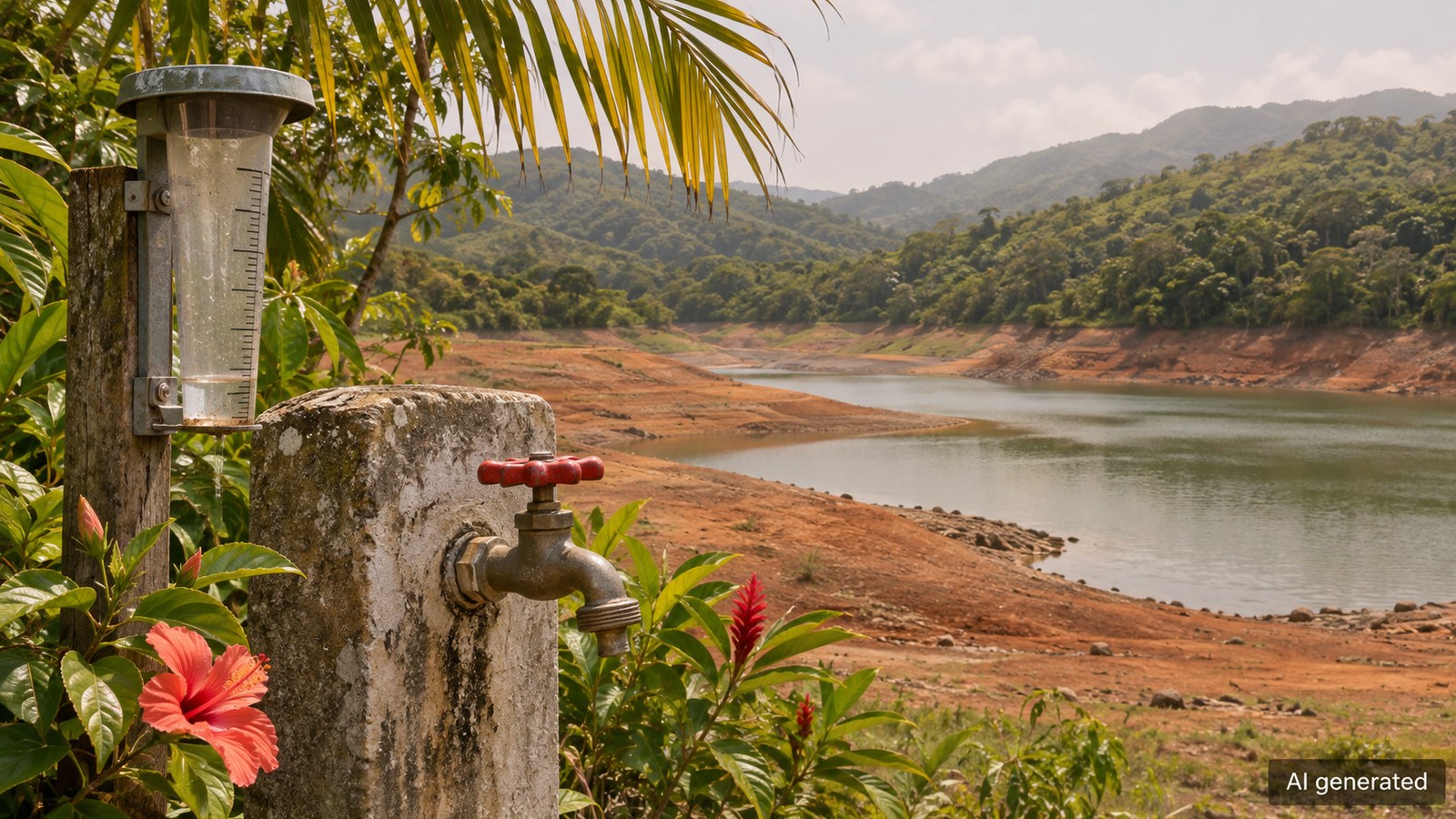
The alert will need reassessment as rainfall, river flow and groundwater measurements change. The accompanying image is an invented tropical reservoir scene, not a photograph of a Guadeloupe water source, restriction breach or current supply point.
Sources & context
Reporting and reference material used for this article. Context sources do not independently confirm every news claim.
- Guadeloupe prefecture ↗Primary government source, updated 19 November 2026: islandwide alert notice and access to the 17 November restriction order.
- Météo-France Guadeloupe ↗Primary climate context, published in October 2026: recent rainfall deficits and unusually dry September conditions.
- Météo-France Guadeloupe ↗Primary forecast context, published 20 November 2026: rainfall outlook through 20 December.
- RCI Guadeloupe ↗Independent local reporting, published 19 November 2026: confirmation of the alert, resource decline and duration of the deficit.
Written for WHIF from the linked material. This article does not claim on-the-ground reporting. Our editorial standards.