New AI footprint study sharpens France’s debate over data-centre growth
Green IT’s global projection adds urgency to a policy choice between expansion, efficiency and more selective uses.
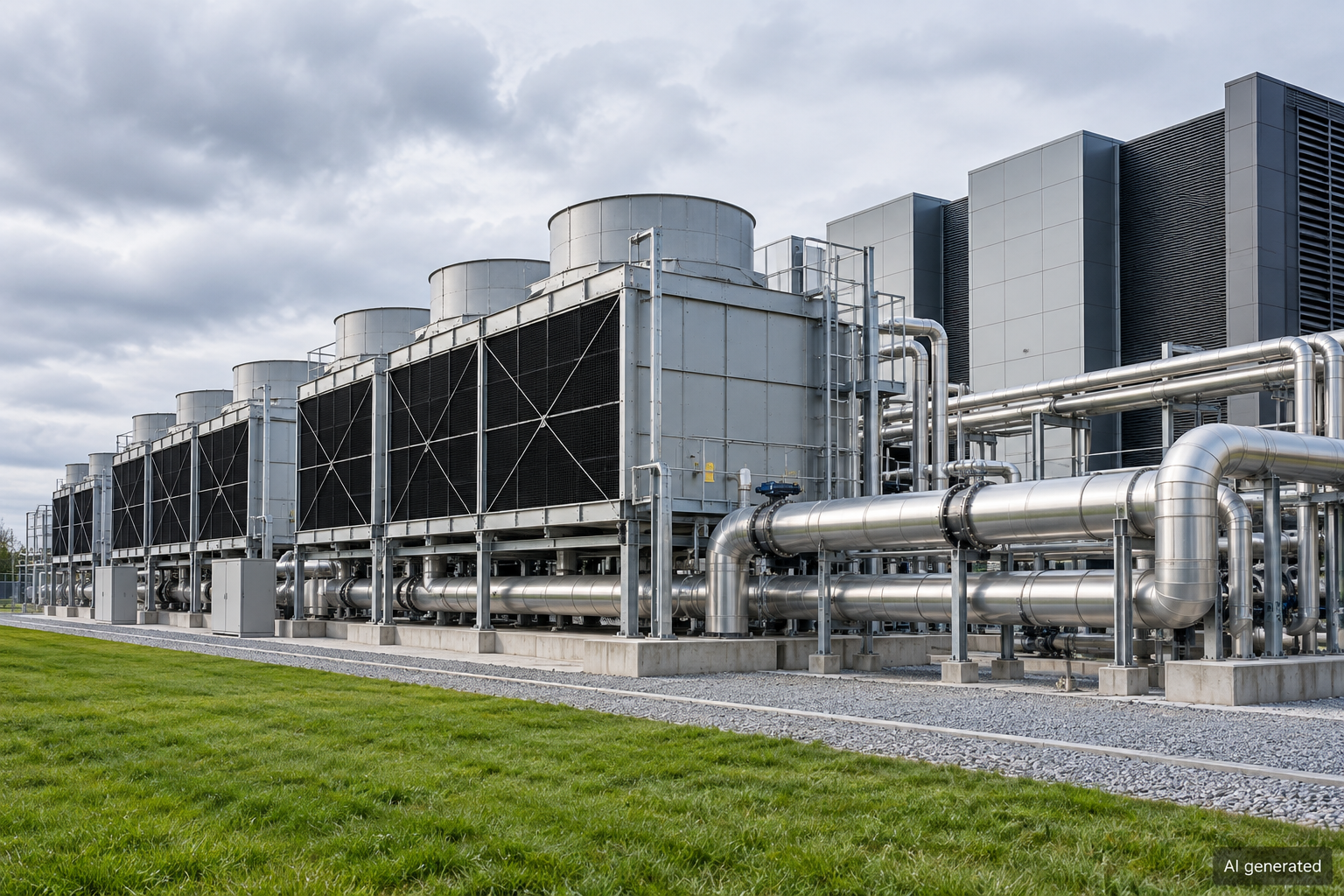
A new study from the French association Green IT, published on 30 September, examines the environmental consequences of growing AI infrastructure. Carenews reports that it was presented at the Produrable event. The release adds a new assessment to France’s debate over how much computing infrastructure to build and what conditions should accompany it.
The study models global electricity consumption rising from 174 terawatt-hours in 2025 to 1,169 in 2030. These are estimates within the authors’ scenario, not metered totals for France or a certainty about the future. They depend on assumptions about the equipment deployed.
Read the forecast with its boundaries
The assessment covers backend infrastructure, including servers and data centres, across their life cycle. It excludes users’ devices and access networks. Its results cannot represent every environmental effect associated with AI, or the footprint of an individual prompt.
The French Senate’s separate inquiry, completed on 16 September, frames the issue as both a development opportunity and an environmental constraint. Its published summary acknowledges incomplete data and pressures on electricity, minerals, water and land. It also says the potential environmental benefits of AI remain difficult to establish. That is a case for better measurement, not an endorsement of any single forecast.
A policy disagreement about scale
The Senate recommends greater transparency, a shared European measurement framework, an environmental score for major language models and support for specialised, less resource-intensive systems. It also favours faster grid connections for data centres alongside stronger environmental performance. Those recommendations combine expansion with safeguards, rather than proposing a simple halt to development.
Green IT’s summary argues that greener facilities alone will not contain the impacts and urges policies that limit unnecessary uses. The disagreement concerns deployment scale as well as efficiency. These are competing policy positions, not proof that one precise 2030 outcome is inevitable.
For France, the practical question is how projects will demonstrate resource needs and benefits before expanding. The Senate’s transparency proposals could inform those decisions. This edition reports a new scenario and parliamentary recommendations; neither establishes that the preferred measures are already binding.
Sources & context
Reporting and reference material used for this article. Context sources do not independently confirm every news claim.
- Association Green IT, executive summary ↗Primary study, September 2026 version 2: modelled results, scope, assumptions and authors’ recommendations. A scenario, not independently verified future outcomes.
- French Senate ↗Primary policy context: inquiry completed 16 September, stated data limitations and recommendations. Not independent validation of Green IT’s numerical projection.
- Carenews, Célia Szymczak ↗Current reporting, 30 September: study launch at Produrable and policy debate. Technical figures here are taken from the primary study.
- Association Green IT, publication record ↗Primary publication metadata: 30 September release date, authors and methodology. Same organisation as the study, not independent corroboration.
Written for WHIF from the linked material. This article does not claim on-the-ground reporting. Our editorial standards.