France tries a narrower UN route through the Hormuz crisis
Paris is drafting a Security Council text focused on commercial navigation, but no resolution has yet been circulated or adopted.
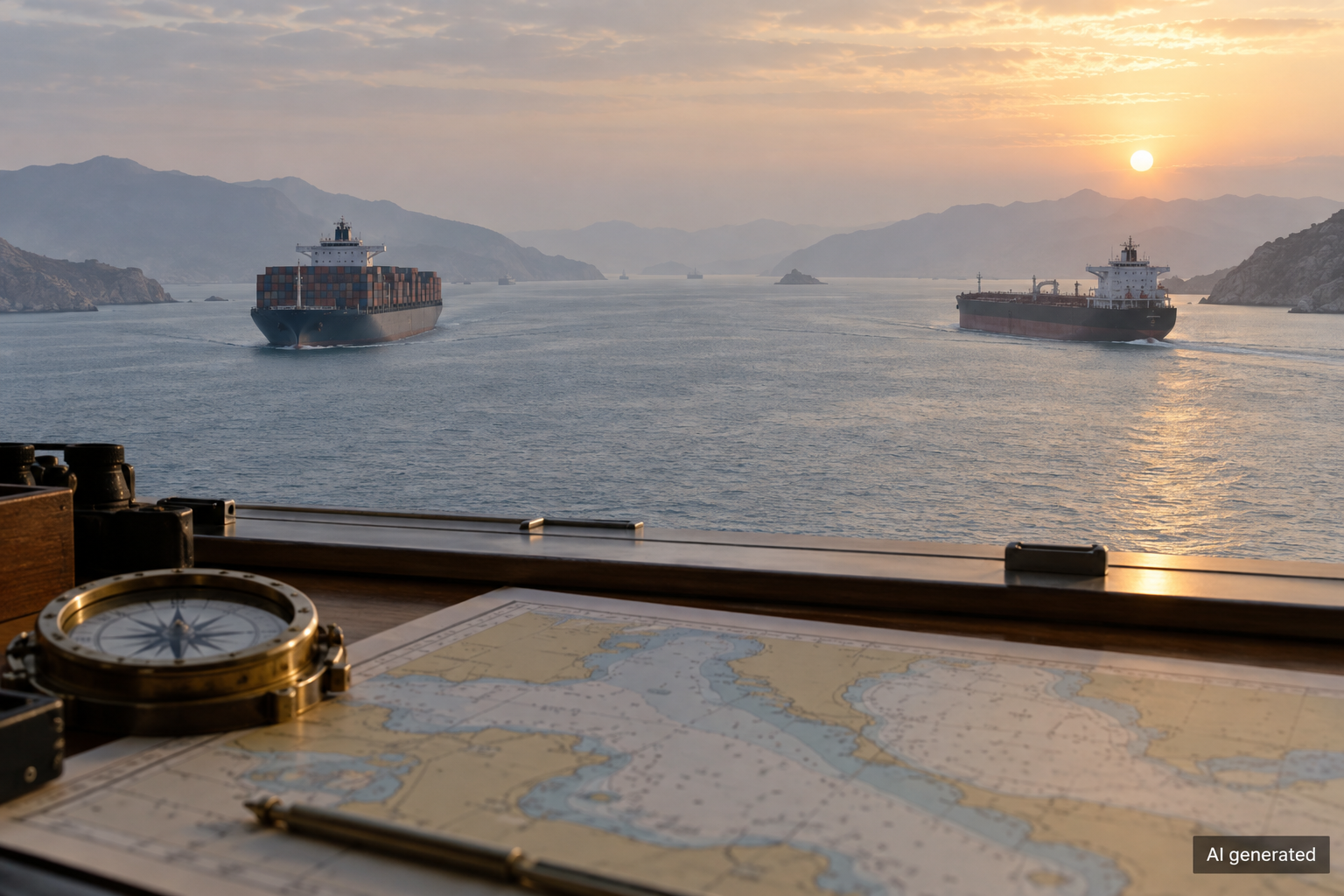
France has begun drafting a United Nations Security Council resolution aimed at restoring movement through the Strait of Hormuz, according to diplomats cited by Reuters. The work is being coordinated with the United States after talks between Emmanuel Macron and Donald Trump in New York. Paris hopes to circulate a text, but the diplomats gave no timetable and no draft has been adopted.
The French approach seeks to separate navigation from the wider confrontation with Iran. Reuters reports that the proposed language would emphasise the shared interest in commercial shipping and energy access, avoid an offensive posture toward Tehran and leave other regional disputes outside the text. That narrower scope reflects the failure of earlier efforts, which did not win support from veto-holding China and Russia.
A draft is not yet a mission
A Security Council resolution is not the same thing as an international mission. The Council has 15 members, and substantive decisions require nine votes without a veto from any permanent member. The nature of any mission would depend on the final wording, member commitments and operational arrangements. Until those exist, descriptions of a new naval force or guaranteed reopening would go beyond the available evidence.
The economic stakes explain the diplomatic urgency. The International Energy Agency estimates that almost 20 million barrels a day of crude oil and petroleum products passed through Hormuz in 2025, roughly a quarter of world seaborne oil trade. It also calculates that Qatari and Emirati liquefied natural gas moving through the strait represented almost one-fifth of global LNG trade. Alternative pipeline capacity is far smaller than the normal flow.
Two shipping corridors, different legal questions
Pressure is also rising at the Bab el-Mandeb corridor. The Guardian reported heavy fighting around Yemen's Red Sea coast and new displacement as Houthi forces contested strategic territory. G7 foreign ministers, including France, separately called on Iran to stop supporting the Houthis and urged an end to attacks on civilian shipping. Those developments broaden the shipping risk, but they are not themselves part of the unpublished Hormuz draft.
France's proposal therefore has two tests. Diplomatically, it must find language acceptable to governments with very different views of the conflict. Operationally, it must explain what participating states would do, under which authority and with what rules for avoiding escalation. Neutral phrasing can make negotiation easier, but it does not remove those practical choices.
The most accurate status on 23 September is preliminary. France is drafting and consulting; previous attempts failed; the energy and shipping exposure is measurable; and no Security Council mandate has been created. The next verifiable step would be circulation of a text, a Council meeting or an official vote.
Sources & context
Reporting and reference material used for this article. Context sources do not independently confirm every news claim.
- Reuters ↗Current diplomatic reporting on the French drafting effort, its proposed scope and the objections that blocked earlier attempts.
- International Energy Agency ↗Primary energy-market factsheet on 2025 oil and LNG flows, alternative routes and the global exposure to disruption.
- The Guardian ↗Independent current reporting on fighting near the Bab el-Mandeb corridor and the associated humanitarian and shipping risks.
- Reuters ↗Separate current reporting on the G7 statement concerning Houthi attacks and civilian shipping, used as regional context.
Written for WHIF from the linked material. This article does not claim on-the-ground reporting. Our editorial standards.