Réunion and Mayotte anchor France's Indian Ocean security strategy
A military exercise highlights how two overseas departments support crisis response, maritime surveillance and diplomacy in an increasingly contested region.
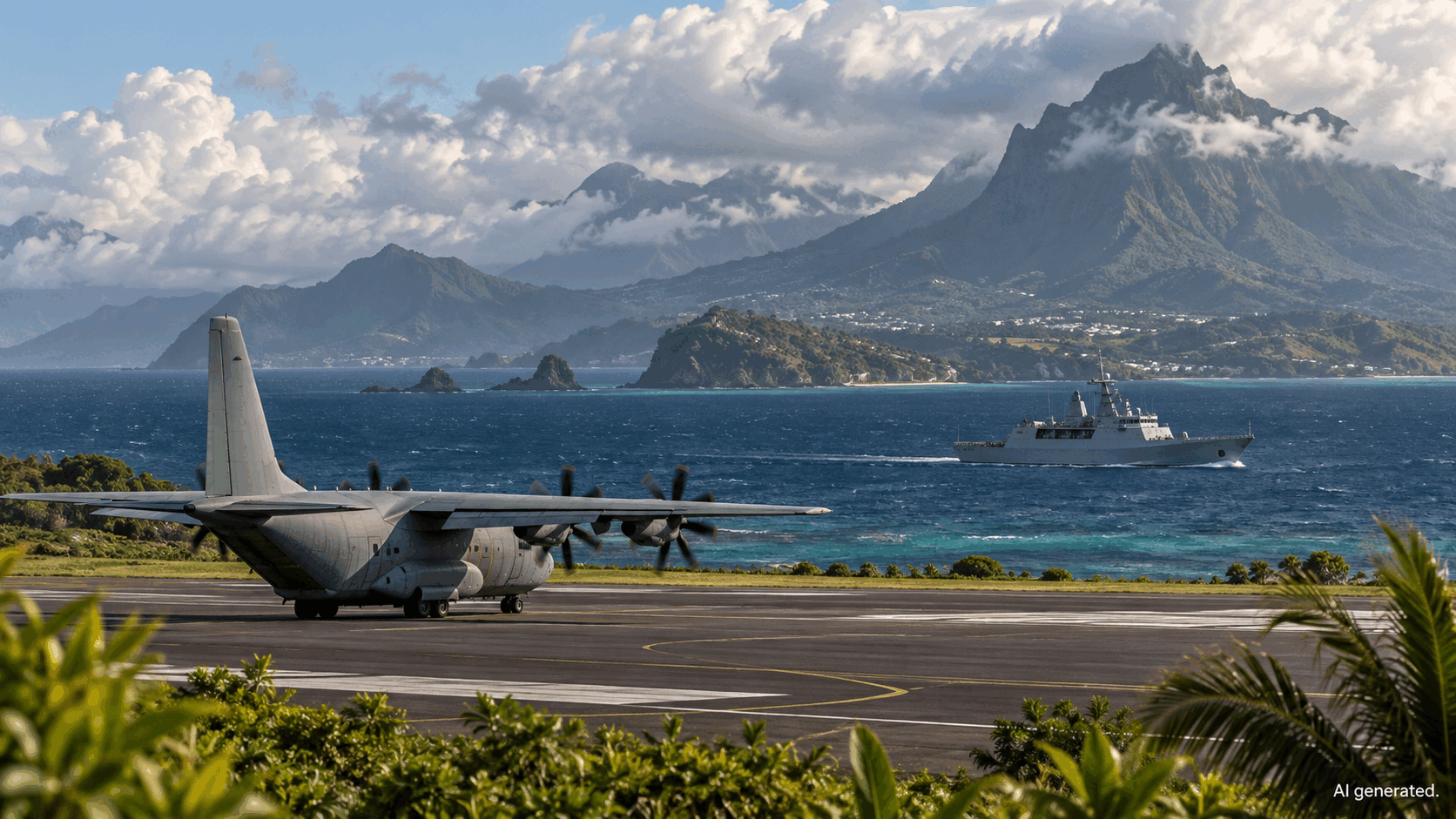
A French military exercise linking Réunion and Mayotte has put the country's permanent presence in the southwest Indian Ocean back in view. AFP reported from Réunion on 10 October as paratroopers boarded an A400M for a maritime jump near Mayotte, roughly 1,400 kilometres to the northwest.
The exercise illustrates geography as much as military capability. Réunion provides an air and logistics hub, while Mayotte sits near the Mozambique Channel, a route used by global shipping and exposed to trafficking, illegal fishing and regional crises. Permanent forces can respond faster than units dispatched from metropolitan France.
Permanent bases support more than military deterrence
France presents these deployments as serving several missions at once: protecting citizens and territory, monitoring exclusive economic zones, supporting neighbours after disasters and training with regional partners. The official Indo-Pacific strategy makes overseas departments central to national policy and emphasises sovereignty partnerships, multilateral institutions and European cooperation.
Those roles are not interchangeable. Maritime surveillance, humanitarian relief and combat readiness require different equipment, legal authorities and relationships with local communities. A transport flight can demonstrate reach, but it does not by itself show how quickly forces could sustain a larger operation or how civil agencies would be integrated.
Regional competition raises the value of trusted partnerships
The regional context is also competitive. AFP noted renewed Russian naval contacts with Seychelles and the history of Wagner's failed deployment in northern Mozambique. Earlier analysis by Le Monde described Russian diplomatic and information efforts in Madagascar and the Comoros. China, India and Gulf states also pursue economic and security interests across the region.
Sciences Po's Indo-Pacific Observatory places the FAZSOI command in a broader French network of bases, defence attachés and regional forums. France participates in the Indian Ocean Commission, the Indian Ocean Rim Association and the Indian Ocean Naval Symposium. That network is designed to turn a sovereign presence into cooperation rather than a purely national projection of force.
Credibility will depend on outcomes beyond exercises. France needs to show that surveillance reduces illegal activity, that disaster-response arrangements reach communities quickly and that partnerships are shaped with regional states rather than announced for them. Réunion and Mayotte give Paris a permanent position in the Indian Ocean, but legitimacy and practical capacity determine what that position achieves.
Sources & context
Reporting and reference material used for this article. Context sources do not independently confirm every news claim.
- AFP via Boursorama ↗Independent current reporting, 10 October: Réunion-Mayotte exercise, operational missions and regional rivalry.
- France Diplomatie ↗Primary policy source: updated Indo-Pacific priorities, overseas territories, security risks and multilateral approach.
- Sciences Po Indo-Pacific Observatory ↗Academic context: FAZSOI's place in the French military network and participation in regional institutions.
- Le Monde ↗Independent context, 17 December 2025: Russian diplomacy, information activity and strategic competition around Madagascar and the Comoros.
Written for WHIF from the linked material. This article does not claim on-the-ground reporting. Our editorial standards.