A refrigerator cyberattack turns patching into a food-security issue
Connected cooling systems were manipulated at hundreds of French shops, spoiling food and exposing the physical cost of obsolete industrial software.
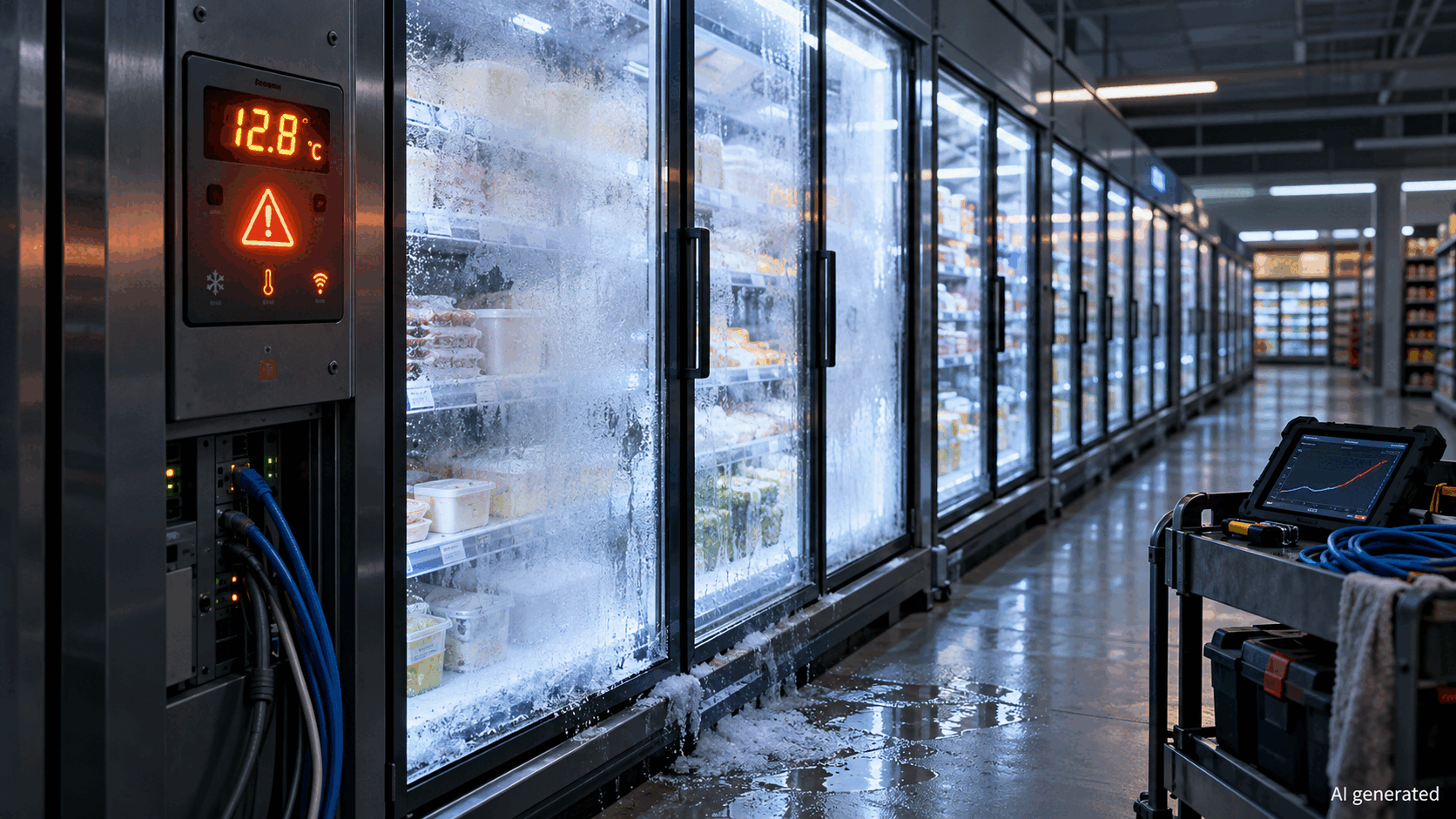
A cyberattack manipulated connected refrigeration systems at hundreds of French supermarkets overnight from 11 to 12 October, raising temperatures, extending defrost cycles and forcing stores to discard chilled and frozen food. The Paris prosecutor's office opened an investigation into the large-scale incident, while the government asked France's cybersecurity agency, ANSSI, to assess the attack.
Reuters reported that around 150 Intermarché stores and 80 Carrefour locations were affected, while Monoprix said about 5% of its French network was hit. Le Monde reported a wider impact across Intermarché and Netto, Coopérative U, E.Leclerc and some wholesalers. These are company and newsroom counts collected during an evolving response, not a final national total.
The attack reached physical equipment
The target was not a supermarket payment system. Internet-connected control panels manage whole banks of refrigerators and allow maintenance companies to adjust them remotely. In affected stores, settings were changed so that equipment heated rather than cooled. Some shops reported fires or melted components as well as food losses.
Danfoss, the supplier named in the reporting, said affected installations were using outdated firmware or obsolete equipment. Earlier research by Claroty's Team82 described vulnerabilities in Danfoss refrigeration controllers that could allow authentication bypass and code execution. Danfoss had issued updates, but investigators have not publicly attributed the October attack or proved that every affected unit failed in exactly the same way.
Known weaknesses met uneven maintenance
The incident connects cybersecurity to public health and waste. Once the cold chain is broken, a retailer cannot safely put food back on sale merely because the equipment starts working again. Stores need temperature records, disposal procedures and evidence for insurers, while customers may face closures or empty shelves.
It also exposes a governance gap in franchise and member-owned networks. Refrigeration may be bought, maintained and updated store by store, even when the same controller is deployed nationally. A patch can exist without reaching every installation, especially after a product reaches the end of supported life.
The lesson is narrower than banning remote maintenance. Connected controls can improve efficiency and allow faster repairs. They also need an inventory, network isolation, supported firmware and a tested manual fallback. In this case, software maintenance became part of food safety, fire prevention and business continuity at the same time.
Sources & context
Reporting and reference material used for this article. Context sources do not independently confirm every news claim.
- Reuters ↗Independent reporting, 12 October: prosecutor and government response, retailer counts, temperatures and Danfoss statement.
- Le Monde ↗Independent reporting, 13 October: wider store impact, defrost manipulation, losses and decentralised maintenance context.
- BleepingComputer ↗Independent specialist reporting, 12 October: technical attack description and investigation status.
- Claroty Team82 ↗Primary security-research context: previously disclosed controller vulnerabilities and remediation information.
Written for WHIF from the linked material. This article does not claim on-the-ground reporting. Our editorial standards.