France’s smart-glasses scrutiny moves from warning to investigation
A Paris criminal inquiry and complaints to the CNIL are testing how existing privacy rules apply when a camera looks like ordinary eyewear.
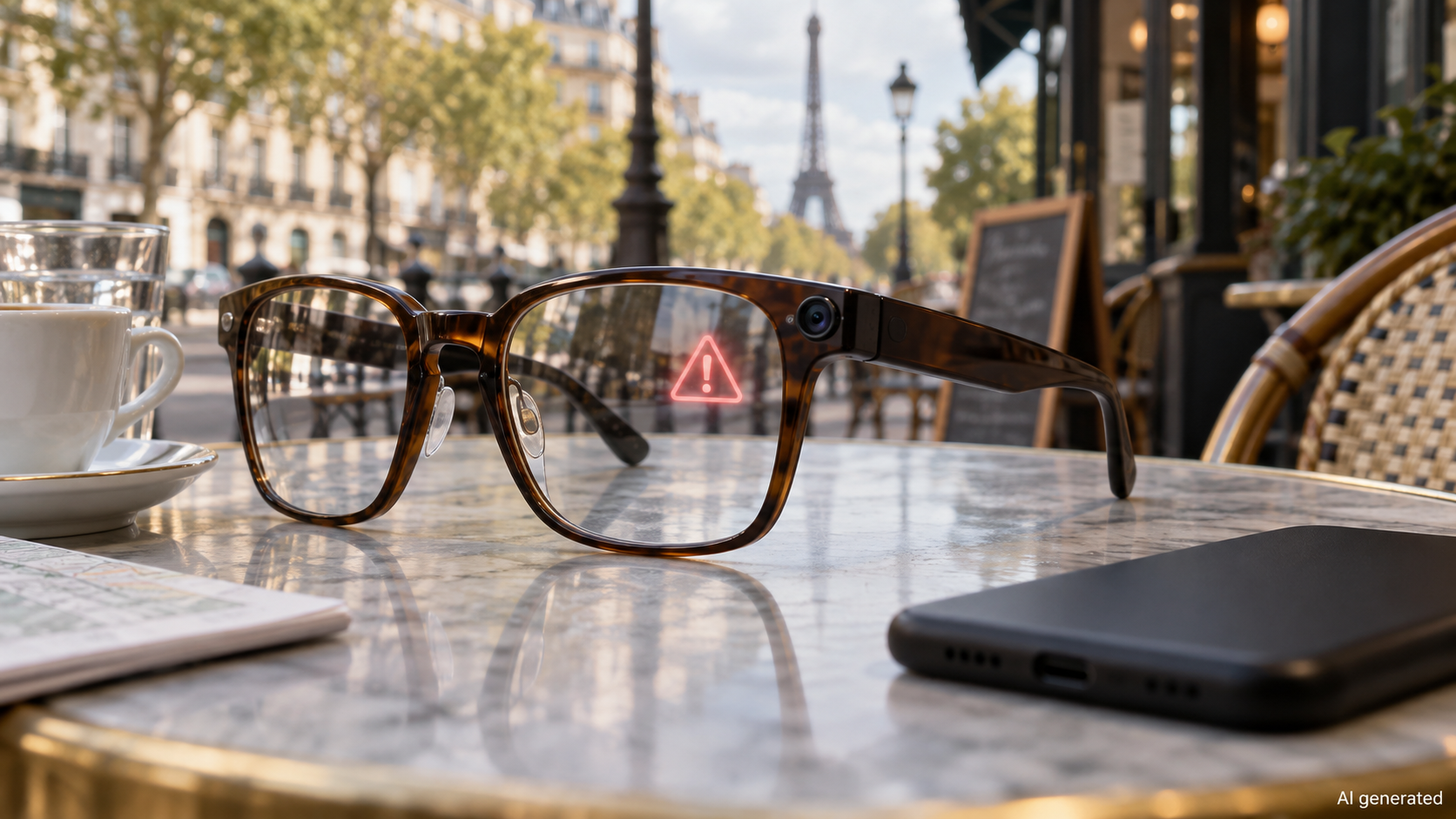
French prosecutors and privacy regulators are increasing scrutiny of camera-equipped smart glasses after reports of people being filmed without their knowledge. Reuters reported on 18 September that Paris prosecutors had opened a criminal investigation connected to alleged covert recording and online publication. An investigation examines allegations; it does not establish guilt or a final legal breach.
The CNIL has also received complaints and questions from employers about the devices, according to Reuters. The authority had already warned in May that smart glasses combine familiar sensors with a less visible form factor. Its innovation laboratory noted that a wearer can capture images, sound and contextual information while people nearby may not recognise that recording is taking place.
Existing rules, harder visibility
French and European rules do not create one simple ban on every use. The legal assessment depends on who is recording, why the data is processed, where the device is used and whether an exemption for purely personal activity applies. Publication, facial recognition, workplace monitoring or systematic collection can introduce additional obligations. A visible indicator light does not by itself settle questions of lawful basis, transparency or proportionality.
The practical problem is social as well as technical. Conventional cameras and phones give bystanders clearer cues. Glasses may look ordinary, and a small recording light can be missed. Reuters reports that recent allegations disproportionately involve women filmed in intimate or harassing contexts. That makes consent, platform enforcement and the design of safeguards central to the debate.
Restrictions abroad are context, not French law
Other countries are testing restrictions in sensitive settings. Australia is considering limits in federal government buildings, while courts and schools elsewhere have introduced their own rules. Those examples show growing concern but are not French law. Employers in France should assess security, confidentiality and data-protection duties before imposing a policy, especially where accessibility uses may be affected.
For individuals, the key distinction is between noticing a device and knowing what it is doing. The current French inquiry may clarify how criminal law applies to specific alleged conduct, while the CNIL can address personal-data processing. Neither process means every pair of connected glasses is unlawful. The stronger conclusion today is that existing privacy rules are being tested by hardware designed to disappear into everyday clothing.
Sources & context
Reporting and reference material used for this article. Context sources do not independently confirm every news claim.
- Reuters: French scrutiny of smart glasses, 18 September ↗Current reporting on the Paris investigation, CNIL complaints and reported misuse; allegations are not treated as findings.
- CNIL LINC: Smart glasses, old issues in a new form, 11 May ↗Primary regulatory analysis of sensors, bystander awareness and data-protection questions.
- CNIL: Smart-glasses vigilance and action plan, 11 May ↗Primary regulator guidance on privacy law, limited recording signals and recommended practices.
- Reuters: Australia considers government-building restrictions, 17 September ↗International policy context; not presented as French law or independent proof of the French allegations.
Written for WHIF from the linked material. This article does not claim on-the-ground reporting. Our editorial standards.