Twenty-four police inquiries turn protest injuries into a national test
Serious injuries to minors have moved France's school protests into a wider argument about crowd-control weapons, accountability and proportional force.
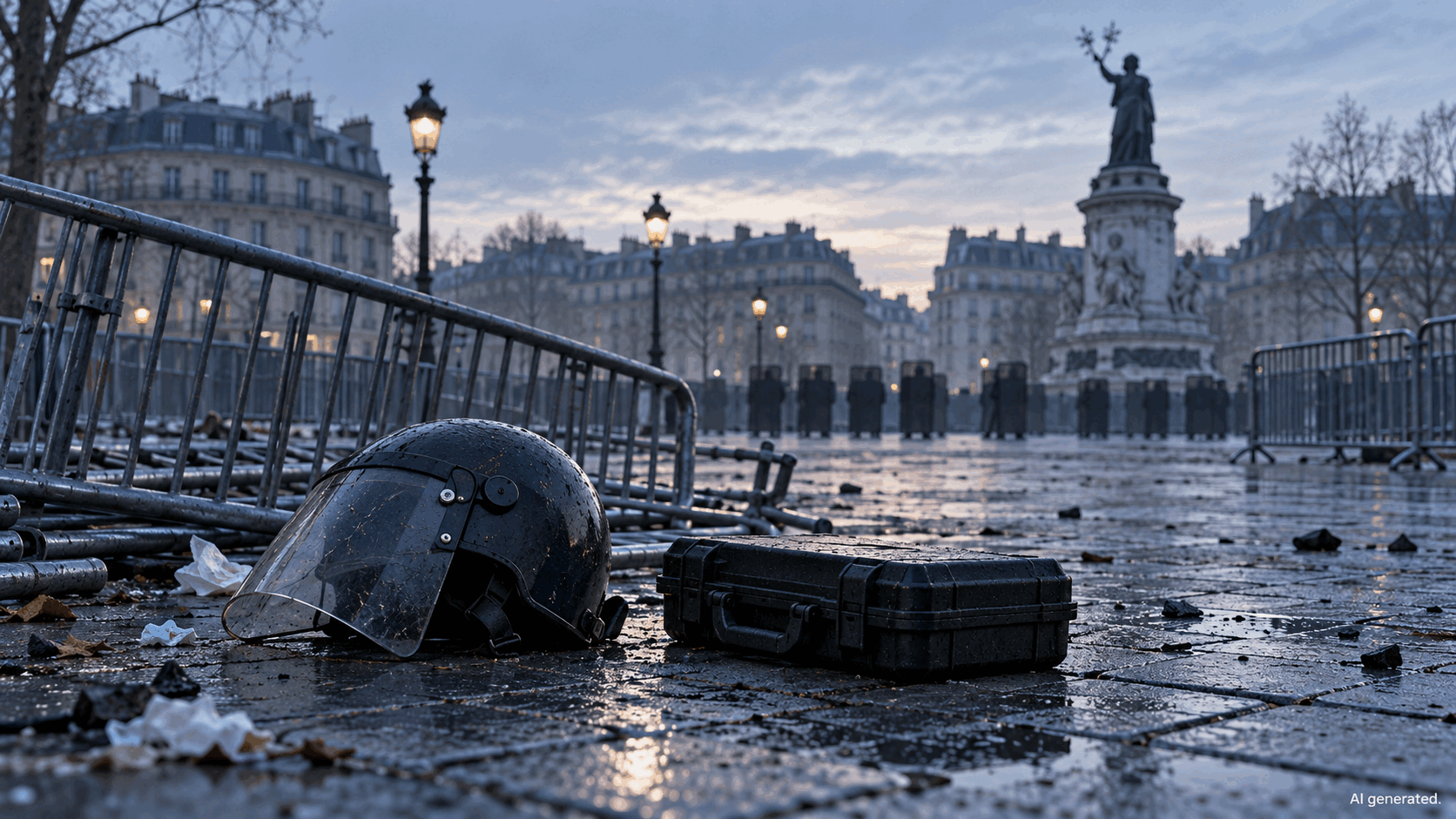
France's internal police watchdog is investigating 24 cases linked to the policing of high-school protests, according to the Interior Ministry figure reported on 9 and 10 October. The number does not establish wrongdoing in every case, but it shows that scrutiny has expanded well beyond a single disputed encounter.
Reuters documented 28 injuries it attributed to police force after reviewing legal files and interviewing families, lawyers and witnesses. Fifteen of those cases were among the IGPN inquiries identified by the news agency. The reported methods include rubber projectiles, stun and tear-gas grenades, baton strikes and mounted charges.
Permanent injuries raise the standard of scrutiny
Several cases involve potentially permanent harm to minors. A 14-year-old in Saint-Ouen-l'Aumône suffered a broken jaw and damaged teeth after being hit by a tear-gas projectile. In Lens, a 15-year-old lost a hand after a grenade exploded. Another teenager in Argenteuil suffered a serious eye injury. The precise facts and legal responsibility remain under investigation in each case.
Interior Minister Laurent Nuñez has temporarily suspended stun-grenade use during the current school protests while the Lens case is examined. He has also said that police action was proportionate in almost all cases and stressed that officers faced fires, projectiles and assaults. The Associated Press reported his position that intervention was sometimes necessary when demonstrations turned into vandalism or violence.
Violence around schools does not end the duty of restraint
The public-order debate cannot be separated from harm to police, teachers and property. Authorities cited by Reuters said about 700 officers had been injured, while schools were burned or damaged and members of staff were attacked. The Justice Ministry's 9 October statement distinguished legitimate protest from offences and said prosecutors were responding to violence and damage costing several million euros.
That context does not remove the duty to investigate force used against children. Amnesty International France welcomed the temporary pause on stun grenades but called for a permanent ban in crowd control, arguing that blast and fragments can cause irreversible injury. Police representatives quoted by Reuters countered that removing intermediate options could leave officers without a workable response short of more dangerous force.
The next test is evidence, not slogans. Prosecutors and the IGPN must establish what was fired, at what distance, under whose authority and whether each use met necessity and proportionality rules. Publishing findings and disciplinary or judicial outcomes will matter as much as the headline inquiry count. Until then, allegations should not be treated as verdicts, and official assurances should not substitute for independent examination.
Sources & context
Reporting and reference material used for this article. Context sources do not independently confirm every news claim.
- Reuters ↗Independent reporting, 10 October: 24 IGPN cases, documented injuries, official figures and competing arguments over crowd-control weapons.
- Associated Press ↗Independent reporting, 8 October: serious injury cases, the interior minister's response and the prosecutor's account in Saint-Ouen-l'Aumône.
- French Ministry of Justice ↗Primary official source, 9 October: prosecutorial framing of legitimate protest, violence and property damage.
- Amnesty International France ↗Advocacy source, 8 October: human-rights argument for a permanent ban on stun grenades in crowd control.
Written for WHIF from the linked material. This article does not claim on-the-ground reporting. Our editorial standards.