A new report maps the lobbying battle over France’s plastic rules
Zero Waste France says packaging interests declared at least €2.5 million in lobbying for 2025, a claim that turns public registers into a test of policy influence.
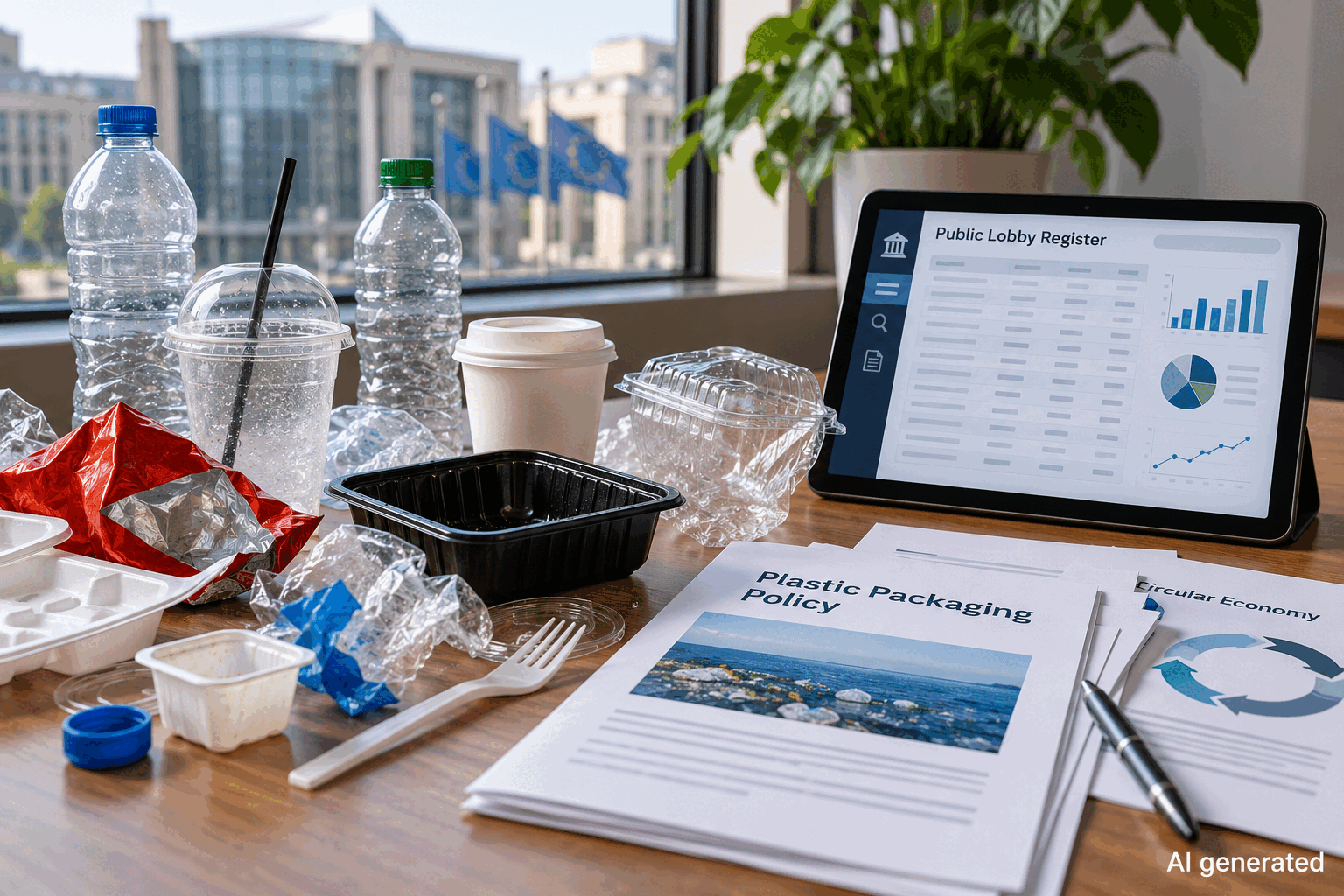
A new report from Zero Waste France has put numbers and names around the political fight over single-use packaging. The environmental advocacy group says packaging manufacturers and their representatives declared at least €2.5 million in lobbying expenditure for 2025 while defending a market it values at about €22 billion. The figures were reported by Le Monde on 8 October.
The report is advocacy research, not a regulator’s finding of misconduct. Lobbying is legal, and a declared budget does not prove that any particular meeting changed a vote. Zero Waste France built its analysis from the public register maintained by the High Authority for Transparency in Public Life, supplemented by industry communications, LinkedIn posts and parliamentary records, according to Carenews.
Packaging volumes remain far from the stated trajectory
The policy stakes are measurable. More than 110 billion units of single-use household packaging entered the French market in 2024, according to figures cited by Zero Waste France and Actu-Environnement. Le Monde reports that 14.6 billion plastic bottles are still sold annually even though national policy set a goal of halving that volume by 2030.
Recycling is also falling short of stated targets. Le Monde says France recycles about one quarter of its plastic packaging, compared with an EU target of 50 per cent and an average of 42 per cent elsewhere in the bloc. It reports that France pays roughly €1.5 billion to the European Union under the contribution linked to non-recycled plastic packaging waste.
A register shows contact and spending, not automatic causation
Zero Waste France focuses on the gap between formal transparency and practical influence. The plastics packaging association Elipso reported 34 lobbying activities for 2025 and a €200,000 budget, Le Monde says. The group credits its advocacy with helping stop a proposed tax on non-recycled plastic packaging during the 2026 budget process. That account establishes activity and a claimed outcome, not a complete causal chain.
Industry organisations argue that packaging rules must account for food safety, industrial capacity, recycling infrastructure and European competition. Environmental groups answer that voluntary change and recycling alone have not reduced the number of disposable units quickly enough. Those are competing policy positions; the value of the register is that citizens can see who is advancing them and with what declared resources.
The next useful evidence will come from decisions, not rhetoric: whether France adopts binding reuse targets, revives producer charges, improves collection and meets its 2030 bottle objective. The report makes lobbying visible, but policymakers still have to explain which arguments shaped each rule and publish enough data to show whether packaging volumes actually fall.
Sources & context
Reporting and reference material used for this article. Context sources do not independently confirm every news claim.
- Zero Waste France ↗Primary advocacy source, October 2026: report listing and methodology focus on declared packaging-industry lobbying.
- Le Monde ↗Independent reporting, 8 October: declared budgets, market value, packaging volumes and recycling comparisons.
- Carenews ↗Independent sector reporting, 8 October: research method and dispute over the withdrawn producer tax.
- Actu-Environnement ↗Specialist context, 8 October: 2024 packaging volume and the industry-association policy conflict.
Written for WHIF from the linked material. This article does not claim on-the-ground reporting. Our editorial standards.