France's national strike begins under heavy security and transport closures
Authorities have deployed about 70,000 police while unions widen their action across public services and Paris closes 25 metro stations from 11:00.
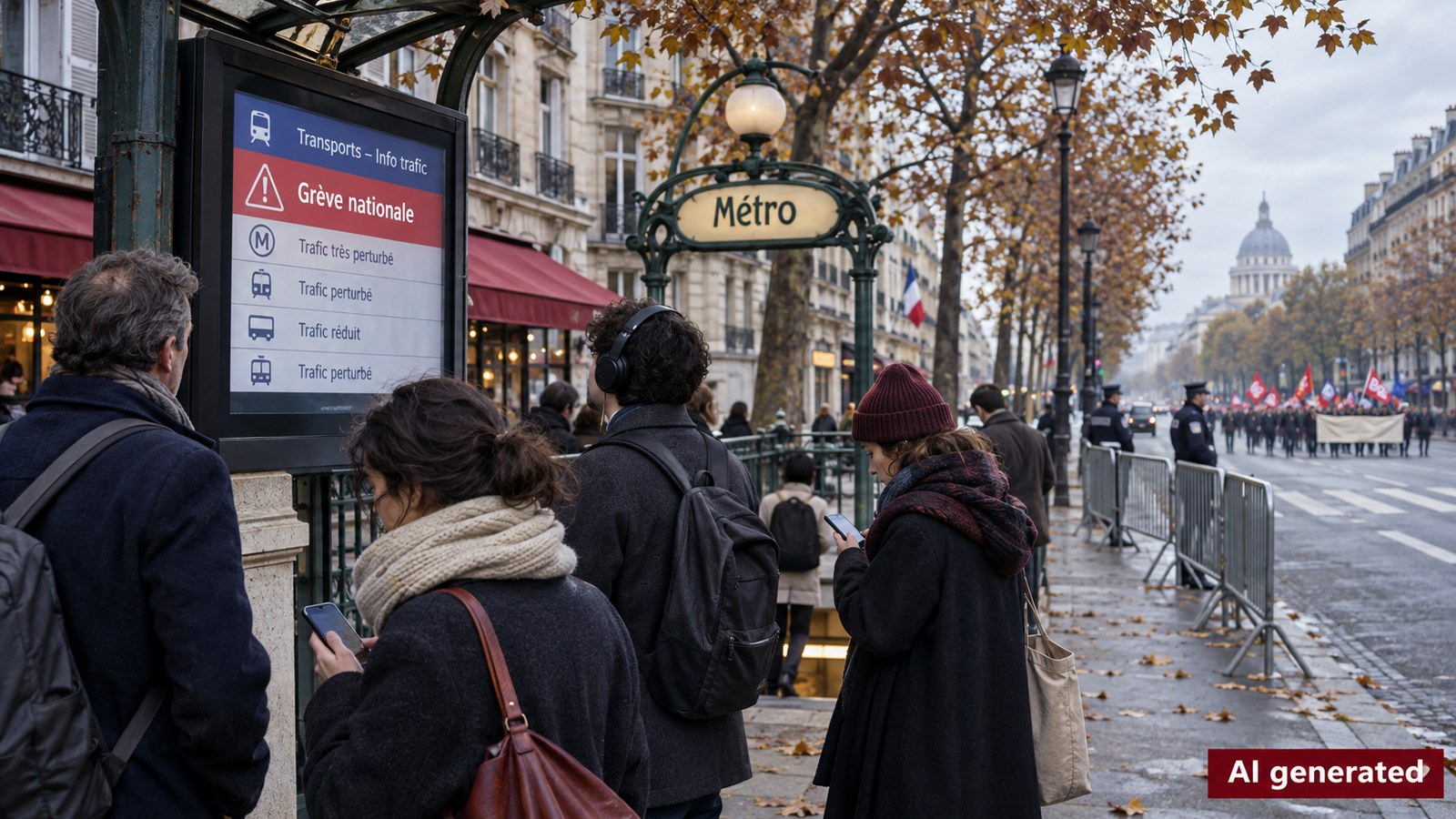
France entered a national day of strikes and demonstrations on Thursday 5 November with an unusually large security deployment and confirmed transport restrictions. Reuters reports that about 70,000 police are being deployed nationwide. The figure describes official preparations, not the number of protesters or an assessment of how the day will end.
The mobilisation brings together unions and student groups around wages, living costs, public services and education. Reuters says energy workers are expected to participate, while The Guardian reports calls involving teachers, hospital staff, postal workers, rail staff and air traffic control. Participation will vary by workplace and region, so a national call should not be read as a uniform shutdown.
Paris closures are now confirmed
Paris travellers face a concrete change from the advance warnings published earlier this week. RATP says 25 stations will close from 11:00 at the request of the police prefecture, with trains passing through without stopping and connections unavailable. The affected stations include major central stops such as Concorde, Invalides, Madeleine and Charles de Gaulle–Étoile. Reopening requires police authorisation.
Rail disruption is broader but uneven. SNCF Connect describes TGV traffic as slightly disrupted, with disruption on Intercités, TER services and trains and RER lines in Île-de-France. Passengers are advised to verify a specific train shortly before departure, because a national forecast cannot replace a live operator timetable.
Why the security deployment is so large
The political setting is tense after unrest on 17 October. Reuters reports that President Emmanuel Macron convened a defence and security meeting on Wednesday and that the government wants to avoid a repeat of violence and looting. That context explains the scale of the deployment, but it does not establish that today's marches will become violent.
Forecasts of turnout must also remain forecasts. Domestic intelligence estimates cited by Reuters expected between 500,000 and 700,000 participants outside Paris. At this morning's publication time, verified final attendance, arrest and injury totals were not available. WHIF will not convert projections or isolated images into national results.
Confirmed action, unfinished outcome
Today's material development is therefore operational as well as political: the strike is under way, the security plan is active and named transport closures are confirmed. The responsible reading is provisional. People travelling should use RATP and SNCF live information, while claims about the scale and conduct of the mobilisation should wait for independently verified evidence.
Sources & context
Reporting and reference material used for this article. Context sources do not independently confirm every news claim.
- Reuters ↗Independent national reporting, published 5 November 2026: strike scope, security deployment, political context and turnout forecasts.
- RATP ↗Primary operator bulletin, consulted 5 November 2026: 25 station closures from 11:00, skipped stops and reopening conditions.
- SNCF Connect ↗Primary operator information, consulted 5 November 2026: disruption levels by service family and live-check advice.
- The Guardian ↗Independent reporting, published 5 November 2026: sectors covered by the national strike call.
Written for WHIF from the linked material. This article does not claim on-the-ground reporting. Our editorial standards.