France raises its bird-flu risk level to high
The nationwide metropolitan alert takes effect on 20 November, bringing tighter biosecurity as migration-linked infections spread across Europe.
France has raised the risk from highly pathogenic avian influenza to the highest national level across metropolitan France. The ministerial order published on 19 November takes effect on Friday 20 November, replacing the moderate level introduced earlier in the month.
The decision follows infections detected in wild birds along migration corridors and outbreaks in domestic birds in France and neighbouring European countries. The alert level describes the risk of virus introduction and spread among birds; it is not a measure of infection in the general human population.
High risk activates stricter protection measures
High-risk rules require stronger protection for poultry holdings, including confinement or netting in covered situations, controls around gatherings and movements, and reinforced surveillance and disinfection. Exact obligations vary with the type of bird, establishment and activity, so keepers must follow current ministry and prefectural instructions.
The Loiret prefecture cited three confirmed outbreaks in small domestic flocks, positive wild ducks in the Camargue and a wider rise across European poultry and wildlife. Reuters independently reported that the national escalation was driven by seasonal spread in wild birds.
A national classification is not a farm diagnosis
These precautions are designed to reduce contact between kept birds and potentially infected wildlife. They do not mean that every free-range flock is infected, and the national classification should not be used to identify a particular farm or locality as an outbreak site without official confirmation.
For commercial farms, confinement can affect labour, animal management and outdoor-production claims. For private keepers, the response includes securing feed and water from wild birds, limiting unnecessary contact and reporting abnormal mortality through the appropriate veterinary channel.
Surveillance will determine how long measures remain
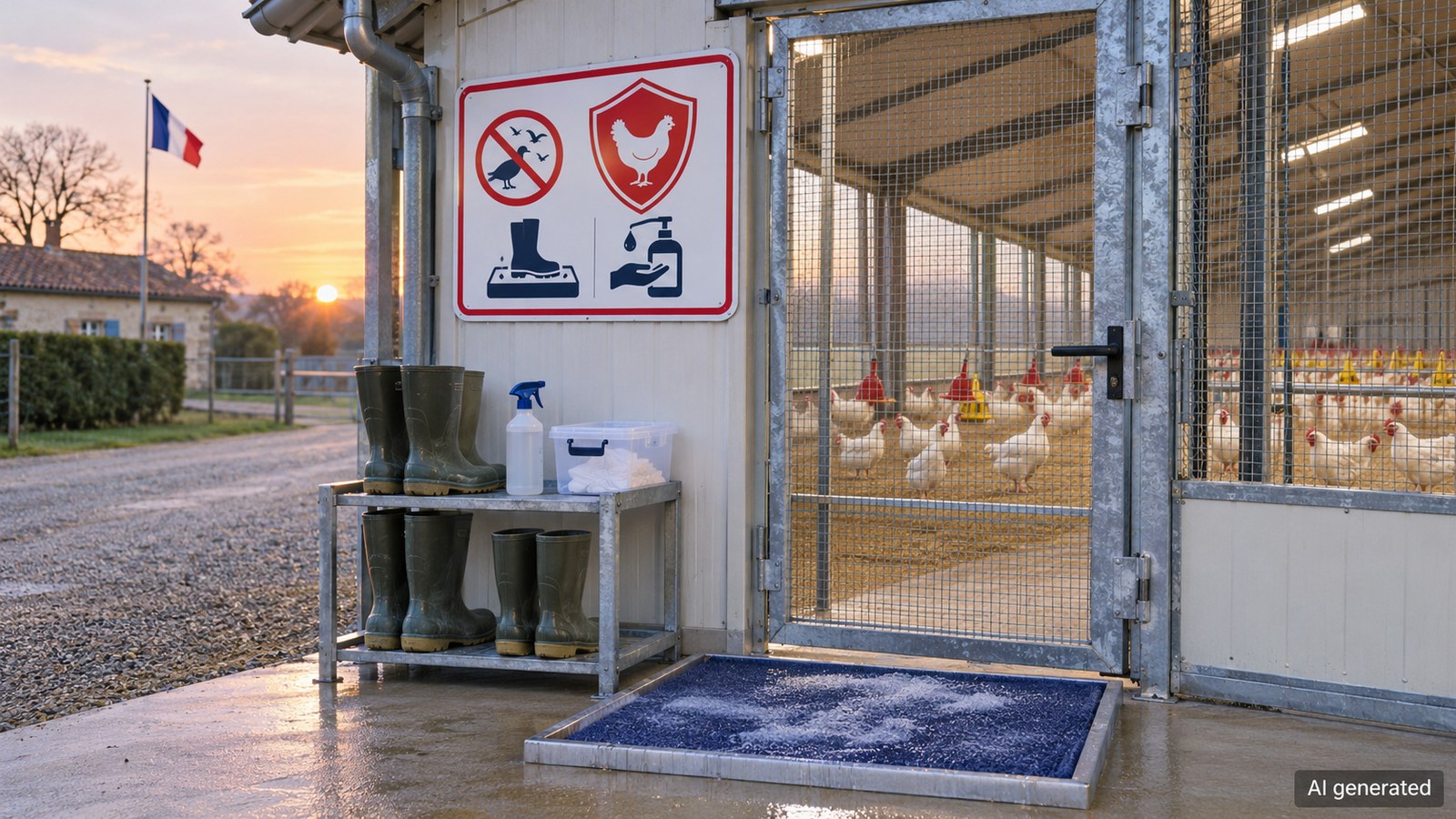
The next indicators will be confirmed outbreaks, surveillance results and any later change in the national level. The accompanying image is an invented biosecurity entrance with healthy birds, not a photograph of an affected farm, an outbreak or a named place.
Sources & context
Reporting and reference material used for this article. Context sources do not independently confirm every news claim.
- Loiret prefecture ↗Primary government notice, published 19 November 2026: effective date, outbreak context and required risk response.
- Reuters ↗Independent reporting, published 19 November 2026: national escalation and seasonal European wildlife context.
- French Agriculture Ministry ↗Primary operational context, consulted 20 November 2026: surveillance, biosecurity and official situation updates.
- La Dépêche ↗Additional reporting, published 19 November 2026: corroboration of the high alert and immediate restrictions.
Written for WHIF from the linked material. This article does not claim on-the-ground reporting. Our editorial standards.