France’s food-waste campaign tackles the everyday barriers to sorting
Fresh official guidance explains how households can separate scraps without a private garden. The campaign is new, not the underlying 2024 framework.
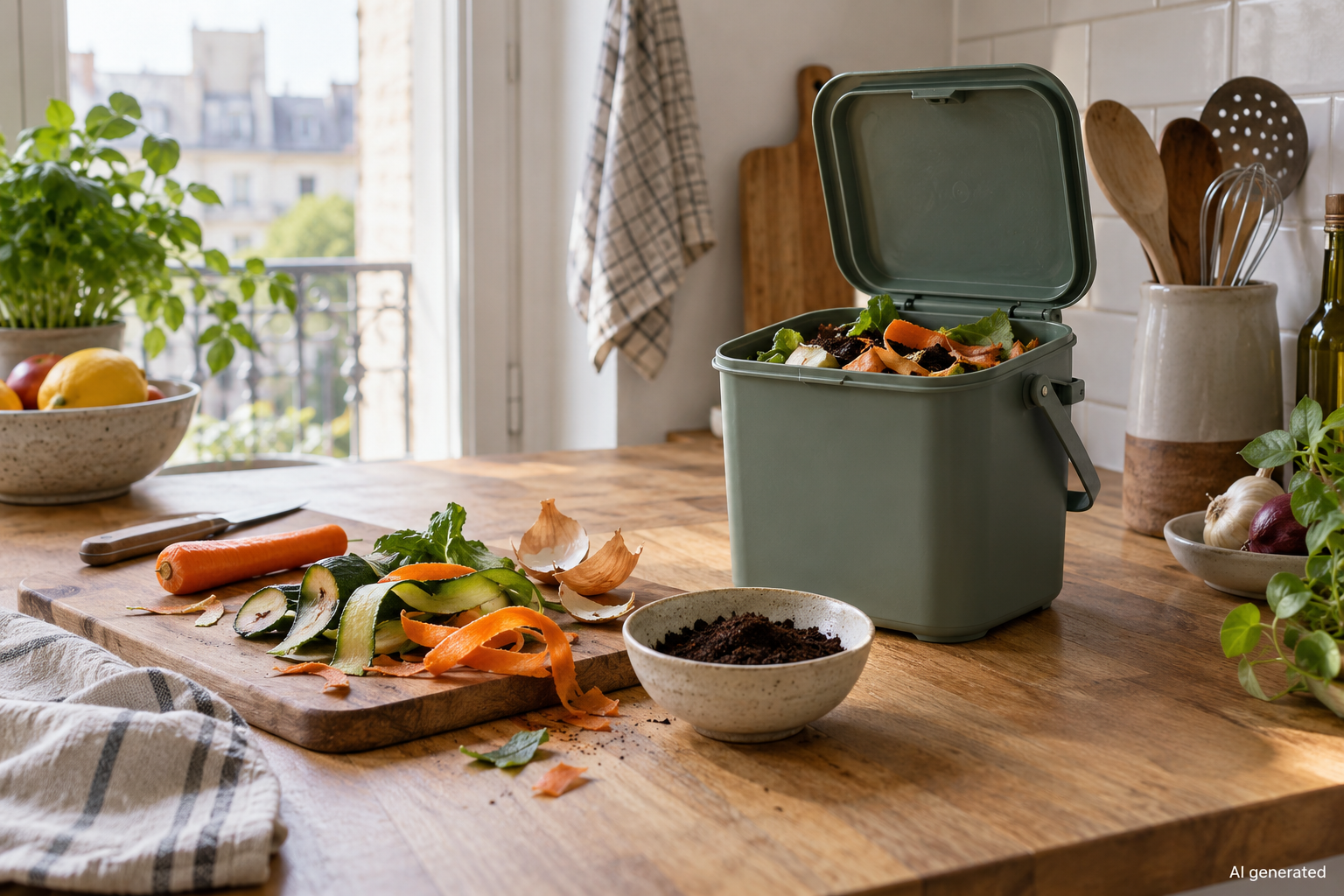
A fresh French government guide published on 18 September aims to make food-waste sorting less confusing. It follows the renewal of a national information campaign earlier this month. The immediate message is practical: residents do not need to own a garden or install a private compost bin to separate organic waste.
The ministry describes several possible arrangements, including shared composting, local drop-off points and collection from homes. The relevant choice depends on the service offered locally. Before buying equipment or putting scraps into a communal container, check the instructions of the municipality or the organisation responsible for waste collection.
An existing measurement, newly explained
The campaign cites ADEME’s MODECOM 2024 work to put the scale in context: organic waste represents about 32 percent of the contents of the ordinary residual household bin. This is a composition figure, not a claim that a third of every household’s purchases is wasted. ADEME’s publication page dates the study release to December 2025, so the September campaign is communicating existing research rather than publishing a new national measurement.
Separating these materials can support different treatments. The ministry describes composting and anaerobic digestion, with outputs that can include soil amendments and biogas. Not every local service uses the same process. Residents should follow their collection scheme’s accepted-material list rather than assume that everything biodegradable belongs in every bin.
Start with the local collection instructions
The new guide also addresses storage. A small covered kitchen caddy, emptied regularly, can help; for home composting, it recommends attention to aeration and the balance of wet and dry material. The practical point is to establish a manageable routine rather than accumulate a large quantity of scraps before deciding where they should go.
The campaign refers back to the source-separation framework introduced in January 2024. It does not announce a new September deadline or establish that the same collection service is available everywhere. Its companion information page also puts prevention before treatment: avoiding unnecessary food waste remains distinct from finding a better destination for unavoidable scraps.
Sources & context
Reporting and reference material used for this article. Context sources do not independently confirm every news claim.
- Ecological transition ministry: six misconceptions, 18 September 2026 ↗Primary current guidance and the immediate news peg; national policy communication, not an independent audit of local services.
- ADEME: MODECOM 2024 study publication ↗Research context: publication page consulted for the study’s scope and December 2025 release date. Downloadable report was not reviewed; the 32 percent figure is attributed to the ministry.
- Ecological transition ministry: renewed food-waste campaign, updated 11 September 2026 ↗Primary practical context on treatment, collection choices and prevention. Same ministry as the first source, not independent corroboration.
Written for WHIF from the linked material. This article does not claim on-the-ground reporting. Our editorial standards.