France's energy-poverty dashboard shows wider pressure from heat and bills
A new national dashboard puts 3.5 million households in energy poverty and shows that unaffordable warmth now sits alongside rising summer heat risk.
France's National Observatory for Energy Poverty estimates that 3.5 million households were in energy poverty in 2024, equivalent to 11.5 percent of households. The share rose by 0.7 percentage point in a year, according to the 2026 national dashboard released on Wednesday 18 November.
The measure combines low income with a high burden from housing energy costs. It is therefore narrower than the number of people who say they feel cold or restrict their heating, but it gives a consistent national indicator. The dashboard also records 1.2 million supplier interventions for unpaid residential energy bills in 2025.
Restriction reaches beyond the headline indicator
Self-reported pressure is broader. The observatory says 72 percent of households restricted their heating during winter 2026 to avoid high bills. Forty-three percent of low-income households reported being cold during winter, compared with 35 percent across all households surveyed.
The 2026 edition adds a stronger summer dimension. Sixty-five percent of households said they had experienced excessive heat in their home, rising to 75 percent among beneficiaries of the energy cheque. Poor insulation, limited ventilation and the cost of cooling can turn the same dwelling into a winter and summer health risk.
Winter and summer risks are not the same measure
These figures come from different sources and years, so they should not be added together. The 11.5 percent indicator is calculated from 2024 income and expenditure data, while the heating and summer-comfort figures are survey responses collected later. Together, they show several forms of vulnerability rather than one interchangeable count.
The National Energy Mediator's 2026 barometer reinforces the affordability signal, reporting that many households are changing consumption because of price concerns. Official guidance says the energy cheque is allocated according to tax and household information and can be used for eligible energy bills, but eligibility does not guarantee that a home is adequately insulated or protected from heat.
Bills are only one part of housing vulnerability
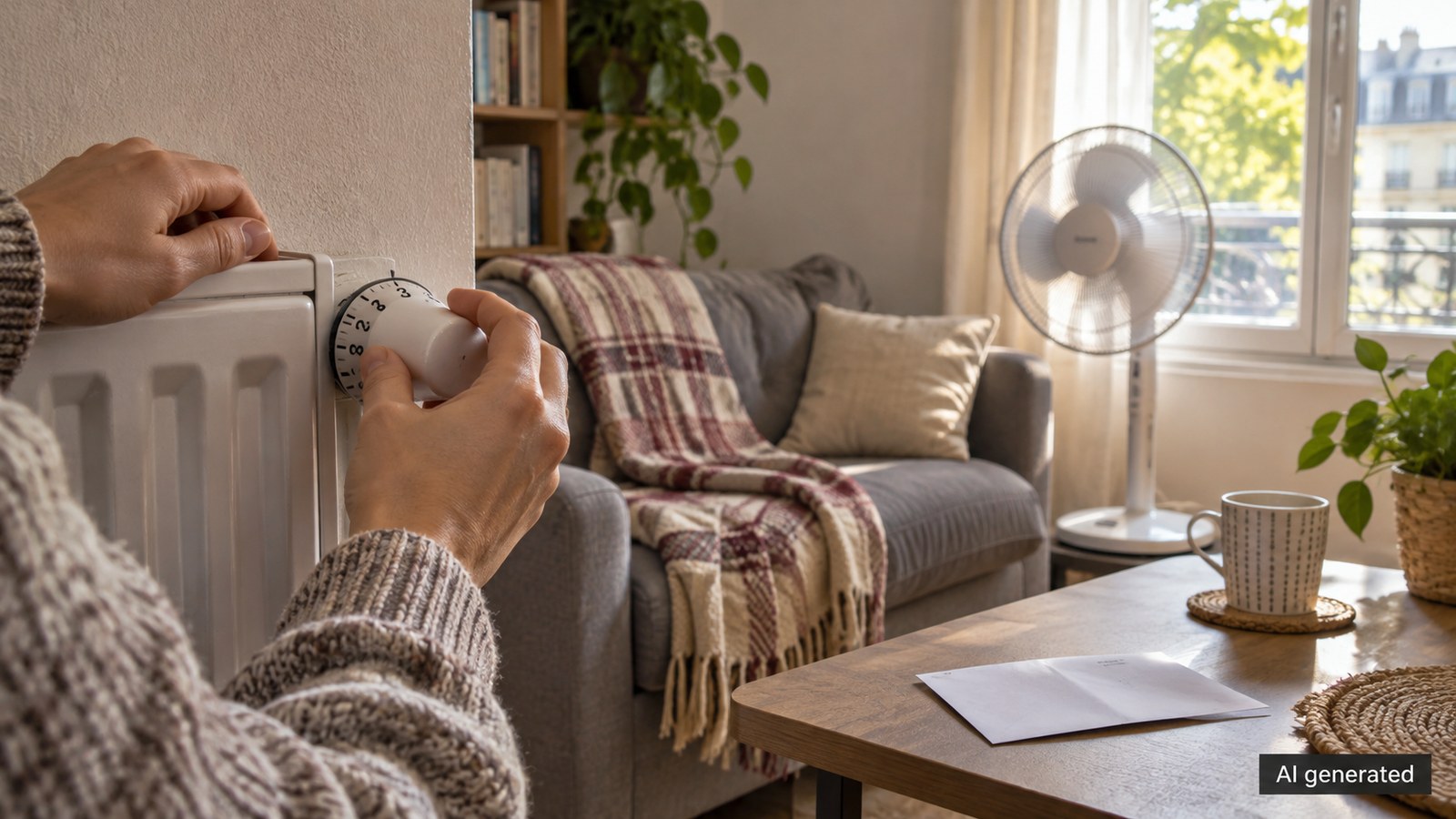
The policy question is therefore larger than emergency bill assistance. Renovation quality, tenant protections, summer comfort and access to advice all affect whether support produces durable change. The accompanying image is an invented home-comfort scene, not a photograph of a surveyed household, a real bill or a named place.
Sources & context
Reporting and reference material used for this article. Context sources do not independently confirm every news claim.
- ADEME and ONPE ↗Primary national dashboard, released 18 November 2026: calculated energy-poverty rate, unpaid-bill interventions and household comfort indicators.
- National Energy Mediator ↗Independent public-authority survey context, published in November 2026: consumer concern, bill pressure and changes in household energy use.
- Service-Public ↗Primary administrative context, consulted 18 November 2026: energy-cheque eligibility, allocation and permitted uses.
Written for WHIF from the linked material. This article does not claim on-the-ground reporting. Our editorial standards.