France builds a national evidence base for insect decline
Dynabiod links field counts, collections and data tools across 1,000 sites to understand changes in invertebrates and plants.
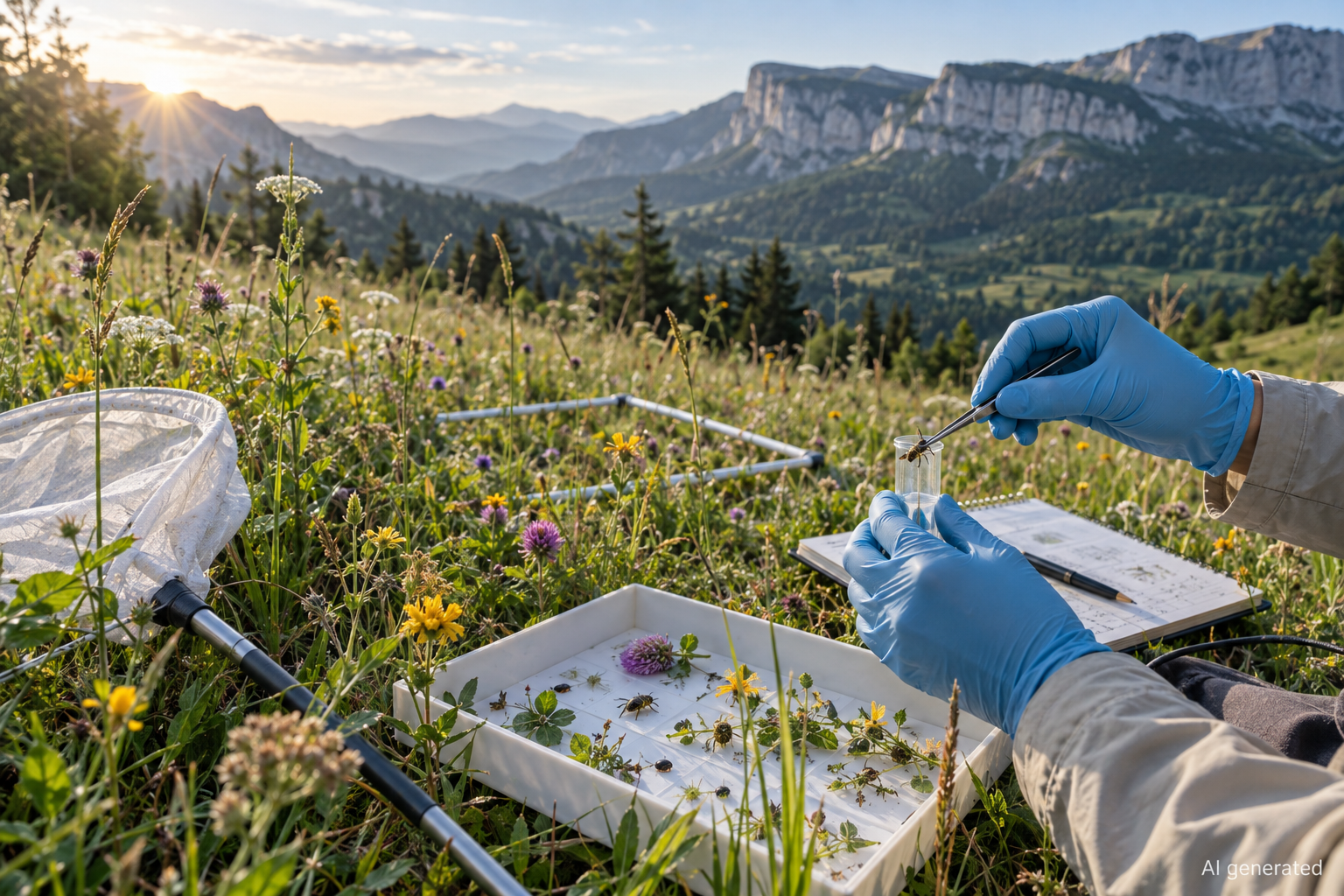
A field report from the Vercors has brought fresh attention to Dynabiod, France’s national research programme on changes in invertebrate and plant biodiversity. Le Monde followed scientists working with insects in September and described the patient observation behind the project. The programme itself was launched earlier in 2026, so this is an update on work under way rather than a new launch.
The National Museum of Natural History says Dynabiod is planned over eight years with a budget of €45 million. Its aim is to document the dynamics and functions of invertebrates and plants, understand pressures on them and develop responses. The museum coordinates the programme with CNRS and INRAE.
Why 1,000 sites and old collections matter
Scale is central to the design. Le Monde reports that monitoring is intended to cover 1,000 sites, while the museum describes a combination of long-term observation, experiments, modelling and large data sets. Standard methods can make records from different habitats and dates more comparable than isolated observations.
Historic collections add another time dimension. The museum holds tens of millions of specimens, allowing researchers to compare current sampling with evidence gathered in earlier periods. Collections have limits because collecting methods and locations change, but they can preserve information that cannot be recreated after a habitat has changed.
Tools are useful only with transparent evidence
Pl@ntNet, a Dynabiod partner, says the programme also includes tools for recognising and monitoring plants and invertebrates at scale. Its description is a partner account of intended technology, not a result proving that every species can already be identified automatically. Expert verification and transparent uncertainty remain important.
Recordings from the programme’s launch day, published by Canal-U, show that Dynabiod brings together multiple research institutions and work packages. This matters because a national trend cannot be inferred from one meadow or one charismatic species. The value comes from consistent measurements across places, seasons and groups that receive less public attention.
The policy promise should be judged after data are collected and analysed. Better monitoring can reveal where decline is strongest and which pressures are associated with it, but measurement alone does not restore habitats. The milestones to watch are published protocols, accessible data, peer-reviewed results and evidence that public decisions respond to what the programme finds.
Sources & context
Reporting and reference material used for this article. Context sources do not independently confirm every news claim.
- Le Monde ↗Current field reporting from the Vercors and programme-scale context, published 20 September 2026
- National Museum of Natural History ↗Primary programme description, institutions, budget and research objectives, published 1 June 2026
- Pl@ntNet ↗Partner description of the monitoring and recognition tools planned within Dynabiod
- Canal-U ↗Primary recordings from the programme launch, consulted for institutional and work-package context
Written for WHIF from the linked material. This article does not claim on-the-ground reporting. Our editorial standards.