France enters the recharge season with water reserves still exposed
Two-thirds of monitored groundwater levels were below normal on 1 October. The autumn test is sustained recharge, not a single spell of rain.
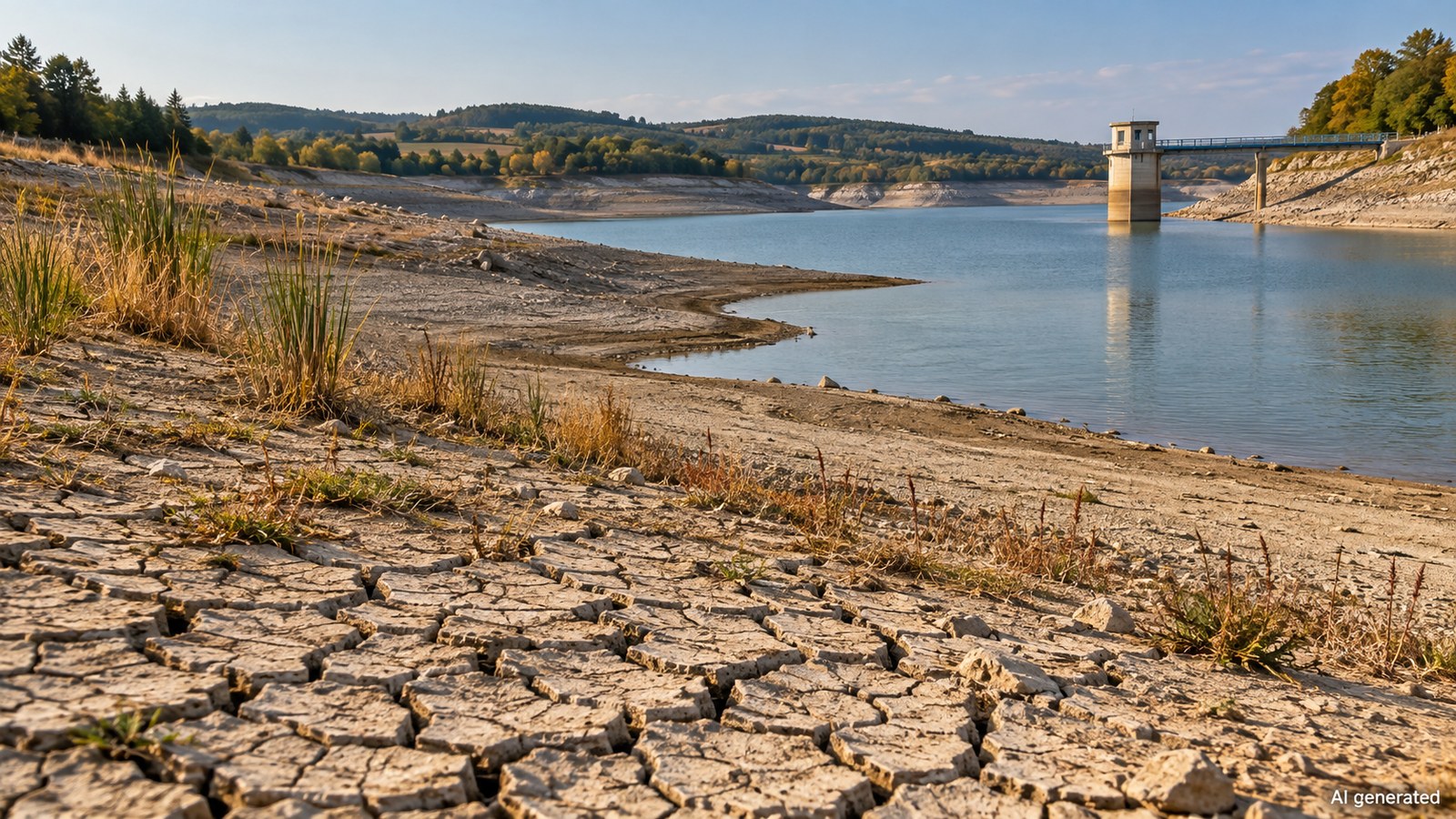
France has entered the normal groundwater recharge period with reserves still unusually weak. The BRGM reported that 66% of monitored groundwater points were below their monthly norms on 1 October, compared with 31% a year earlier. Levels were still falling at 81% of observation points, while only 7% had begun to rise.
The national figures hide different local conditions, but the direction is clear. Effective rainfall had been deficient since May and the usual autumn transition from drawdown to recharge had barely started. The BRGM described particularly low levels in several limestone, crystalline and sandstone aquifers, while some reactive aquifers in the south and north-east had started to improve.
A summer shock that outlasts summer
The Office français de la biodiversité's mid-October field account adds ecological and enforcement detail. It said around half of observed small watercourses had dried up during the crisis, more than 100,000 hectares of forest had burned and 64,000 people still lacked tap water at the beginning of October. From June to September, the agency carried out more than 16,000 checks on water restrictions; 1,211, just over 7%, identified breaches followed by an administrative or judicial response.
Météo-France places those impacts in an exceptional climate sequence. Summer 2026 was France's hottest since national records began in 1900, with a mean temperature of 24.0°C, 3.6°C above the 1991–2020 norm. September then produced a national rainfall deficit of about 70% and ranked among the driest Septembers in the hydrological record used by the service.
Why autumn rain is not an instant reset
A wet episode can lift a fast-reacting aquifer or river quickly without repairing deeper reserves. Recharge depends on repeated effective rainfall, soils that are no longer taking most of the water for vegetation and enough time for infiltration. Local flooding can therefore coexist with a national groundwater deficit.
The next useful evidence will be monthly BRGM measurements and local drinking-water restrictions, not a few rainy days. Households, farmers and municipalities face different rules by department, so national percentages should not substitute for prefectural notices. The current data support caution, but they do not imply that every commune has the same supply risk.
Source access note: OFB, BRGM and Météo-France were consulted as separate primary public bodies for field impacts, groundwater monitoring and climate measurements. Banque des Territoires supplied independent reporting that connected the new OFB and BRGM releases. Figures refer to different observation systems and dates, which are stated rather than merged into one estimate.
Sources & context
Reporting and reference material used for this article. Context sources do not independently confirm every news claim.
- OFB: Drought 2026, nature under pressure ↗Primary field source: ecological impacts, checks and early-October drinking-water figure
- BRGM: Groundwater on 1 October 2026 ↗Primary data: monitoring-point levels, trends and recharge status
- Météo-France: 2026 climate summaries ↗Primary climate context: record summer heat and September drought
- Banque des Territoires: watercourses and groundwater remain stressed ↗Independent reporting: synthesis of OFB and BRGM findings, 19 October
Written for WHIF from the linked material. This article does not claim on-the-ground reporting. Our editorial standards.