France sets a €725 million farm-recovery plan after a punishing summer
The ten-year package combines climate equipment, loan guarantees, water projects and farm transfers, but much of its delivery still depends on budgets and project selection.
The French government has set out a €725 million agricultural recovery plan following a summer of extreme heat, drought and fires. Announced on 12 November at the close of the Food Sovereignty Conferences, it is separate from the emergency aid already mobilised after the summer. The new package is designed to run over ten years.
The plan has three stated goals: adapt farms to climate change, strengthen food and agricultural sovereignty, and make farm transfers easier. The agriculture ministry says €400 million is intended for projects it regards as strategically important, while €100 million will support equipment that protects crops and livestock from high temperatures.
Equipment, guarantees and strategic projects
A further €100 million is intended to guarantee roughly €1 billion in loans for long-term farm adaptation. The government also says it will continue additional support for agricultural water projects and create a transmission pact for farmers approaching retirement. Those announcements describe allocated envelopes and mechanisms, not money already spent on completed works.
The package tries to join two objectives that can pull in different directions. Raising domestic production may require new equipment, processing capacity and irrigation, while climate adaptation demands careful management of water, soil and energy. Le Monde's reporting highlighted that tension rather than treating sovereignty and environmental resilience as automatically identical.
Production and adaptation must coexist
The political timetable creates another condition. Prime Minister Sébastien Lecornu described agriculture as a major part of future budget compromise, and several measures depend on the 2027 finance law or later project decisions. The government says about 130 water-related projects could move forward by 2027, but selection, permits and local water availability will matter.
Farm organisations and affected regions will now judge whether the plan is accessible to smaller holdings as well as larger investment projects. Loan guarantees can unlock capital but still leave borrowers carrying debt. Equipment grants can reduce heat exposure, but they do not settle debates about water allocation or agricultural prices.
Delivery will determine who benefits
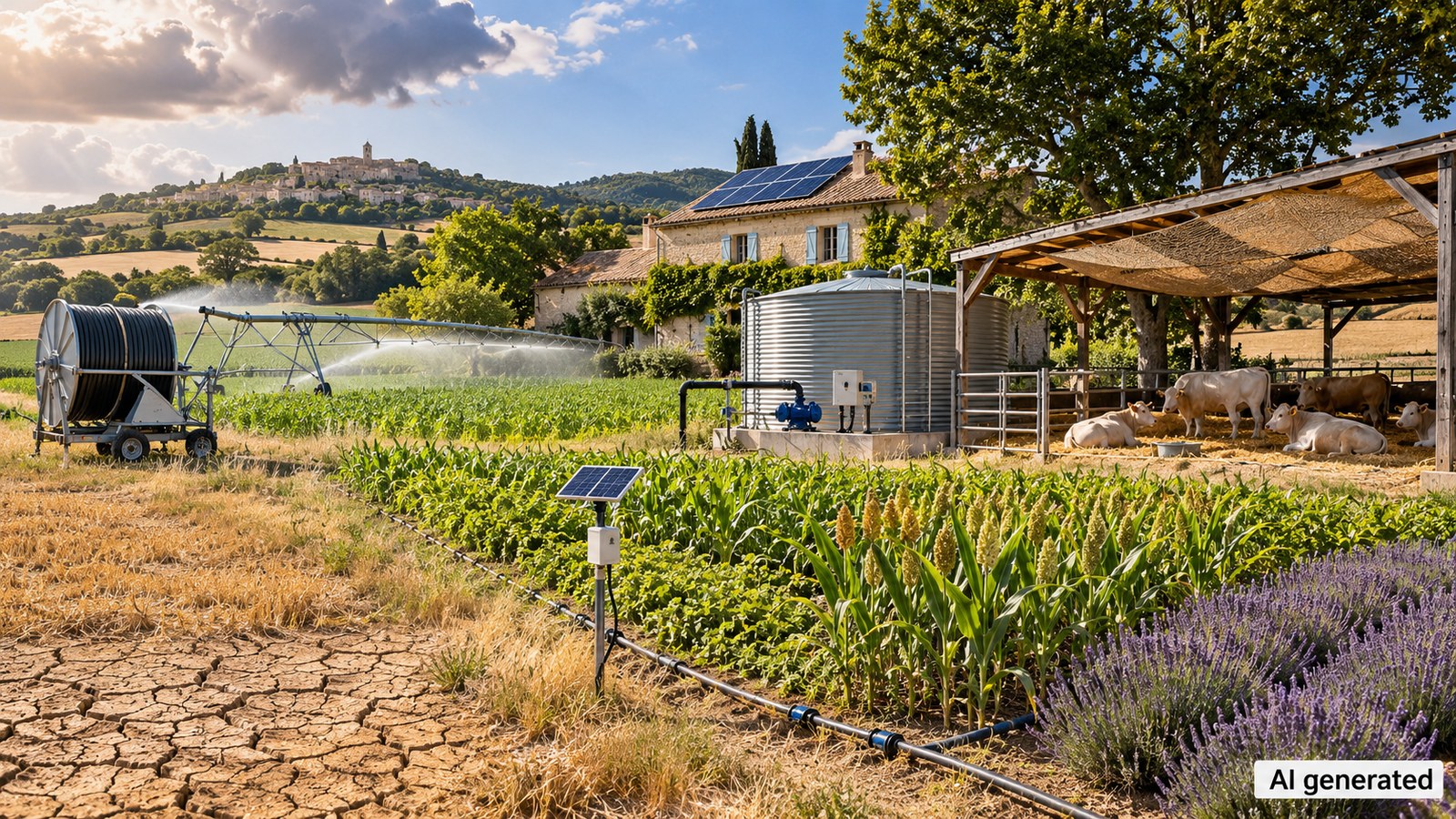
The most useful measures of success will be published awards, the distribution of support by farm type and region, completed adaptation projects and evidence that businesses remain viable through future shocks. Until then, €725 million is a policy commitment with defined headings, not a verified outcome. The accompanying image is illustrative rather than documentary.
Sources & context
Reporting and reference material used for this article. Context sources do not independently confirm every news claim.
- Ministry of Agriculture ↗Primary press dossier, published 12 November 2026: €725 million total, relationship to emergency aid and the three programme axes.
- French Government ↗Primary announcement and transcript: climate-equipment support, loan guarantees, water projects and dependence on the 2027 budget.
- Le Monde ↗Independent reporting: tension between production goals and climate adaptation, programme context and implementation questions.
- Public Sénat ↗Independent political reporting: ten-year horizon, funding components and the Prime Minister's budget-compromise comments.
Written for WHIF from the linked material. This article does not claim on-the-ground reporting. Our editorial standards.