Stellantis to end Sochaux night shift as demand softens
The January change will leave about 500 temporary contracts unrenewed, while the plant lowers daily output and keeps a separate battery-pack night team.
Stellantis will end the vehicle-assembly night shift at its Sochaux factory in January 2027, a change expected to leave about 500 of 1,100 temporary contracts unrenewed. Management presented the plan to employee representatives on 24 November, according to Reuters and regional reporting.
The factory introduced the shift in January 2026 to support production of the Peugeot 3008 and 5008. Stellantis now plans to operate two daytime teams and target about 850 vehicles a day, down from roughly 1,150 under the three-shift pattern.
Battery-pack night work will continue
The decision does not close the plant or eliminate all night work. A separate night team producing battery packs is due to remain. L'Est Républicain also reported that several hundred permanent employees assigned to nights will be offered places on daytime teams or other arrangements.
Management linked the adjustment to market demand and the plant's order book. L'Argus reported planned periods of short-time working around the transition. These are operational forecasts, and actual output will still depend on orders, supply conditions and the mix of vehicles produced.
More electric vehicles, but lower planned output
The product mix is shifting toward electrified models. Reuters reported that battery-electric vehicles are expected to represent about 47 percent of Sochaux production from January, up from roughly 20 percent. That increase does not automatically preserve the same labour requirement when total planned output falls.
Temporary workers carry the immediate employment cost because their assignments can expire without the redundancy process that applies to permanent posts. The announcement therefore illustrates how manufacturers can change staffing quickly even while investing in electric production and maintaining a major industrial site.
The January plan remains an operating forecast
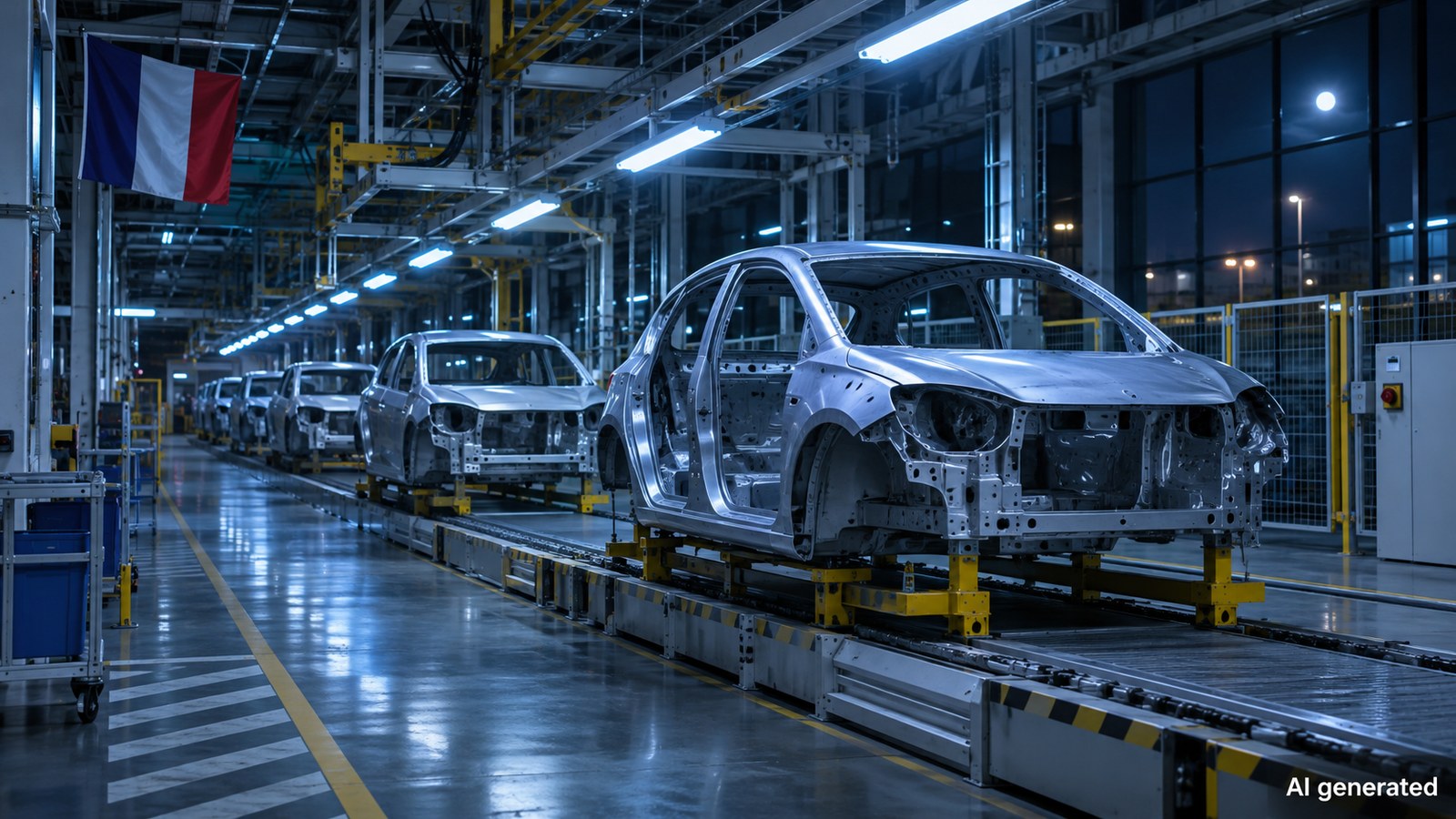
The confirmed development is the January shift reorganisation, not a permanent production forecast for 2027. WHIF will follow any revised timetable or employment measures. The accompanying image is an invented empty assembly line, not a photograph of Sochaux, its workers or a Stellantis production stoppage.
Sources & context
Reporting and reference material used for this article. Context sources do not independently confirm every news claim.
- Reuters ↗Independent reporting, published 25 November 2026: temporary-contract impact, output target, vehicle mix and retained battery-pack shift.
- L'Est Républicain ↗Independent regional reporting, published 24 November 2026: employee briefing, permanent-worker transfers and short-time-working plans.
- L'Argus ↗Independent automotive reporting, published 25 November 2026: shift history, production change and market context.
Written for WHIF from the linked material. This article does not claim on-the-ground reporting. Our editorial standards.