EDF speeds up nuclear climate work after a record summer strain
Extreme heat and low rivers cut French nuclear output on an unprecedented scale, bringing cooling systems and maintenance schedules into the adaptation debate.
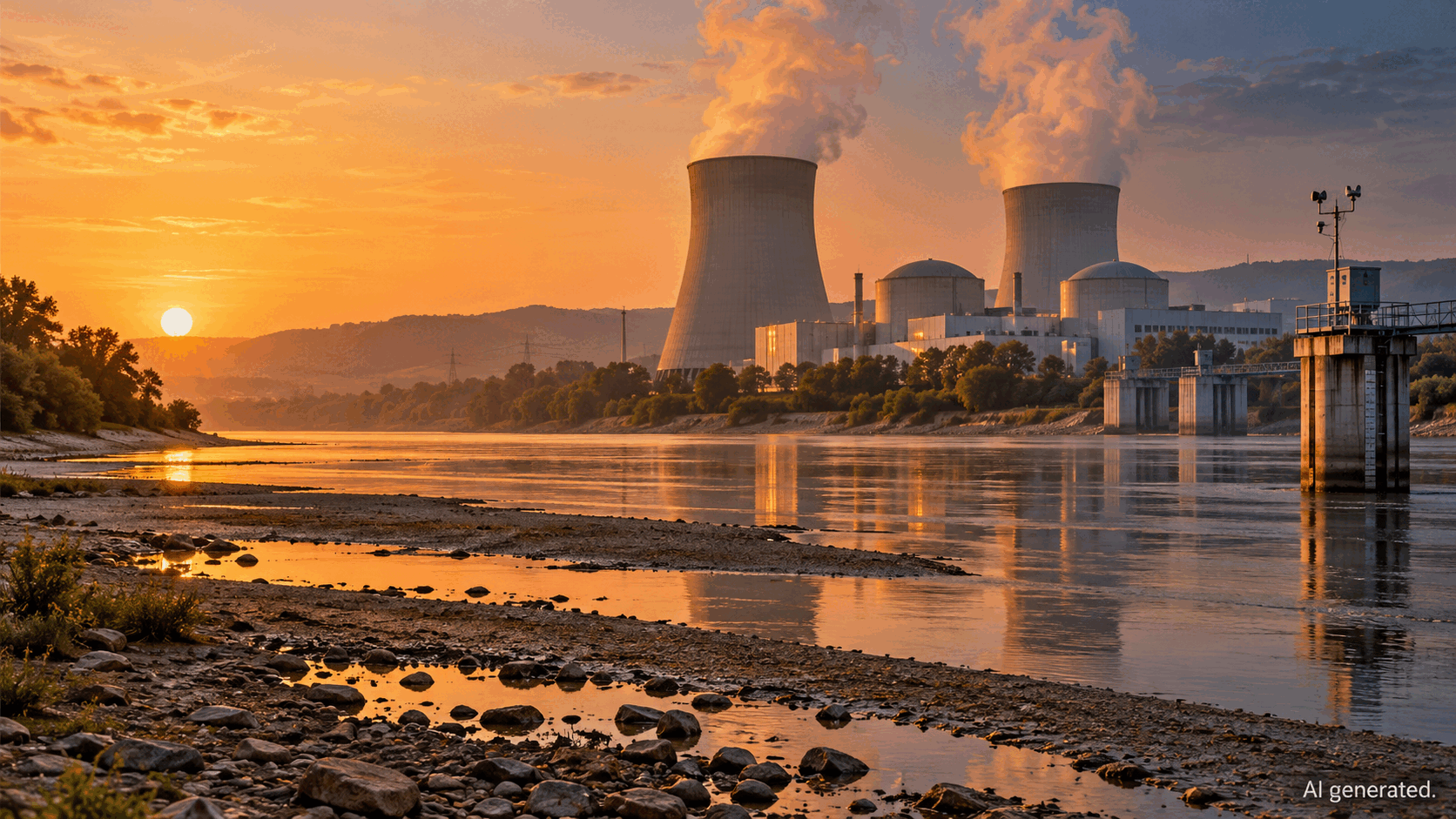
EDF says it will accelerate climate adaptation across France's nuclear fleet after heat and river conditions caused record environmental restrictions this summer. Xavier Ursat, the group's senior executive responsible for engineering and supply-chain projects, told Reuters on 13 October that the experience showed the existing ADAPT timetable needed to move faster.
The scale was unusual. EnergyScan data cited by Reuters put output lost to environmental restrictions at more than 13 terawatt-hours by 7 October, over four times the previous record. EDF's own September operational update said river conditions were still constraining some reactors even as cumulative 2026 nuclear generation remained above the comparable 2025 level.
Cooling rules protect rivers during extreme heat
Most of the affected reactors use rivers or estuaries for cooling. When water is too warm or flows are too low, environmental limits can require an operator to reduce output so discharged water does not put additional stress on aquatic ecosystems. These are controlled restrictions, not evidence that reactor safety systems failed.
The proposed response includes cooling towers that use air to lower the temperature of part of the water before discharge, as well as basins that can reduce river-water temperatures during heatwaves. Reuters reported that EDF had already set out an €8.7 billion adaptation budget in June. Faster work would bring costs forward and may require changes to outage and maintenance schedules.
A national plan still needs site-by-site choices
This summer provided several warnings. During the August heatwave, 13 of France's 57 reactors were shut or operating at reduced power for environmental or external causes, according to reporting based on EDF data. In July, low river levels and high water temperatures also affected individual sites and contributed to EDF lowering its full-year earnings outlook.
The engineering choice is not one-size-fits-all. River flow, local ecology, reactor design and the electricity system's seasonal needs differ by site. New cooling infrastructure can improve resilience, but construction, energy use and water impacts still need assessment. More adaptation also does not remove the need to cut greenhouse-gas emissions that intensify heat and drought risks.
The next useful test is a site-by-site schedule with cost, water and output assumptions that can be reviewed publicly. EDF's decision establishes the direction, while regulators and local water authorities will determine what can be authorised. A faster programme will matter only if it protects both electricity supply and the rivers on which many reactors depend.
Sources & context
Reporting and reference material used for this article. Context sources do not independently confirm every news claim.
- Reuters ↗Independent reporting, 13 October: acceleration decision, lost output, planned cooling measures and adaptation budget.
- EDF ↗Primary operational data, updated in October: September output and continuing river-related constraints.
- Euronews ↗Independent reporting, 12 August: number of reactors affected at the summer peak and environmental causes.
- Reuters, July results ↗Independent context, 31 July: site-level heat and low-water effects, earnings outlook and the earlier adaptation commitment.
Written for WHIF from the linked material. This article does not claim on-the-ground reporting. Our editorial standards.