Duralex gets a new owner, but not every job survives
Tomé's takeover keeps the Loiret glassworks operating and retains 155 posts, while its investment plan, public support and lost jobs remain central to the test ahead.
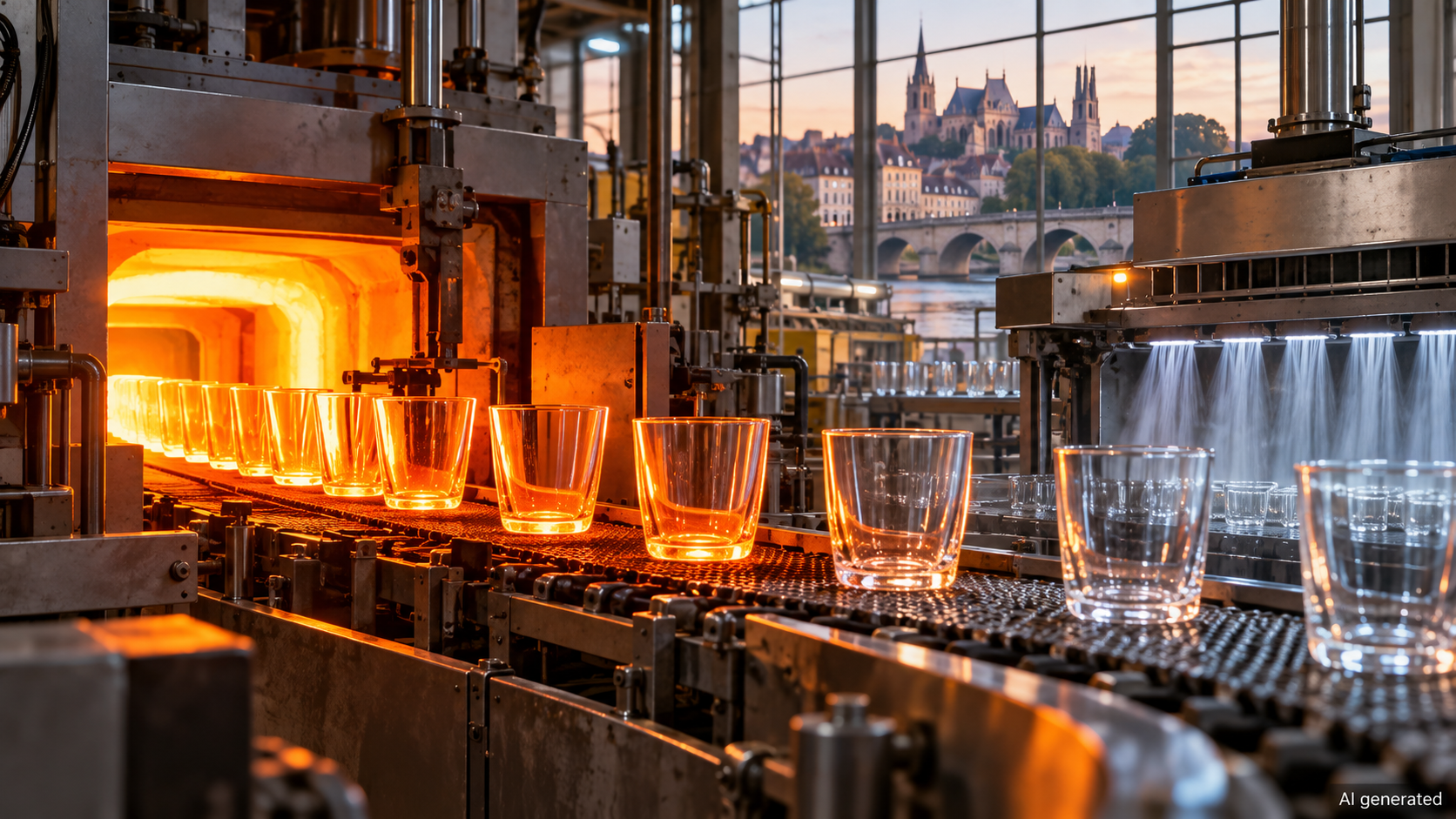
The Orléans commercial court transferred Duralex to the Tomé holding company on 14 October, ending the glassmaker's short period as a worker cooperative. Reuters reported that the buyer, led by entrepreneur Cédric Meston, expects to preserve roughly 150 jobs. Le Monde put the precise offer at 155 of the 220 jobs still on the La Chapelle-Saint-Mesmin site.
That is a rescue with a significant social cost, not a return to normal. Around 60 employees are expected to lose their posts, and the cooperative company will disappear. The decision followed Duralex's latest judicial-receivership process, its fifth in two decades, after the employee-owned structure created in 2024 ran into severe cash pressure.
A €16 million plan mixes private and public money
Tomé's plan carries €16 million in financing, according to Le Monde. Private investors are to provide €10 million, including €4 million from Tomé, while public support accounts for another €6 million. The buyer has also promised no economic layoffs for two years and priority in later recruitment for workers not retained at transfer.
The industrial promise is to cut the factory's exposure to volatile gas prices. Tomé plans an electric furnace by 2029 and photovoltaic panels with local support. Energy costs represent almost one fifth of Duralex revenue, the buyer told Le Monde. Those targets are commitments that still require equipment, permits, financing and profitable orders.
Ownership changes faster than the factory's economics
The state had already identified expensive energy, raw materials and the need to modernise production as core pressures. In a September answer to the Senate, the industry ministry said it was looking for a credible project able to keep the Loiret site operating and protect as many jobs as possible. The court's selection answers the ownership question, not the competitiveness problem.
The transfer also leaves financial losses around the failed cooperative. Employee shareholders and people who participated in a public fundraising campaign may not recover their investments. A separate criminal inquiry is open, although the reasons have not been disclosed. That investigation must not be treated as proof of wrongdoing by any named person.
The next test is implementation. The industry minister is due to visit the site on 16 October to discuss state support and monitoring. Job retention, capital actually invested, the furnace timetable and operating results will show whether the takeover can become a durable industrial recovery rather than another temporary reprieve.
Sources & context
Reporting and reference material used for this article. Context sources do not independently confirm every news claim.
- Reuters ↗Independent reporting, 14 October: court-approved takeover, buyer, approximate job retention and government response.
- Le Monde ↗Independent reporting, 14 October: 155 jobs, financing structure, two-year pledge, electric furnace and cooperative-investor consequences.
- French Senate ↗Primary public-policy context, government answer updated 11 September: energy, raw-material and investment pressures, plus stated conditions for support.
- Confédération générale des Scop ↗Interested-party context, 18 June: the cooperative movement's account of underfunding and its support for employees during receivership.
Written for WHIF from the linked material. This article does not claim on-the-ground reporting. Our editorial standards.