A smaller Champagne harvest puts reserves to work
Heat and frost have reduced yields, even as producers point to the quality of the grapes.
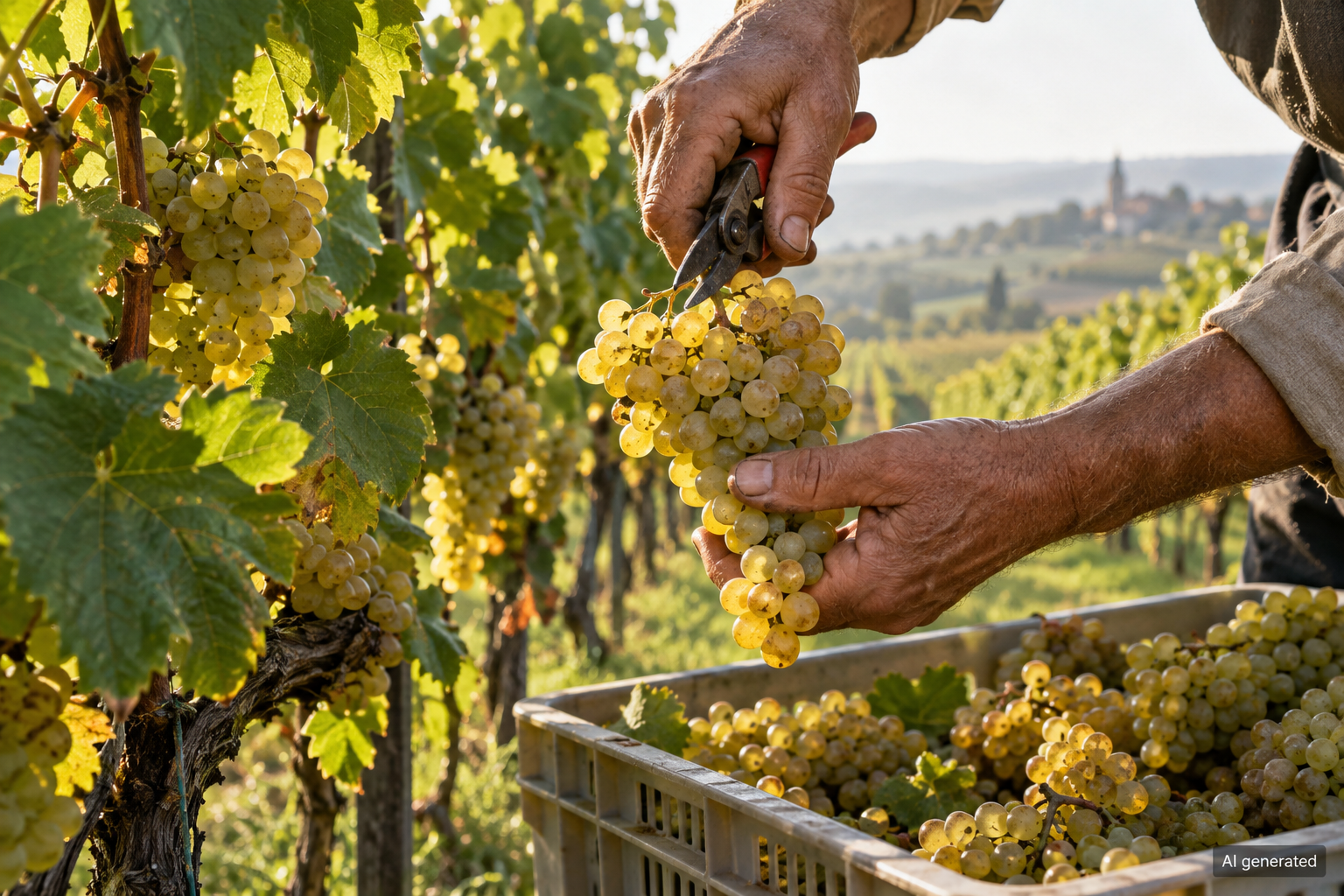
Champagne’s latest harvest story reaches beyond this year’s grapes. Reuters reports that producers expect to draw on wines kept from earlier harvests after weather reduced the crop, illustrating why a bottle’s production story can extend across more than one season.
The report links lower yields with difficult conditions while noting producers’ comments on grape quality. Quantity and quality are separate assessments. A smaller crop does not, by itself, tell a reader how a finished wine will taste or what it will cost.
The cellar is part of the harvest story
UNESCO’s account of the Champagne landscape connects vineyards, cellars and houses in a single production system. Its listed sites include historic hillsides, Saint-Nicaise in Reims and the Avenue de Champagne in Épernay. The region’s identity rests on work above and below ground.
That is a helpful perspective for understanding reserves. The harvest is a visible moment, but the cellar is part of a longer process. WHIF’s interpretation is that reading the region only through a yearly crop figure misses the importance of time and stored production.
The European Environment Agency identifies food security and water among Europe’s climate risks. This provides a wider backdrop to weather-sensitive agriculture; it is not an assessment of a particular Champagne house or a prediction of the next vintage.
Questions worth taking beyond the headline
For visitors, the story suggests useful questions to bring to a producer’s explanation: which harvests are represented, what role do reserve wines play, and how is a particular cuvée described? The answers should come from the producer concerned, rather than assumptions applied to the whole region.
For readers following the business story, watch for confirmed harvest results and subsequent production decisions. Expectations during a harvest are not final totals. The reserves explain one way producers manage variation, but they do not justify a forecast about every bottle that will eventually reach the shelf.
Sources & context
Reporting and reference material used for this article. Context sources do not independently confirm every news claim.
- Reuters ↗Reporting on this story
- UNESCO — Champagne Hillsides, Houses and Cellars ↗The region’s connected cultural and production landscape
- European Environment Agency — European Climate Risk Assessment ↗European risk assessment, published March 2024; background
Written for WHIF from the linked material. This article does not claim on-the-ground reporting. Our editorial standards.