Versailles turns climate disruption into a test for heritage sport
The first Ironman 70.3 at Versailles finally crossed the Grand Canal after a heatwave delay, showing both the appeal and limits of landmark events.
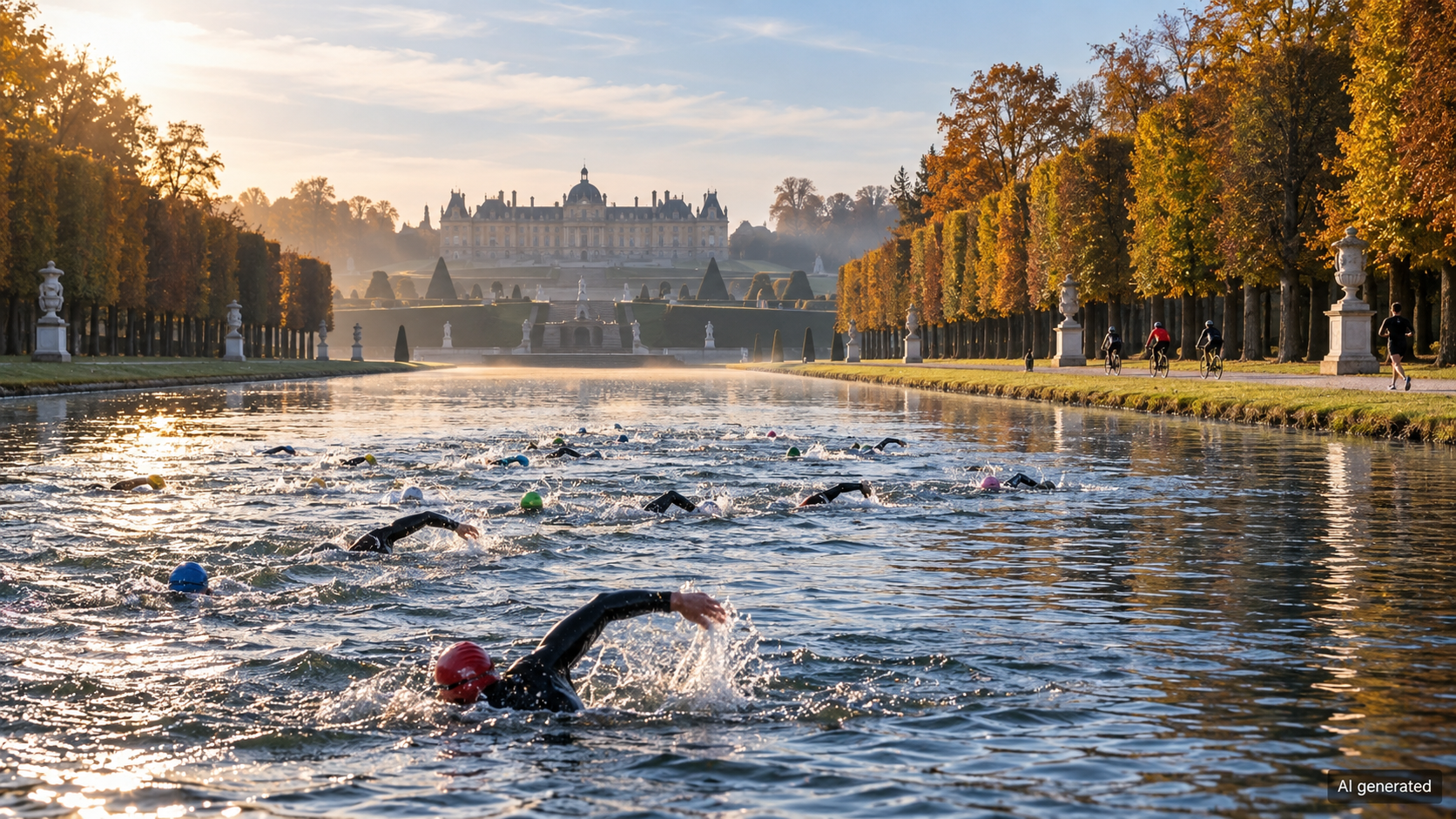
Around 1,400 athletes completed the first Ironman 70.3 Versailles on 11 October, three months after extreme heat forced the original July date to be abandoned. Competitors swam 1.9 kilometres in the Château de Versailles Grand Canal, cycled 90 kilometres through the Chevreuse valley and ran a half-marathon through the city.
Local reporting identified Mathieu Gallet as the first men's winner in 3 hours, 58 minutes and 54 seconds. The sporting result matters, but the event's wider significance lies in how an emergency relocation turned a historic ornamental basin into a competition venue for the first time.
Heat and water quality changed the route
The swim had originally been planned for the Pièce d'Eau des Suisses. Repeated heatwaves lowered its water level and encouraged cyanobacteria, making it unsuitable, according to Le Monde. Organisers, the city and the palace then moved the swim to the Grand Canal after water testing and preparation.
That sequence is a reminder that climate adaptation can reshape cultural events rather than simply cancel them. It also has limits. A replacement venue needs water-quality controls, protection for historic fabric, safe crowd movement and a plan for residents affected by road closures.
The Olympic effect brings visitors and new obligations
The race also extends a post-Paris 2024 approach that places sport inside recognisable heritage settings. The Château hosted Olympic equestrian and modern pentathlon events, while national monument managers have since developed more running, fencing and fitness programmes at historic sites.
Such settings are commercially powerful. Entry places sold out rapidly despite high fees, and the destination attracted athletes from abroad. Heritage institutions can gain visitors and sponsors, while organisers gain a visual identity that an ordinary course cannot offer. The trade-off is that public monuments risk becoming premium backdrops unless access and conservation benefits are clearly demonstrated.
A successful race day does not settle whether the model should be repeated. Organisers should publish water-quality information, environmental impact, attendance and restoration commitments before a second edition. Versailles showed that a heritage site can adapt after a climate shock. Repetition should depend on evidence that the monument and the public gain as well as the event brand.
Sources & context
Reporting and reference material used for this article. Context sources do not independently confirm every news claim.
- Le Parisien ↗Independent on-scene reporting, 11 October: completed event, participant count, winner and race context.
- Le Monde ↗Independent reporting, 11 October: heatwave delay, cyanobacteria, Grand Canal preparation and heritage-sport trend.
- City of Versailles ↗Primary municipal source: official route, distances, rescheduling and registration information.
- Château de Versailles ↗Primary venue source: confirmation of the 11 October event and Grand Canal swim.
Written for WHIF from the linked material. This article does not claim on-the-ground reporting. Our editorial standards.