Why the fuel bill weighs more heavily on rural France
A new INSEE study maps exposure to fuel costs using older household data. Its price-shock scenario is not a count of households struggling today.
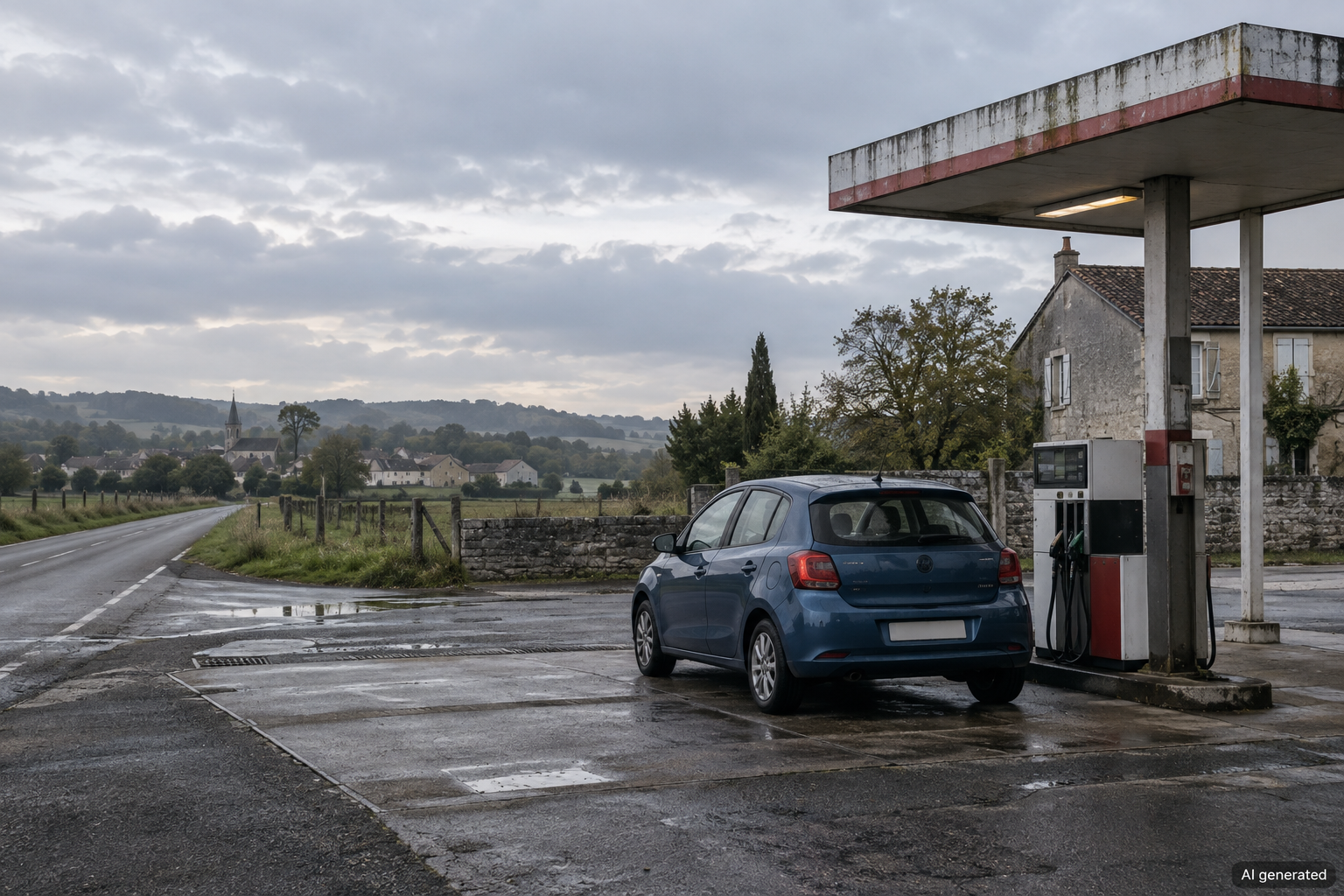
A study published by INSEE on 8 September puts geography at the centre of France’s fuel-budget debate. Using 2021 household figures, it finds that 2.2 million car-owning households spent more than one month of their annual disposable income on fuel. That represents 10.6% of the car-owning households studied.
The proportion was 13.5% in rural intermunicipal areas, against 9% in urban ones. Longer journeys and lower incomes help explain the gap. It is the combination that matters: a long commute does not impose the same financial pressure on a high-income household as on one with little money left after essentials.
What the price scenario does—and does not—show
INSEE also applies higher fuel prices comparable to those of spring 2026 to its older household baseline. Under unchanged incomes and driving behaviour, 4.7 million households would cross that threshold. This is a simulation. It does not establish that 4.7 million households actually face those circumstances in September 2026.
The broader transport context predates this year’s price shock. The national mobility survey for 2019, published by the government’s SDES statistical service in 2023, found cars accounted for about 63% of local weekday trips. Outside urban units, the proportion was four in five. SDES explicitly describes those results as a picture from before the pandemic.
Read the geography alongside the method
Those historical figures help explain why advice simply to stop driving can miss the practical issue. A substitute must connect the places people need to reach. They do not, however, measure today’s bus provision or prove that every rural household lacks an alternative. Local journeys and services need to be examined individually.
There is also a methodological distinction. INSEE’s new study links household information with the road-vehicle statistical register. SDES explains that this register uses registration records and supports vehicle-fleet statistics; annual anonymised files have been enriched with household characteristics since 2022. It is a statistical evidence base, rather than a poll asking drivers how expensive travel feels.
The useful reading is therefore a map of exposure, not a current national headcount. Publication in 2026 makes the analysis new; it does not make every underlying observation new. Keeping that distinction visible is essential when fuel prices become part of a wider discussion about rural living costs.
Sources & context
Reporting and reference material used for this article. Context sources do not independently confirm every news claim.
- INSEE — rural household fuel expenditure, 8 September 2026 ↗Primary material: new study using a 2021 baseline and a hypothetical price scenario
- SDES — national mobility survey, published 12 April 2023 ↗Context: travel patterns measured in 2019, not current behaviour
- SDES — road-vehicle statistical register (RSVERO) ↗Methodological context: register underlying the study; not independent corroboration
Written for WHIF from the linked material. This article does not claim on-the-ground reporting. Our editorial standards.