Paris G7 closes with commitments on Ukraine, Hormuz and economic security
The final declaration turns a crowded two-day agenda into shared positions, but most commitments still depend on later financing, sanctions or operations.
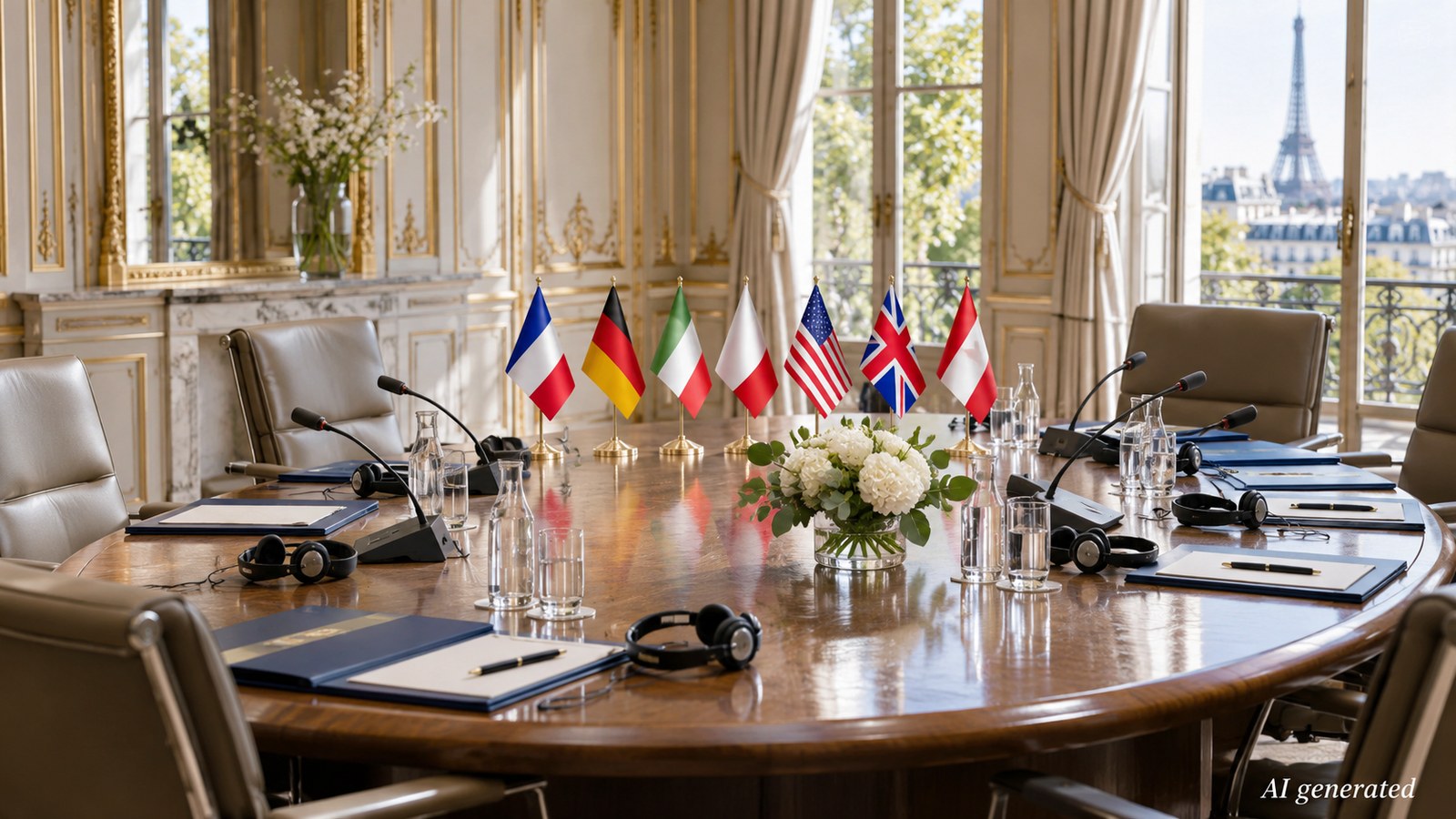
The G7 foreign ministers have closed their Paris meeting with a joint declaration spanning Ukraine, the Strait of Hormuz, the Indo-Pacific, Sudan, Haiti and economic security. The text, published on 11 November after talks on 9 and 10 November, is the substantive outcome of a meeting that had opened with a much broader list of crises. It records political commitments rather than creating a treaty.
On Ukraine, the ministers backed a comprehensive and reciprocal ceasefire and said Europeans must take part in negotiations about Europe's future security. They also acknowledged Ukraine's financing needs for 2027 and beyond, promised continued military support and discussed further pressure on Russia's war economy, including action against vessels and intermediaries linked to the shadow fleet.
Ukraine support extends beyond 2026
The declaration also gives France a visible role around the Strait of Hormuz. It says a defensive initiative led by France and the United Kingdom could help maritime traffic resume, including by supporting verification that mines have been removed. AP's reporting from the meeting showed that partners were still debating how much each country should contribute to maritime security.
On Iran, the ministers combined support for diplomacy over the nuclear programme with warnings about attacks, maritime disruption and alleged violent plots. They also noted Britain's attribution of the September incident near RAF Fairford. These statements express a common G7 position; they do not themselves impose a new sanctions package or launch an operation.
Hormuz language gives France a defined role
Economic security received a separate commitment. The group said it would coordinate responses to economic coercion, protect strategic technologies and work together on critical-mineral supply chains. The language identifies shared risks, but it leaves national governments and later G7 work to define funding, legal powers and implementation.
The final text matters because it replaces the pre-meeting agenda with positions all seven members and the EU representative accepted. Reuters had described tensions over Ukraine strategy and the wider international setting before the meeting. Agreement on wording is evidence of diplomatic alignment, although it should not be confused with delivery on the ground.
A common framework awaiting delivery
The next tests are concrete: financing for Ukraine, any coordinated sanctions, contributions to maritime security and follow-up on critical minerals. Until those decisions are announced, the Paris declaration is best read as a common framework. It narrows disagreements and assigns priorities, but it does not by itself guarantee resources or outcomes.
Sources & context
Reporting and reference material used for this article. Context sources do not independently confirm every news claim.
- France Diplomatie ↗Primary final declaration, published 11 November 2026: agreed positions on Ukraine, Iran, maritime security, regional crises and economic security.
- Associated Press ↗Independent reporting from the meeting: debate over Hormuz security contributions and the diplomatic setting around Ukraine talks.
- Reuters ↗Independent pre-meeting reporting: tensions among partners, Ukraine strategy and the international context against which the final agreement was reached.
Written for WHIF from the linked material. This article does not claim on-the-ground reporting. Our editorial standards.