Made-in-France fashion faces its price test at Paris manufacturing fair
Local clothing, leather and craft brands are using MIF Expo to argue that durability and shorter supply chains can justify prices shoppers often find hard to absorb.
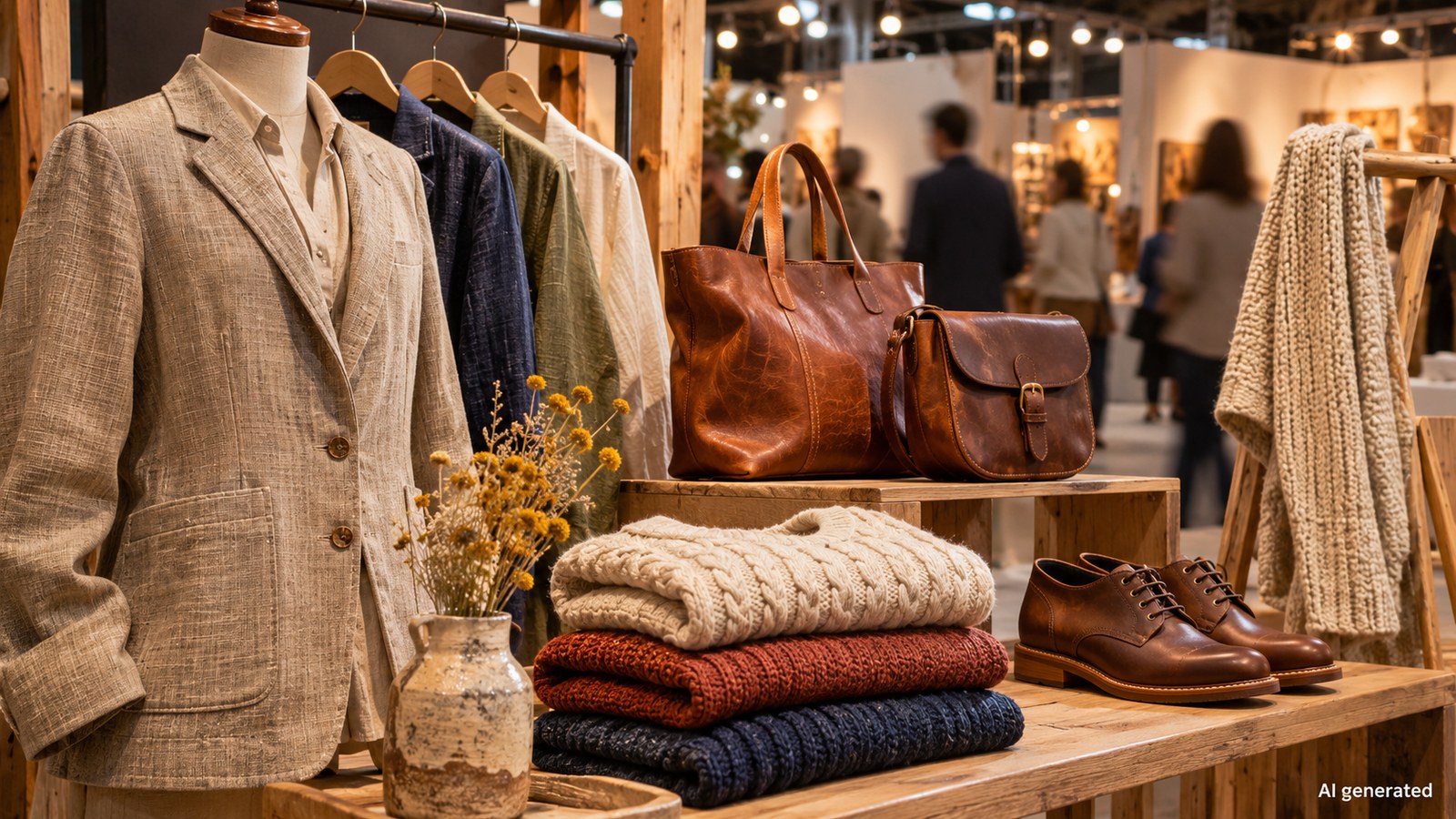
MIF Expo closes its four-day Paris edition on Sunday with French-made clothing, leather goods, jewellery and footwear sharing the hall with food, homeware and technology. The organiser says 1,000 exhibitors are gathered at Porte de Versailles, making the event a concentrated test of what shoppers will pay for domestic production.
Fashion is a useful test because the price difference is immediately visible. French workshops face higher labour costs and smaller production runs than mass-market importers. Independent reporting from Le Figaro found exhibitors defending a fair price through local sourcing, repairability and longer product life rather than claiming that every French-made item can be cheap.
Origin is more detailed than a flag
The label also covers very different supply chains. A product assembled in France may contain imported fibres, hides, hardware or components. Shoppers should look beyond a flag motif and ask where the main manufacturing steps occurred, what the material specification says and whether a recognised origin claim is independently checked.
The fair gives small producers a way to explain those details directly. The national craft-chambers network selected more than 200 artisans from 20 regions for a 2,000-square-metre village. Its programme includes makers of clothing, jewellery and other goods alongside demonstrations of traditional and newer techniques.
Why cheaper local production remains difficult
Affordability remains the difficult part. L'Est Républicain's pre-fair reporting examined whether French production can reach lower prices and found that scale, automation and simpler ranges can narrow the gap, but do not erase the structural cost difference. A lower sticker price can also conflict with wages, materials or repair services that form the case for buying locally.
For consumers, useful comparisons are cost per wear, repair terms, material quality and the exact origin of manufacture. A French label is not by itself proof of sustainability, and a higher price is not automatic proof of quality. The best exhibitors should be able to answer specific questions without relying on patriotic marketing alone.
A practical way to compare claims
The event runs through 6 p.m. on 15 November, with free invitations available from the organiser. Visitor forecasts are promotional estimates, not attendance figures. The accompanying image is an invented fashion-fair display and does not show MIF Expo, a real exhibitor or an actual French-made product.
Sources & context
Reporting and reference material used for this article. Context sources do not independently confirm every news claim.
- MIF Expo ↗Primary organiser material: 12-15 November dates, venue, exhibitor count, product sectors and visitor forecast.
- Le Figaro ↗Independent reporting from the fair, published 14 November 2026: exhibitors' price, sourcing and local-production arguments.
- L'Est Républicain ↗Independent pre-fair analysis: scale, automation and the limits of low-price French production.
- CMA France ↗Primary craft-chambers programme: artisan-village size, regional representation, maker selection and demonstrations.
Written for WHIF from the linked material. This article does not claim on-the-ground reporting. Our editorial standards.