French MPs reject the 2026 year-end budget adjustment
The 63-49 vote blocks the government's closing adjustments at first reading, but the bill now moves to the Senate and the budget process continues.
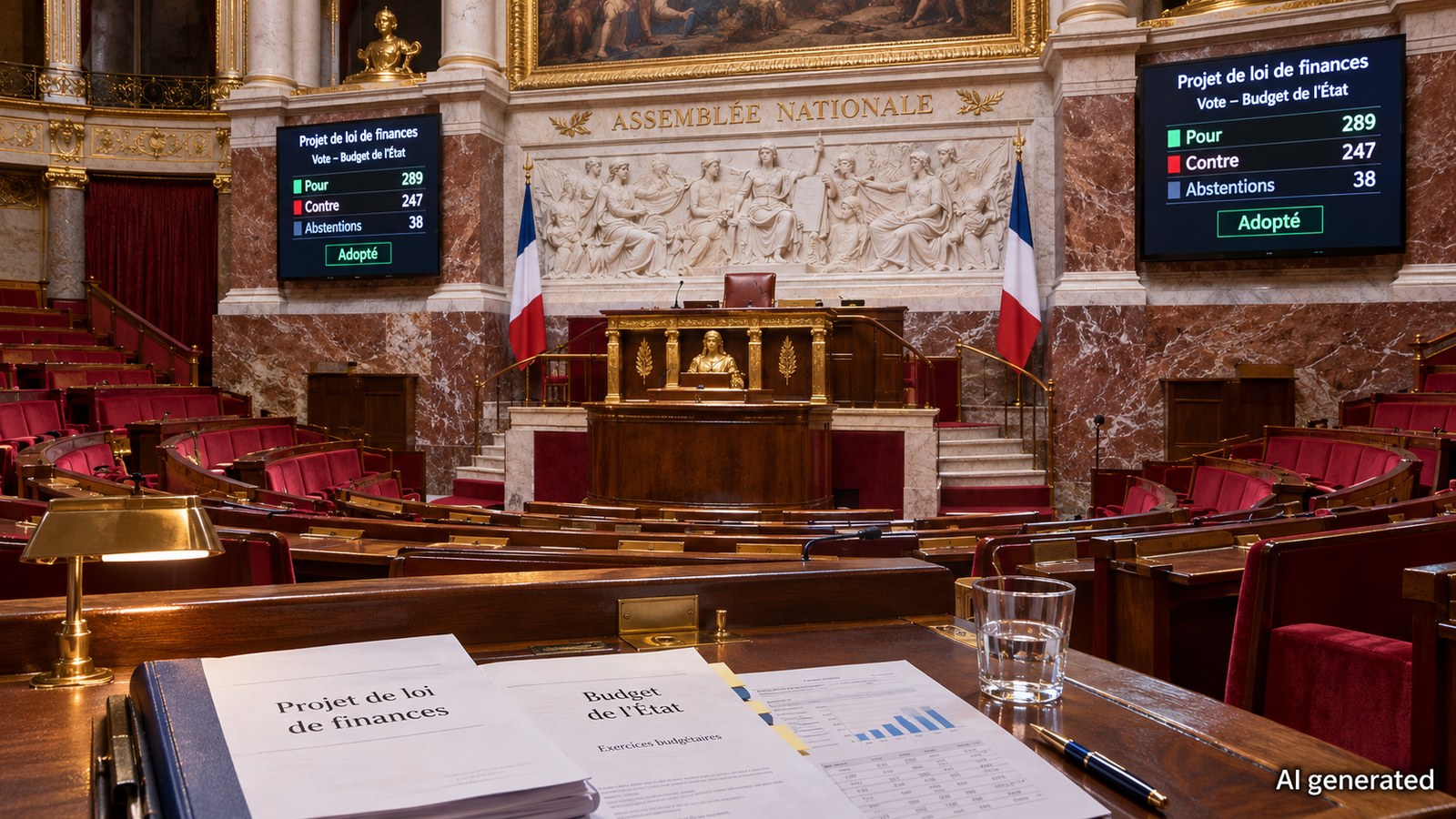
France's National Assembly rejected the 2026 year-end finance bill at first reading on 12 November. The official roll call recorded 49 votes in favour, 63 against and 76 abstentions. The result is a parliamentary defeat for the government, but it does not end the bill's accelerated legislative route.
The measure is designed to make the final adjustments to the current year's state budget. It opens and cancels appropriations in response to execution data and crises, including the drought and the Middle East conflict. Unlike an ordinary supplementary budget, this type of year-end bill cannot introduce new tax provisions.
A technical bill with political weight
The governing bloc largely supported the bill, the left outside the Socialist Party opposed it, and Socialist and far-right deputies mostly abstained, according to AFP reporting. The opposition had amended or removed parts of the government's version before the final vote. The text now proceeds to the Senate.
The government defended its management by saying state spending should finish almost €1 billion below the amount authorised in the initial 2026 budget. That comparison concerns the defined state-spending perimeter, not the entire public deficit. The bill still keeps the government's 2026 public-deficit forecast at 5.4 percent of gross domestic product.
The government's defence meets a fiscal warning
France's independent fiscal watchdog judged the bill against a worsening background. The High Council of Public Finances said downside risks to the 2026 forecast had increased and projected public debt rising by 3.7 percentage points to 119.4 percent of GDP. It also warned that the economic assumptions for the second half of 2026 were becoming dated.
A rejection at first reading is therefore both procedural and political. Parliament has not approved the closing adjustments in the government's preferred form, but the Senate can examine the measure and the two chambers can continue the legislative shuttle. The previous year's comparable bill was ultimately adopted after further readings.
Rejection is not the end of the bill
The next points to watch are the Senate's changes, any compromise between chambers and the final appropriations actually enacted. The vote should not be confused with the separate 2027 state budget or Social Security financing bill. It concerns how the government closes the 2026 accounts while those larger future budgets remain contested.
Sources & context
Reporting and reference material used for this article. Context sources do not independently confirm every news claim.
- National Assembly ↗Primary roll call, 12 November 2026: 49 votes for, 63 against, 76 abstentions and non-adoption at first reading.
- Le Figaro with AFP ↗Independent parliamentary reporting: voting blocs, amendments, crisis-related appropriations and the bill's move to the Senate.
- High Council of Public Finances ↗Primary independent fiscal assessment: downside risks, debt projection and warning about dated economic assumptions.
- French Government ↗Primary government presentation: purpose of the year-end bill, spending claim, crisis context and 5.4 percent deficit forecast.
Written for WHIF from the linked material. This article does not claim on-the-ground reporting. Our editorial standards.