French school leaders rally over violence after nearly two months of unrest
An unusually broad mobilisation by principals puts staff safety at the centre while keeping student demands and violent acts analytically separate.
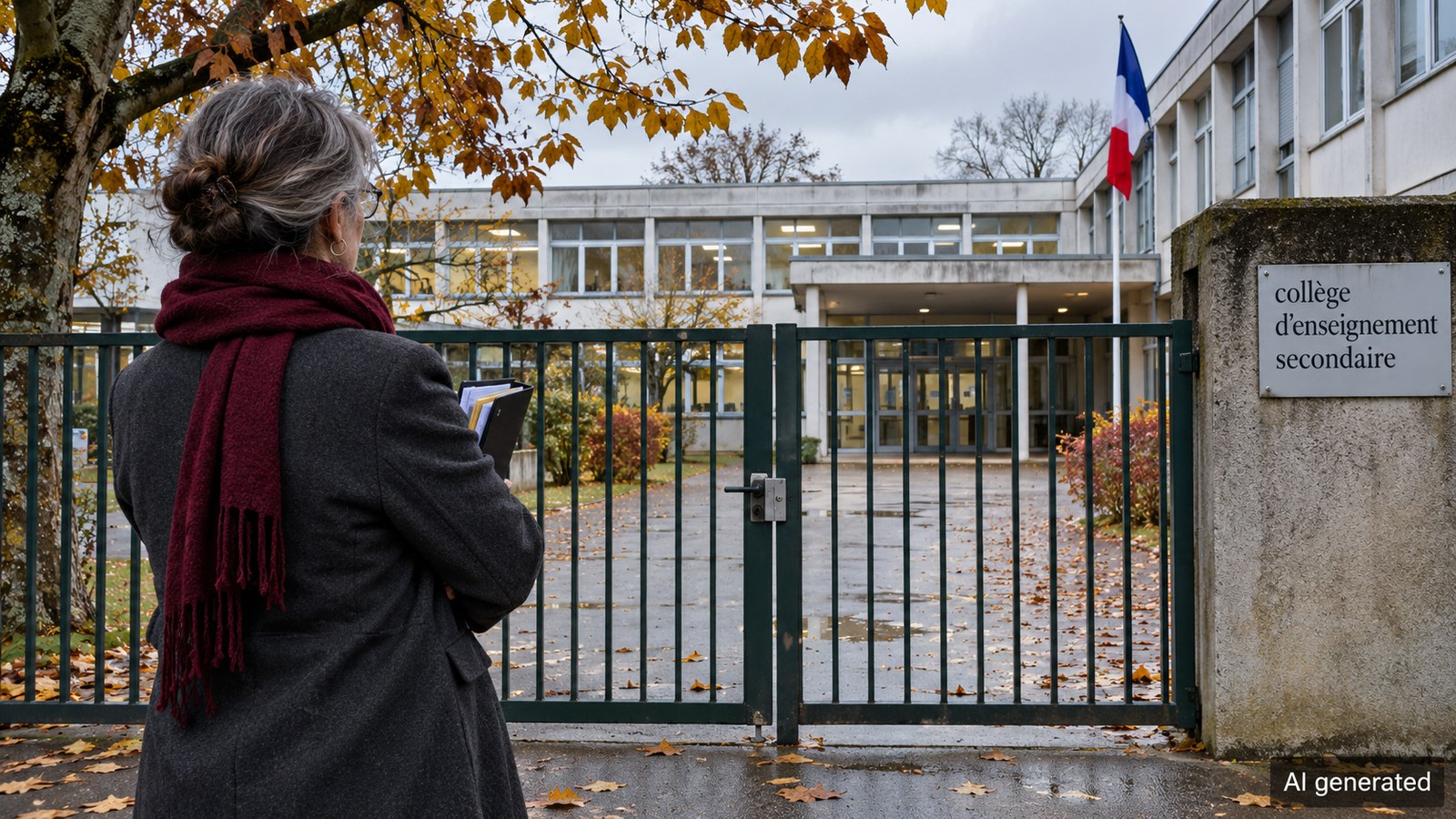
Secondary-school principals and other leadership staff are due to rally across France at 3 p.m. on 13 November to protest violence directed at education workers. The SNPDEN-Unsa union called the action after weeks of student mobilisation in which staff have reported insults, threats, property damage and physical attacks. More than one hundred local gatherings were announced by regional organisers.
The mobilisation is unusual because school leaders normally remain responsible for keeping establishments operating during disputes. SNPDEN secretary general Bruno Bobkiewicz told AFP that the breadth of planned gatherings was itself significant. The action is about staff safety, not a declaration that every school protest or participating student is violent.
An uncommon action by school management
Recent incidents explain the urgency. Reuters reported that a principal near Bordeaux was struck in the head, a school in Aix-en-Provence was set on fire and a regional official in Chelles was hit by a petrol-filled object. The government said nearly 300 education employees had been injured since the protests began almost two months earlier.
The government is moving toward systematic prosecution of alleged offences against education staff and disciplinary proceedings where public employees are accused of encouraging illegal acts. Prime Minister Sébastien Lecornu has described planned violence as concentrated in a small minority of schools. Those statements are the government's position and do not determine guilt in individual cases.
Government promises prosecution
The wider movement began with demands concerning school buildings, staffing and university access, then connected with broader cost-of-living protests. On 10 November, the Education Ministry said 49 of France's 3,700 high schools were blockaded and that 99 percent of pupils were back in class. National percentages can coexist with severe local disruption.
Independent reporting also records complaints of excessive police force against protesters. That evidence should not be erased by attacks on staff, just as legitimate education demands do not excuse violence. Keeping those questions separate allows safety, protest rights, policing and policy grievances to be examined on their own facts.
Safety and protest rights are separate questions
Because the rallies had not yet concluded when this edition was prepared, turnout and outcomes are not reported here. The next verified update should compare organisers' accounts with local reporting and any official response. This article marks the event date clearly and does not treat planned participation as a completed national result.
Sources & context
Reporting and reference material used for this article. Context sources do not independently confirm every news claim.
- Agence France-Presse via Boursorama ↗Independent advance reporting, published 13 November 2026: union call, planned rallies, staff experiences and why the action is unusual.
- Reuters ↗Independent reporting: recent attacks, government injury figure, blockade count and the movement's wider demands.
- Le Monde ↗Independent reporting, published 13 November 2026: local disruption, government response and differences among mobilised schools.
- SNPDEN-Unsa Dijon section ↗Organiser material: local gathering locations and the claim of more than one hundred coordinated events in mainland and overseas France.
Written for WHIF from the linked material. This article does not claim on-the-ground reporting. Our editorial standards.