France's first compulsory school Armistice ceremonies expose a civic divide
A new rule requires ceremonies for pupils from CM1 through secondary school, while unions dispute how remembrance, education and military participation should meet.
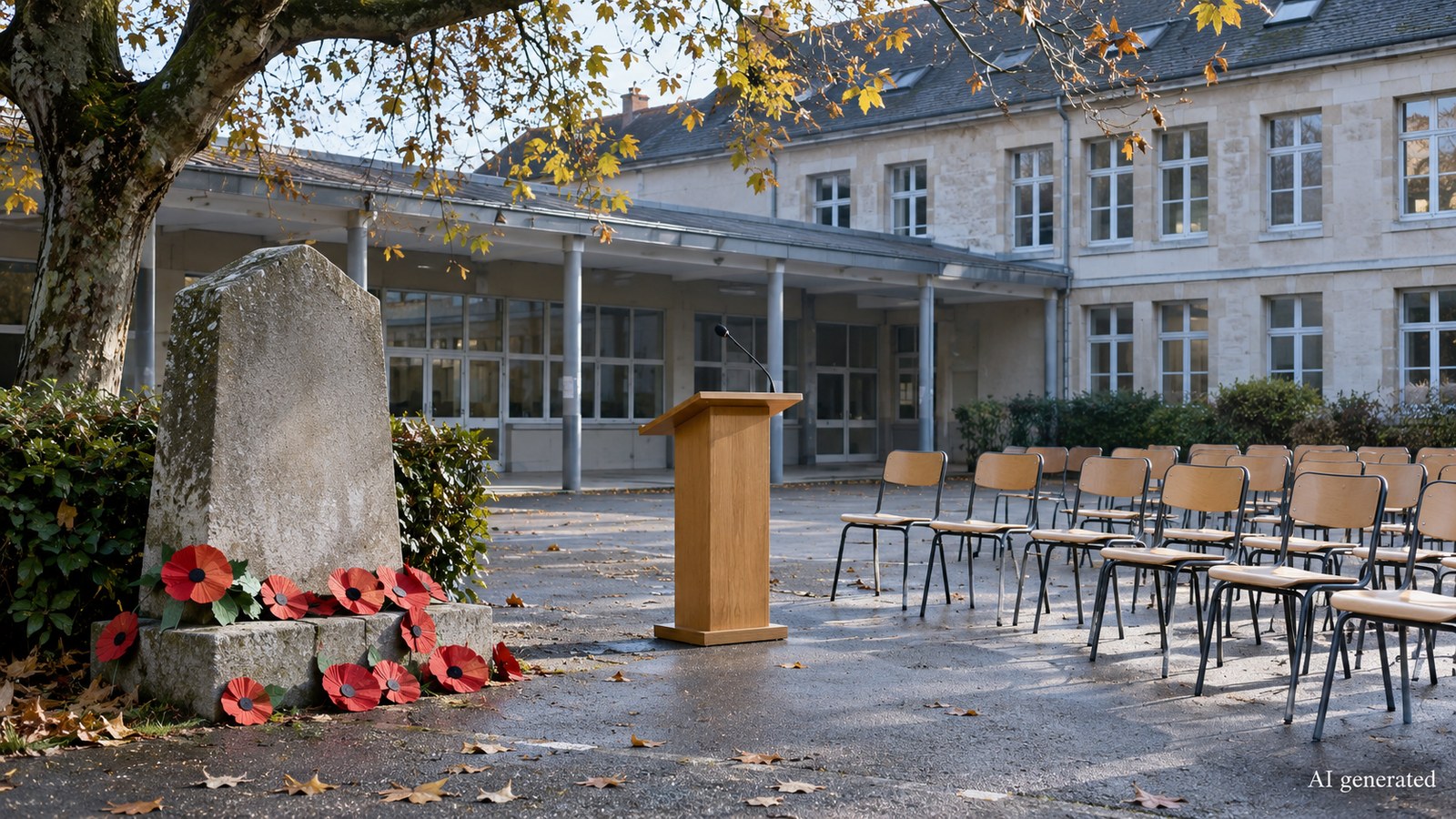
French schools are holding compulsory Armistice remembrance ceremonies for the first time under a national rule introduced for the 2026 school year. The requirement covers pupils from CM1 through lycée in public schools, private schools under contract and the French education network abroad. Each school chooses a date within four days before or after 11 November.
The education ministry's July circular presents the ceremony as a civic and educational exercise honouring all those recognised as having died for France. School leaders are responsible for organising it within the establishment, linking it to history, moral and civic education, arts and existing memorial material. Pupils are meant to participate actively rather than simply attend.
A national rule with local organisation
The circular allows schools to invite veterans' groups, elected officials, reservists and departmental military representatives, under the school's educational authority. That possibility has become the main point of dispute. The SNES-FSU teachers' union called for withdrawal of the measure and said it would support staff refusing to participate in some circumstances.
Critics argue that a mandatory format risks turning remembrance into political or military staging. Supporters say it gives every pupil a shared encounter with the history of war and civic responsibility. Le Monde reported that the disagreement reflects a longer tension between patriotic commemoration and anti-war interpretation, not simply a dispute about one timetable.
Remembrance and militarisation are disputed
On 11 November, Education Minister Édouard Geffray said he had not received reports of tension or refusal in schools at that stage. That is an early operational assessment, not a national evaluation of how every ceremony was received. Because schools may hold events after the public holiday, the first cycle was not complete when he spoke.
The policy also differs from the national ceremony led by the president at the Arc de Triomphe. School events are locally organised teaching activities, even when outside guests are invited. Treating them as identical to a military parade would misstate the circular, while ignoring the compulsory element would understate the unions' objection.
The first year still needs evaluation
The first year's useful questions are now practical: how schools interpreted the guidance, how pupils participated and whether outside involvement remained subordinate to teaching goals. Evidence from inspections, staff feedback and future ministry review will matter more than isolated examples. The ceremonies have happened, but the argument over their civic purpose is not settled.
Sources & context
Reporting and reference material used for this article. Context sources do not independently confirm every news claim.
- French Ministry of Education ↗Primary circular, dated 2 July 2026: scope, timing, educational purpose, organisers and permitted external participants.
- Le Monde ↗Independent reporting, published 9 November and updated 11 November 2026: implementation debate, historical context and reactions from educators.
- SNES-FSU ↗Stakeholder position: the teachers' union's objections, boycott conditions and request that the ministry withdraw the circular.
Written for WHIF from the linked material. This article does not claim on-the-ground reporting. Our editorial standards.