France's public-sector strike brings marches and transport changes
Public workers are marching over pay and careers on 17 November, while reduced regional rail services and station closures make the dispute immediately visible to commuters.
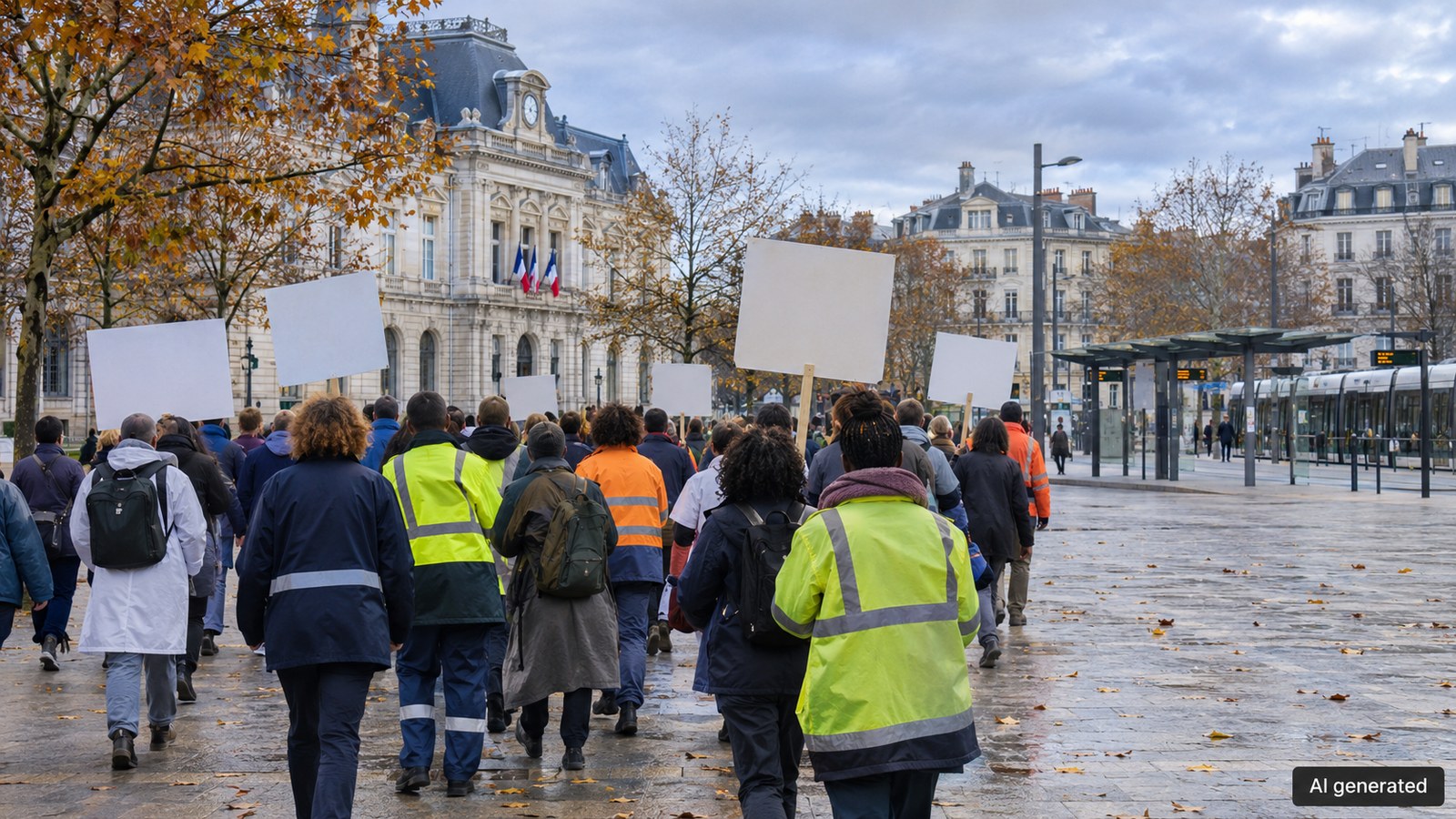
Public-sector workers across France are striking and demonstrating on Tuesday 17 November over pay, career progression and the continued freeze in the civil-service index point. The day includes dozens of marches, with the Paris procession due to leave Place de la Nation for Place d'Italie in the afternoon.
The CFDT's formal strike notice covers state, local-government and hospital employees. It calls for general salary measures, negotiations on pay scales and mandatory annual pay talks. Other unions have issued broader calls, while youth organisations and several private-sector groups have announced that they will join local demonstrations.
Forecasts are not turnout results
Independent reports agree that the action is nationwide, but turnout figures available before the marches are forecasts rather than results. TF1 reported an official expectation of 220,000 to 300,000 participants, including 40,000 to 80,000 in Paris. Those estimates should not be reported later as a final attendance count.
Travel disruption is uneven rather than a national shutdown. Le Parisien reported reduced services on several Transilien routes and the southern branch of RER D, while the RATP planned temporary closures at stations near the Paris march. Most RER lines and TGV services were expected to operate normally.
A pay dispute inside a wider movement
The strike follows a tense autumn of student blockades and demonstrations over living costs. Le Monde reported that the CFDT joined the 17 November call after Prime Minister Sébastien Lecornu postponed the next public-sector purchasing-power meeting until 11 December. The government has announced measures for the lowest-paid workers, but unions say they do not amount to a general pay settlement.
The practical picture can change during the day. Travellers should consult their operator's live service information, and people attending a march should use the declared route and follow local safety instructions. Closures around a procession do not necessarily mean that a whole line or city network has stopped.
What to verify as the day develops
The political test is whether a pay-focused public-sector action can broaden the wider movement after lower participation on 14 November. Reliable conclusions require the Interior Ministry's post-event count, organisers' estimates and reporting from several cities. The accompanying image is an invented peaceful march, not a photograph of today's demonstrators or any named place.
Sources & context
Reporting and reference material used for this article. Context sources do not independently confirm every news claim.
- CFDT Public Services ↗Primary union document, dated 10 November 2026: strike notice, sectors covered and stated pay and career demands.
- Le Parisien ↗Independent live reporting, opened 17 November 2026: nationwide action, Paris route and confirmed morning transport disruption.
- TF1 Info ↗Independent advance reporting, published 16 November 2026: official turnout forecasts, declared marches and expected rail and metro changes.
- Le Monde ↗Independent political context, published 14 November 2026: CFDT decision, postponed talks and the government's difficult relationship with unions.
Written for WHIF from the linked material. This article does not claim on-the-ground reporting. Our editorial standards.