France's latest protests set the next test for 5 November
Official and union counts diverged sharply, but both recorded a national mobilisation. The immediate question is whether the movement can turn turnout into negotiations.
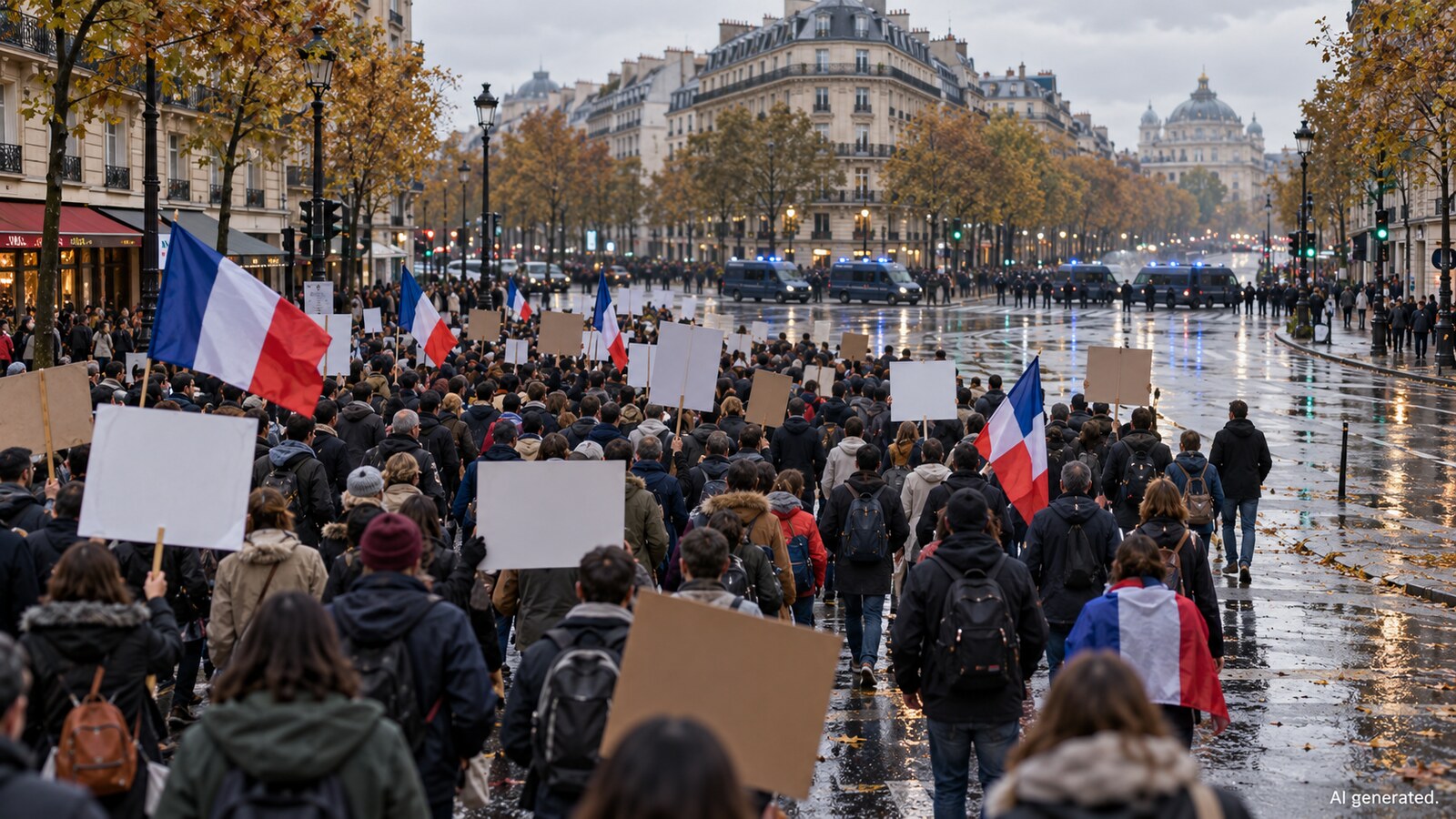
France's Interior Ministry counted 410,000 people in demonstrations on Saturday 24 October, including 110,000 in Paris. The CGT put the national turnout near 800,000 and its Paris figure at 250,000. Those competing estimates should not be blended into one number. They come from institutions with different counting methods and political positions.
Reuters, the Associated Press and Le Monde all described the marches as largely peaceful before clashes developed late in the day in Paris and several other cities. About 70,000 police officers and gendarmes were deployed. Interior Minister Laurent Nuñez said nearly 1,000 people had been arrested by the evening, with the total still being consolidated.
A calmer march did not mean a calm day
The scale of the security operation reflected the violence and looting of the previous weekend. This time, authorities reported fewer attacks on public buildings, but serious injuries and shop damage were still recorded. In Lyon, where an authorised march was not allowed through the centre, the prefecture counted 36 arrests and 22 injured people, including 18 members of the security forces.
The mobilisation brought together students, workers and cost-of-living campaigners. The common demands included better-funded schools and public services, higher purchasing power and greater tax fairness. The mix matters because it explains why a single attendance figure cannot capture the movement's political breadth or its internal differences.
The next date is already on the calendar
The next practical test is 5 November. The CGT has called for a nationwide strike and further demonstrations on that date. A weekend march can show reach, but a weekday strike measures organisation in workplaces, transport and public services. It may also clarify whether other unions will sustain a common front.
For the government, the reduced level of destruction compared with 17 October is not the same as a political resolution. The turnout, the widening list of demands and the call for another national day mean that public-order tactics and social negotiations will remain linked. Any final arrest and injury totals should be treated as provisional until official consolidation.
Source note: Reuters and the Associated Press supplied independent reporting on turnout, policing and clashes. Le Monde's live record was consulted for city-level figures and the sequence of the day. The CGT statement is a primary organiser source for its own count and the 5 November call, not an independent attendance audit.
Sources & context
Reporting and reference material used for this article. Context sources do not independently confirm every news claim.
- Reuters: violence flares after largely peaceful protests ↗Reporting: national turnout estimates, security deployment and late clashes, 24 October
- Associated Press: more than 400,000 march across France ↗Independent reporting: demands, Paris turnout and arrests, 24 October
- Le Monde: 24 October demonstrations live record ↗Independent reporting: city-level incidents, injuries and official statements
- CGT: organiser's 24 October statement ↗Primary organiser source: union turnout claim and call for a 5 November strike
Written for WHIF from the linked material. This article does not claim on-the-ground reporting. Our editorial standards.