France counts the cost after October 17 marches turn violent
A mass mobilisation brought 550,000 to 800,000 people into the streets, while a smaller violent fringe left fires, looting, injuries and more than 1,200 arrests.
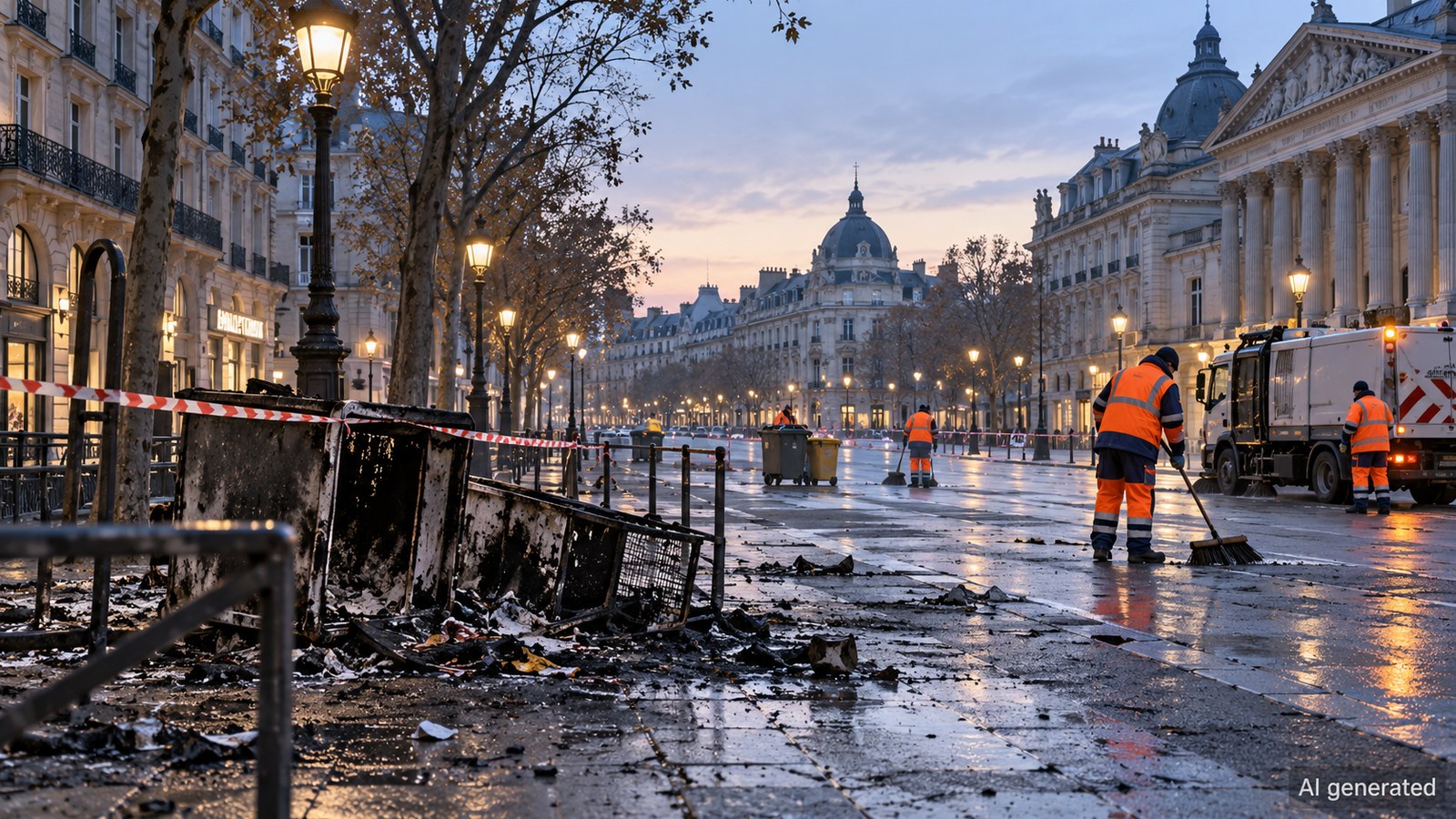
France entered 18 October with two realities from the previous day's nationwide mobilisation. Hundreds of thousands marched over living costs, schools and public services, while violent groups set fires, looted businesses and attacked public buildings in several cities. The scale of the peaceful participation should not be collapsed into the disorder that followed or accompanied parts of the marches.
The Interior Ministry counted about 550,000 demonstrators across 110 marches, including 110,000 in Paris. Organisers put the national figure at 800,000. Reuters, the Associated Press and the Financial Times all reported that most participants were peaceful. These official and organiser estimates use different methods, so neither can be treated as a precise census.
Later figures changed the first picture
Later official figures cited by Prime Minister Sébastien Lecornu put arrests at more than 1,200 and injuries to police and gendarmes above 150. Earlier in the day, authorities had reported roughly 400 arrests. That chronology explains why initial accounts carried a lower total rather than representing an independent contradiction about the final tally.
Serious incidents were reported in Paris, Marseille, Lyon, Bordeaux and Limoges. The Limoges city hall and Lyon tourist office were among public buildings damaged by fire, while shops were looted and police vehicles attacked. The government attributed much of the violence to ultra-left groups and opportunistic offenders, a claim that remains part of the official account rather than a judicial finding for every person arrested.
Police conduct and protest violence face separate scrutiny
Police tactics are also under scrutiny. An investigation was opened after a teenager in Saint-Étienne suffered a severe hand injury, reportedly after picking up a police stun grenade. Reuters said the police watchdog was examining at least two dozen allegations of police violence. Those inquiries concern specific acts and should not be read as a conclusion about the legality of the overall operation.
The October 17 edition of WHIF described the planned convergence of students, unions and Yellow Vest networks before verified outcomes were available. This follow-up replaces forecasts with reported turnout, damage and investigations while preserving the earlier article as a time-stamped preview rather than rewriting it after the event.
The political test now moves beyond crowd size. Organisers must decide whether a broad coalition can sustain common demands, authorities must account for policing and public damage, and courts must separate individual evidence from labels applied during a chaotic day. Treating every marcher as a rioter would be inaccurate, just as treating the violence as incidental would understate its consequences.
Sources & context
Reporting and reference material used for this article. Context sources do not independently confirm every news claim.
- Reuters ↗Independent reporting, updated 18 October: turnout ranges, later arrest and police-injury figures, major incidents and police-watchdog inquiries.
- Associated Press ↗Independent reporting, 17 October: early arrest tally, peaceful majority, cities affected and the Saint-Étienne injury investigation.
- Financial Times ↗Independent reporting, 18 October: later government figures, peaceful turnout and damage to civic buildings.
- AFP ↗Independent wire reporting, 17 October: clashes, fires and looting across the nationwide demonstrations.
Written for WHIF from the linked material. This article does not claim on-the-ground reporting. Our editorial standards.