France's October 17 marches test a new protest coalition
Students, unions and Yellow Vest networks are converging around living costs and public services, but shared anger does not yet amount to a single programme.
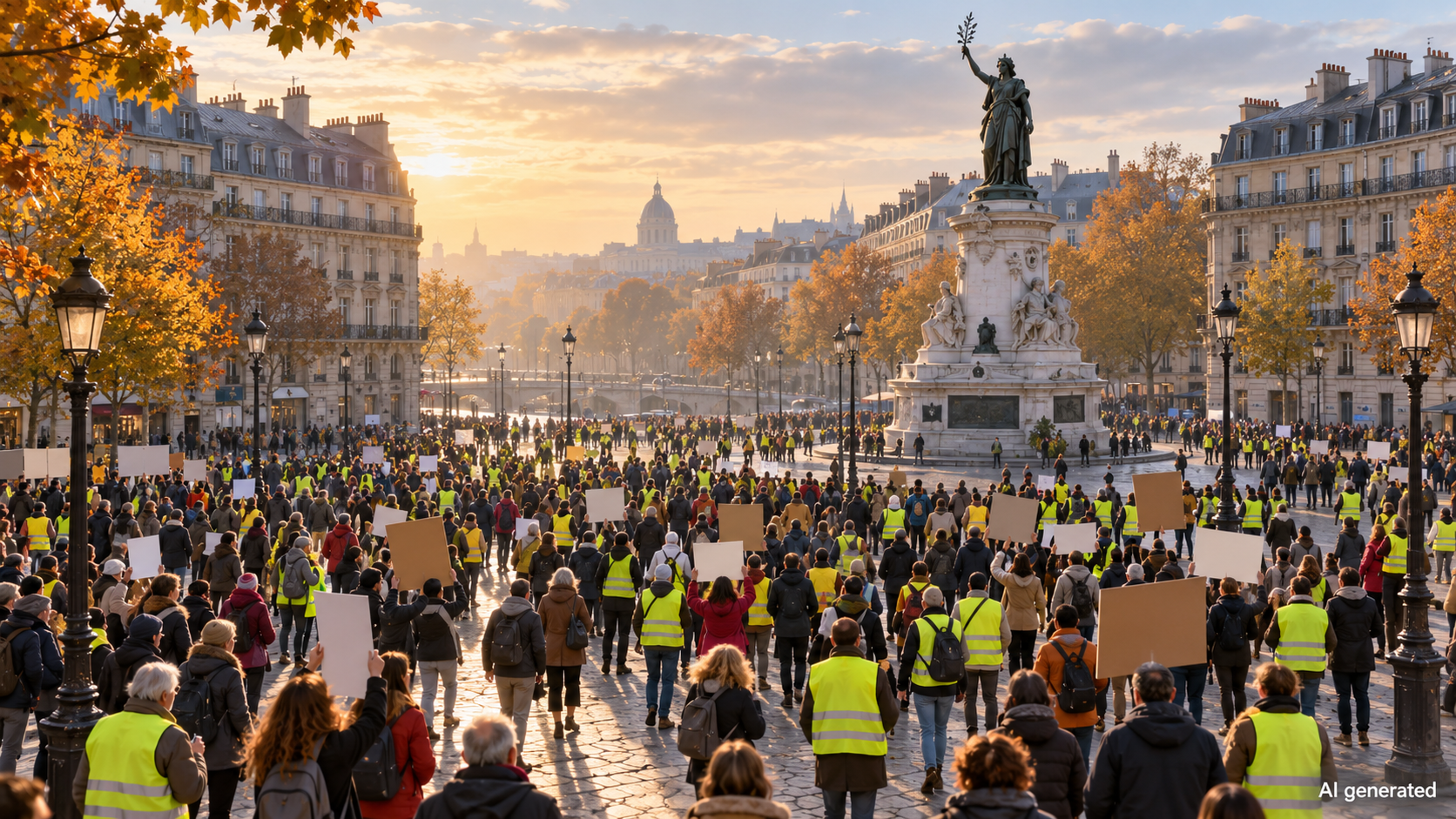
Tens of thousands of people were expected to demonstrate across France on 17 October as high-school and university activists, trade unionists and revived Yellow Vest networks tried to bring separate grievances into one day of action. At publication time the marches were beginning, so this article reports plans and stated demands, not an outcome or final attendance.
The mobilisation grows out of a month of student protests over staffing, buildings, class conditions and access to higher education. Reuters reported that the agenda has widened to living costs, wages, pensions and strained public services. The CGT said it would support actions carrying those social demands while opposing attempts by the far right to redirect the day.
Convergence is not the same as a common programme
The coalition is broad but loosely organised. Le Monde described calls circulating online under labels that combine youth activism with the Yellow Vest legacy. Around 250 gatherings were anticipated by the interior minister, yet local organisers and participants do not necessarily share a national leadership, timetable or list of remedies.
That distinction matters. A large turnout would demonstrate reach, but it would not prove agreement on taxation, school funding, fuel prices or institutional change. Conversely, lower participation in one city would not establish that the underlying student movement or household-cost concerns had disappeared.
Policing and dialogue shape what follows
Policing is also part of the story. Recent student demonstrations produced allegations of excessive force alongside official reports of injuries to police and school staff. The government opened a national student consultation and dedicated school time to dialogue, while campaigners argue that these measures do not answer demands for staffing and investment.
Comparisons with the original Yellow Vest movement require care. The 2018 revolt began around fuel taxes before developing into a wider challenge over inequality and political representation. The 2026 calls borrow its symbols and decentralised methods, but the participants, trigger and political context are not identical.
The useful test comes after the marches: whether groups can translate a shared day into precise demands, negotiations or sustained local organisation. Until verified counts and incident reports are available, claims about a historic resurgence or national rejection remain premature. WHIF will treat later official and organiser figures as competing estimates, not interchangeable facts.
Sources & context
Reporting and reference material used for this article. Context sources do not independently confirm every news claim.
- Reuters ↗Independent reporting, 17 October: planned national mobilisation, participating groups and principal grievances.
- CGT ↗Organiser material, 13 October: the union's own reasons for supporting the 17 October actions.
- Le Monde ↗Independent reporting, 16 October: student organising, Yellow Vest links and limits of the proposed convergence.
- French Education Ministry ↗Primary government context, 7 October: consultation and school dialogue measures announced in response to student concerns.
Written for WHIF from the linked material. This article does not claim on-the-ground reporting. Our editorial standards.